Communication is the foundation of every healthy relationship. Whether you’re dating, engaged, or married, the ability to openly express thoughts, feelings, and concerns plays a crucial role in maintaining a strong emotional connection.
However, communication problems are among the most common relationship issues couples face. Misunderstandings, unresolved conflicts, and emotional distance often stem from ineffective communication rather than a lack of love.
The good news is that communication skills can be improved. By recognizing the warning signs early and taking proactive steps, couples can strengthen their relationship and prevent minor issues from becoming major problems.
In this article, we’ll explore the signs of poor communication in a relationship, why it happens, and practical ways to address it.
Why Communication Matters in Relationships
Healthy communication helps couples:
- Build trust
- Resolve conflicts effectively
- Understand each other’s needs
- Strengthen emotional intimacy
- Avoid resentment and misunderstandings
When communication breaks down, partners may feel unheard, misunderstood, or emotionally disconnected.
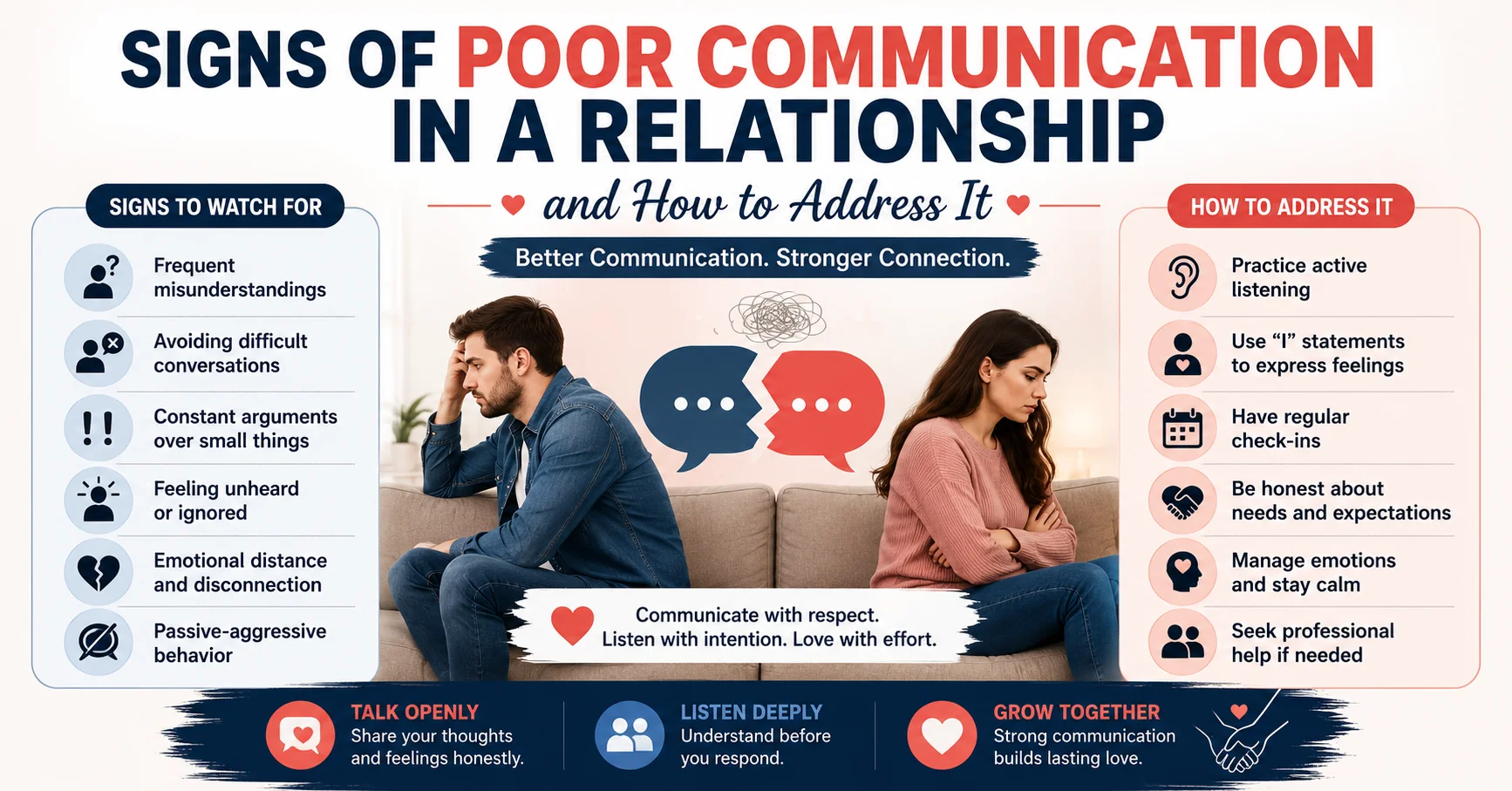
Common Signs of Poor Communication in a Relationship
1. Frequent Misunderstandings
Do simple conversations often turn into arguments?
Frequent misunderstandings are one of the earliest signs of communication issues. When partners interpret messages differently or make assumptions instead of seeking clarification, conflicts become more common.
Example:
One partner says:
“I’ve been busy lately.”
The other hears:
“You don’t care about spending time with me.”
The message and interpretation may be completely different.
2. Avoiding Difficult Conversations
Many couples avoid discussing uncomfortable topics such as:
- Finances
- Future plans
- Family issues
- Relationship concerns
While avoidance may reduce short-term tension, it often creates long-term problems.
Unresolved issues tend to grow over time.
3. Constant Arguments About Small Things
Arguments are normal in relationships.
However, frequent fights over minor matters often indicate deeper communication problems.
Examples include:
- Household chores
- Text response times
- Social media activity
- Daily routines
The real issue is often not the topic itself but the inability to communicate feelings effectively.
4. Feeling Unheard or Ignored
One of the most painful experiences in a relationship is feeling like your thoughts and emotions don’t matter.
Signs include:
- Your partner interrupts frequently
- Conversations feel one-sided
- Concerns are dismissed
- Opinions are rarely acknowledged
Over time, this can lead to frustration and emotional withdrawal.
5. Passive-Aggressive Behavior
Instead of expressing feelings directly, some people communicate indirectly through:
- Sarcasm
- Silent treatment
- Backhanded comments
- Withholding affection
Passive-aggressive communication creates confusion and resentment.
Healthy relationships require honest and respectful conversations.
6. Emotional Distance
Poor communication often leads to emotional disconnection.
You may notice:
- Less meaningful conversation
- Reduced affection
- Feeling like roommates instead of partners
- Lack of emotional support
Emotional distance can gradually weaken relationship satisfaction.
7. Defensive Reactions
Do conversations quickly become defensive?
Common defensive responses include:
- Blaming
- Making excuses
- Refusing responsibility
- Counterattacking
Defensiveness prevents productive discussions and makes conflict resolution difficult.
8. Lack of Active Listening
Communication is not just about speaking—it’s also about listening.
Poor listeners often:
- Interrupt frequently
- Focus on responding rather than understanding
- Check phones during conversations
- Ignore important details
Active listening helps partners feel valued and respected.
9. Assuming Instead of Asking
Assumptions often create unnecessary conflict.
Examples:
- “I know what they’re thinking.”
- “They should already know how I feel.”
- “If they loved me, they wouldn’t need me to explain.”
Clear communication is always more effective than mind-reading.
10. Feeling Lonely Despite Being Together
Many people experience loneliness even while in a committed relationship.
This often occurs when:
- Emotional needs aren’t discussed
- Communication lacks depth
- Conversations become routine and superficial
Emotional intimacy requires meaningful communication.
What Causes Poor Communication?
Understanding the root causes can help couples address the issue more effectively.
Different Communication Styles
People communicate differently based on personality, upbringing, and life experiences.
One partner may prefer direct communication while the other avoids confrontation.
Stress and Busy Lifestyles
Work pressure, financial concerns, and daily responsibilities can reduce the quality of communication.
When people are stressed, they may become impatient or emotionally unavailable.
Past Relationship Experiences
Negative experiences from previous relationships can affect communication patterns.
Some individuals may struggle with trust or vulnerability because of past hurt.
Fear of Conflict
Many people avoid expressing concerns because they fear arguments or rejection.
Unfortunately, avoiding communication often creates even bigger conflicts later.
How to Address Communication Problems
The good news is that communication skills can be improved with effort and commitment.
1. Practice Active Listening
Active listening means fully focusing on your partner without interruption.
Tips include:
- Maintain eye contact
- Avoid multitasking
- Listen to understand, not to respond
- Ask clarifying questions
When people feel heard, they become more open and cooperative.
2. Use “I” Statements
Instead of blaming your partner, focus on your own feelings.
Instead of:
“You never listen to me.”
Try:
“I feel ignored when I don’t feel heard during conversations.”
This reduces defensiveness and encourages productive discussion.
3. Schedule Relationship Check-Ins
Many couples only communicate when problems arise.
Consider setting aside weekly time to discuss:
- Feelings
- Concerns
- Goals
- Appreciation
Regular conversations prevent issues from accumulating.
4. Avoid Bringing Up Past Mistakes
Healthy communication focuses on solving current problems rather than revisiting old arguments.
Constantly referencing past mistakes can create resentment and prevent progress.
5. Learn to Manage Emotions
Strong emotions can make communication difficult.
If a discussion becomes heated:
- Take a short break
- Calm down
- Return when both partners can communicate respectfully
Taking space is better than saying something hurtful.
6. Be Honest About Your Needs
Your partner cannot meet needs they don’t know about.
Clearly communicate:
- Emotional needs
- Expectations
- Boundaries
- Relationship goals
Honesty creates understanding.
7. Show Appreciation Regularly
Positive communication is just as important as problem-solving.
Express gratitude through simple statements like:
- “Thank you.”
- “I appreciate your support.”
- “I value what you do.”
Feeling appreciated strengthens emotional connection.
8. Limit Digital Distractions
Technology can interfere with relationship communication.
Consider:
- Phone-free meals
- Device-free conversations
- Dedicated quality time
Being present improves connection.
9. Focus on Understanding Rather Than Winning
Communication is not a competition.
The goal should be:
- Understanding each other
- Solving problems together
- Strengthening the relationship
Winning an argument often comes at the cost of emotional connection.
10. Seek Professional Help if Needed
If communication problems persist, relationship counseling can be beneficial.
A therapist can help couples:
- Identify unhealthy patterns
- Improve communication skills
- Resolve long-standing conflicts
- Rebuild trust and intimacy
Seeking help is a sign of commitment, not failure.
Benefits of Healthy Communication
When communication improves, couples often experience:
- Stronger trust
- Better conflict resolution
- Increased emotional intimacy
- Reduced misunderstandings
- Greater relationship satisfaction
- Improved mental well-being
Healthy communication creates a foundation for lasting relationships.
Final Thoughts
Poor communication is one of the most common relationship challenges, but it’s also one of the most fixable. Recognizing the warning signs early allows couples to address issues before they damage trust and emotional connection.
Strong relationships aren’t built on never having problems—they’re built on the ability to communicate through those problems effectively.
By practicing active listening, expressing feelings honestly, and making communication a priority, couples can strengthen their bond and create a healthier, happier relationship.
Frequently Asked Questions (FAQs)
What are the biggest signs of poor communication in a relationship?
Common signs include frequent misunderstandings, constant arguments, feeling unheard, emotional distance, and avoiding important conversations.
Can poor communication ruin a relationship?
Yes. If left unresolved, communication problems can lead to resentment, trust issues, and emotional disconnection.
How can couples improve communication?
Couples can improve communication through active listening, honest conversations, regular check-ins, and expressing feelings respectfully.
Is arguing a sign of poor communication?
Not always. Healthy disagreements are normal. Problems arise when arguments become frequent, hostile, or unproductive.
When should couples seek counseling?
If communication issues persist despite efforts to improve, professional counseling can provide valuable guidance and support.
How long does it take to improve communication in a relationship?
Improvement varies by couple, but consistent effort and open communication can produce noticeable positive changes within weeks or months.