Composting is one of the easiest and most environmentally friendly ways to reduce household waste while creating a valuable resource for your garden. Every day, kitchens generate fruit peels, vegetable scraps, coffee grounds, and other organic waste that often ends up in landfills. Instead of throwing these materials away, you can transform them into nutrient-rich compost that improves soil health and supports plant growth.
Whether you have a large backyard or a small outdoor space, starting a compost bin is simpler than most people think. With the right mix of materials and a little patience, you can create high-quality compost that benefits both your plants and the environment.
In this guide, we’ll explain how to start a compost bin, what materials you should add, what you should avoid, and tips for maintaining a healthy compost pile.
What Is Composting?
Composting is a natural process in which organic materials break down into a dark, crumbly substance known as compost. This process is carried out by microorganisms such as bacteria and fungi, along with insects and worms that help decompose organic matter.
The finished compost acts as a natural fertilizer and soil conditioner. It adds nutrients to the soil, improves water retention, and promotes healthy plant growth.
Benefits of Composting
Before starting a compost bin, it’s worth understanding why composting has become increasingly popular among gardeners and environmentally conscious households.
Reduces Household Waste
A significant portion of household garbage consists of organic waste. Composting helps divert this material from landfills, reducing the amount of waste sent to disposal sites.
Improves Soil Quality
Compost enriches the soil with essential nutrients and organic matter, creating a healthier environment for plants.
Saves Money
Instead of purchasing chemical fertilizers or soil conditioners, you can produce your own compost at home for free.
Supports Environmental Sustainability
When organic waste decomposes in landfills, it produces methane, a powerful greenhouse gas. Composting helps reduce these emissions and contributes to a healthier environment.
Choosing the Right Compost Bin
The first step is selecting a composting method that suits your space and lifestyle.
Open Compost Pile
An open compost pile is ideal for people with large yards. Organic materials are stacked in a designated area and allowed to decompose naturally.
Compost Bin
A compost bin keeps materials contained and provides a cleaner appearance. Many bins are designed to improve airflow and accelerate decomposition.
Tumbler Composters
These rotating bins make it easy to mix compost materials and speed up the composting process.
DIY Compost Bin
You can also build your own compost bin using wooden pallets, wire mesh, or a large plastic container with ventilation holes.
Selecting the Perfect Location
Location plays an important role in successful composting.
Choose a spot that:
- Has good drainage
- Receives partial sunlight
- Is easily accessible
- Allows adequate airflow
Placing your compost bin directly on soil is often beneficial because it allows microorganisms and earthworms to enter the compost pile naturally.
Understanding Greens and Browns
Successful composting depends on balancing two types of materials:
Green Materials (Nitrogen-Rich)
Green materials provide nitrogen, which fuels microbial activity.
Examples include:
- Fruit scraps
- Vegetable peels
- Coffee grounds
- Tea leaves
- Fresh grass clippings
- Plant trimmings
Brown Materials (Carbon-Rich)
Brown materials provide carbon, which helps create structure and balance moisture.
Examples include:
- Dry leaves
- Cardboard
- Newspaper
- Paper towels
- Straw
- Small twigs
A common recommendation is to use approximately two to three parts brown materials for every one part green material.
How to Start Your Compost Bin
Step 1: Create a Base Layer
Start with coarse materials such as small twigs or dry leaves. This layer promotes airflow and drainage.
Step 2: Add Green Materials
Add fruit and vegetable scraps, coffee grounds, and other nitrogen-rich materials.
Step 3: Add Brown Materials
Cover the green layer with dry leaves, shredded cardboard, or newspaper.
Step 4: Repeat the Process
Continue alternating layers of greens and browns as you add new waste.
Step 5: Maintain Moisture
The compost pile should feel similar to a damp sponge. If it’s too dry, add water. If it’s too wet, add more brown materials.
Step 6: Turn the Compost
Mix the pile every one to two weeks to improve airflow and speed up decomposition.
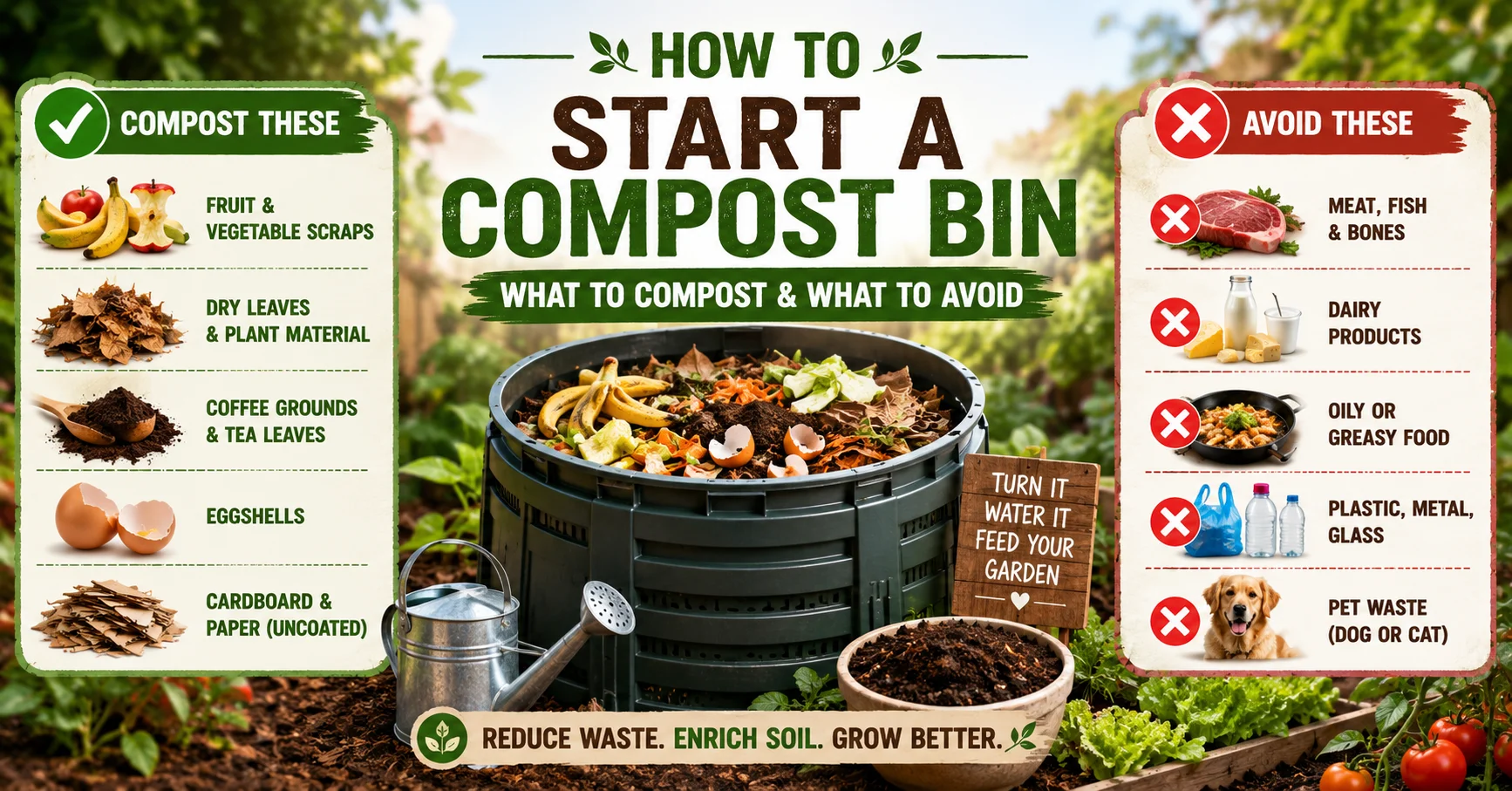
What Can You Put in a Compost Bin?
Many everyday household items can be composted.
Kitchen Waste
- Fruit peels
- Vegetable scraps
- Coffee grounds
- Tea bags (if biodegradable)
- Eggshells
Yard Waste
- Grass clippings
- Dry leaves
- Plant trimmings
- Small branches
- Garden debris
Paper Products
- Shredded newspaper
- Cardboard
- Paper towels
- Brown paper bags
These materials break down effectively and contribute to healthy compost production.
What Not to Put in a Compost Bin
One of the most important aspects of composting is knowing what should be avoided.
Meat and Fish
Meat and fish scraps can attract pests and create unpleasant odors.
Dairy Products
Milk, cheese, butter, and yogurt may attract rodents and slow the composting process.
Oily and Greasy Foods
Cooking oils and greasy leftovers interfere with decomposition and can create foul smells.
Pet Waste
Dog and cat waste may contain harmful pathogens and parasites that are unsafe for home compost systems.
Diseased Plants
Adding diseased plants can spread diseases throughout your garden when the compost is used.
Weeds with Seeds
Certain weed seeds can survive the composting process and spread throughout your garden.
Coal or Charcoal Ash
These materials may contain substances that are harmful to plants.
Plastic, Glass, and Metal
Non-organic materials do not decompose and should never be added to a compost bin.
Chemically Treated Wood
Treated wood often contains chemicals that can contaminate compost.
Common Composting Problems and Solutions
Bad Odors
A healthy compost pile should smell earthy.
If the pile smells bad:
- Add more brown materials
- Improve airflow by turning the pile
- Reduce excess moisture
Compost Is Too Dry
If decomposition seems slow, the pile may be too dry.
Solution:
- Add water gradually
- Include more green materials
Compost Is Too Wet
A soggy pile lacks oxygen and decomposes slowly.
Solution:
- Add dry leaves or cardboard
- Turn the pile regularly
Pests in the Compost
To discourage pests:
- Avoid meat and dairy products
- Cover food scraps with brown materials
- Use a closed compost bin
How Long Does Composting Take?
The composting timeline depends on temperature, moisture, materials, and maintenance.
Generally:
- Active composting: 2–6 months
- Passive composting: 6–12 months
Regular turning and proper moisture levels can significantly speed up decomposition.
How to Know When Compost Is Ready
Finished compost has several recognizable characteristics:
- Dark brown or black color
- Crumbly texture
- Earthy smell
- No visible food scraps
At this stage, it is ready to be used in gardens, flower beds, lawns, and potted plants.
How to Use Finished Compost
Garden Beds
Mix compost into garden soil before planting.
Potted Plants
Blend compost with potting soil to improve nutrient content.
Lawn Care
Spread a thin layer over your lawn to improve soil quality.
Mulching
Apply compost around plants to help retain moisture and suppress weeds.
Final Thoughts
Starting a compost bin is one of the simplest ways to reduce household waste and create a valuable resource for your garden. By understanding the balance between green and brown materials and knowing what should and should not go into a compost pile, even beginners can produce high-quality compost at home.
With a little patience and regular maintenance, your kitchen scraps and yard waste can be transformed into nutrient-rich compost that supports healthier plants, improves soil quality, and contributes to a more sustainable environment. Composting is not just a gardening practice—it’s a small but meaningful step toward reducing waste and protecting the planet.
Frequently Asked Questions (FAQs)
1. Can I compost fruit and vegetable peels?
Yes. Fruit and vegetable scraps are excellent compost materials and break down quickly.
2. How often should I turn my compost pile?
Turning the pile every one to two weeks helps improve airflow and speeds up decomposition.
3. Why does my compost smell bad?
Bad odors usually indicate excess moisture or too many green materials. Add more brown materials and turn the pile.
4. Can I compost cooked food?
It is generally best to avoid cooked foods, especially those containing oils, dairy, or meat.
5. How long does it take to make compost?
Depending on conditions, compost can be ready in as little as two months or may take up to a year.
6. Can I compost paper and cardboard?
Yes. Shredded paper and cardboard are excellent sources of carbon and help balance green materials.
7. Is composting suitable for apartment dwellers?
Yes. Small compost bins, worm composting systems, and balcony composters can work well in limited spaces.
8. What is the ideal compost ratio?
A ratio of approximately two to three parts brown materials to one part green materials generally produces the best results.