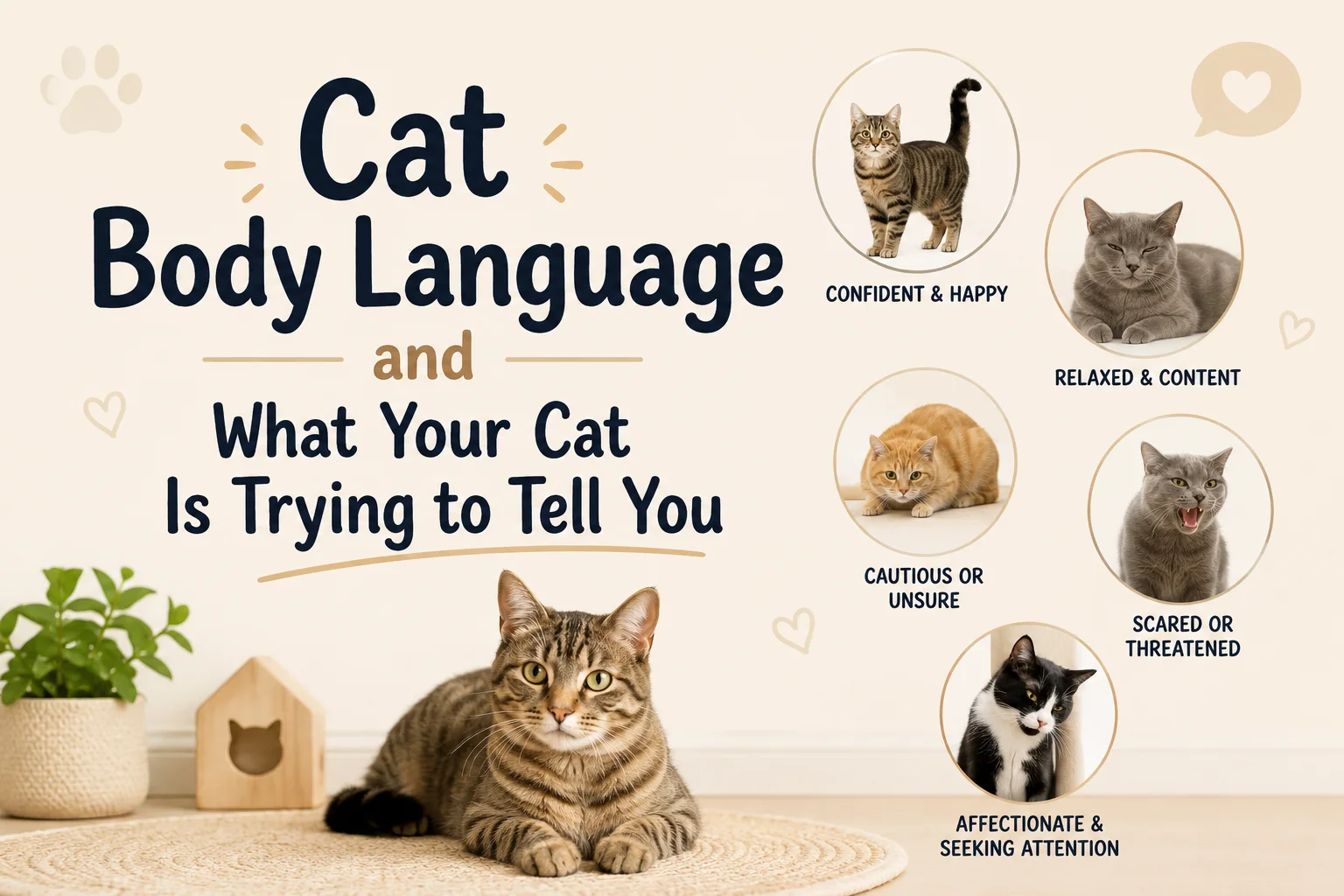
Cats may not speak our language, but they communicate constantly through their body movements, facial expressions, vocalizations, and behaviors. Understanding cat body language is one of the most valuable skills a cat owner can develop. By learning to interpret your feline friend’s signals, you can strengthen your bond, reduce misunderstandings, and ensure your cat feels safe, comfortable, and loved.
Unlike dogs, whose emotions are often more obvious, cats communicate in subtle ways. A flicking tail, flattened ears, slow blink, or specific posture can reveal whether your cat is happy, anxious, playful, scared, or irritated. Paying attention to these signals can help you respond appropriately and improve your relationship with your pet.
This comprehensive guide explains the most common forms of cat body language and what your cat may be trying to tell you.
Why Understanding Cat Body Language Matters
Cats rely heavily on non-verbal communication.
Learning their signals helps you:
- Build trust with your cat
- Prevent scratches and bites
- Recognize stress or illness early
- Improve training and socialization
- Strengthen your relationship
When you understand your cat’s emotions, you can better meet their physical and emotional needs.
How Cats Communicate
Cats communicate through several channels:
Body Posture
A cat’s overall stance often provides the clearest indication of its mood.
Tail Position
A cat’s tail is one of the most expressive parts of its body.
Ear Movements
Ear positioning can reveal alertness, fear, curiosity, or aggression.
Eyes and Facial Expressions
Cats use their eyes extensively to communicate trust and emotions.
Vocalizations
Meows, purrs, chirps, growls, and hisses all carry different meanings.
Understanding these signals together provides the most accurate interpretation.
Understanding Cat Tail Language
A cat’s tail often acts as an emotional barometer.
Tail Held High
A tail standing straight up typically indicates:
- Confidence
- Happiness
- Friendliness
This is often seen when cats greet people they trust.
Tail Curved Like a Question Mark
A slightly curved tail usually signals:
- Playfulness
- Curiosity
- Friendly intentions
Your cat may be inviting interaction.
Puffed-Up Tail
A fluffy, enlarged tail usually indicates:
- Fear
- Alarm
- Defensive behavior
Your cat is trying to appear larger and more intimidating.
Tail Wrapped Around You
When a cat wraps its tail around your legs or arm, it often means:
- Affection
- Trust
- Social bonding
This behavior is similar to a human hug.
Rapid Tail Flicking
Fast tail movements may signal:
- Irritation
- Frustration
- Overstimulation
It’s often best to stop petting at this point.
Slow Tail Swishing
A slow-moving tail may indicate:
- Focus
- Hunting instincts
- Concentration
You may notice this when your cat watches birds or toys.
What Cat Ear Positions Mean
A cat’s ears provide important clues about their emotional state.
Forward-Facing Ears
This usually means:
- Interest
- Curiosity
- Relaxation
Your cat is paying attention to its surroundings.
Sideways Ears
Sometimes called “airplane ears,” this position may indicate:
- Uncertainty
- Nervousness
- Mild irritation
Flattened Ears
Ears pinned tightly against the head often signal:
- Fear
- Aggression
- Extreme stress
Give your cat space if you notice this posture.
Rotating Ears
Cats can move their ears independently.
Constant ear movement often indicates:
- Alertness
- Monitoring multiple sounds
Understanding Cat Eyes and Facial Expressions
Cats communicate a great deal through their eyes.
Slow Blinking
A slow blink is often called a “cat kiss.”
It usually means:
- Trust
- Comfort
- Affection
You can return the gesture by blinking slowly at your cat.
Wide Eyes
Large pupils and wide eyes may indicate:
- Excitement
- Fear
- High alertness
Context helps determine the exact meaning.
Narrowed Eyes
Partially closed eyes often suggest:
- Relaxation
- Contentment
- Security
Direct Staring
A prolonged stare may indicate:
- Curiosity
- Caution
- Territorial behavior
Some cats perceive direct eye contact as threatening.
Reading Cat Body Posture
A cat’s overall body position provides valuable insight.
Relaxed Posture
Signs include:
- Loose body
- Soft facial muscles
- Calm tail
This indicates a happy and comfortable cat.
Curled-Up Sleeping Position
A curled sleeping cat often feels:
- Safe
- Secure
- Comfortable
Belly Exposure
A cat showing its belly may indicate trust.
However, this does not always mean your cat wants a belly rub.
Many cats expose their stomachs while remaining protective of that area.
Crouched Position
A low crouch may signal:
- Fear
- Anxiety
- Preparation to flee
Arched Back
An arched back can have different meanings.
Combined with:
- Puffed fur = fear
- Relaxed posture = stretching
Context matters greatly.
Understanding Cat Vocalizations
Cats use various sounds to communicate with humans.
Meowing
Adult cats primarily meow to communicate with people.
Possible meanings include:
- Hunger
- Attention-seeking
- Greeting
- Boredom
Purring
Purring often indicates:
- Contentment
- Relaxation
However, cats may also purr when:
- Injured
- Sick
- Stressed
Chirping and Trilling
These sounds often express:
- Excitement
- Greeting behavior
- Hunting interest
Hissing
A hiss usually means:
- Fear
- Defensive behavior
- Warning
Respect your cat’s boundaries when hissing occurs.
Growling
Growling often signals:
- Aggression
- Fear
- Territorial concerns
Yowling
Excessive yowling may indicate:
- Stress
- Pain
- Mating behavior
- Medical issues
Persistent yowling should be discussed with a veterinarian.
Signs Your Cat Is Happy
Happy cats typically display:
- Upright tail
- Slow blinking
- Purring
- Relaxed posture
- Kneading behavior
Kneading
Cats often push their paws rhythmically against soft surfaces.
This behavior originates from kittenhood and usually indicates comfort and security.
Signs Your Cat Is Stressed
Stress can affect both behavior and health.
Watch for:
- Hiding frequently
- Flattened ears
- Excessive grooming
- Reduced appetite
- Aggressive behavior
Identifying stress early can prevent long-term issues.
Signs Your Cat Is Scared
Fearful cats may display:
- Puffed fur
- Wide eyes
- Flattened ears
- Hissing
- Attempting to hide
Avoid forcing interaction when your cat feels frightened.
Signs Your Cat Wants Attention
Your cat may seek interaction by:
- Rubbing against you
- Meowing repeatedly
- Following you around
- Sitting on your lap
- Bringing toys
These behaviors often indicate affection and social bonding.
Understanding Rubbing Behavior
Cats frequently rub their faces and bodies on people and objects.
This behavior:
- Marks territory
- Deposits scent
- Shows affection
When your cat rubs against you, it’s often a sign of trust and acceptance.
Why Cats Head-Butt People
Head-butting, also called bunting, is a positive behavior.
It usually means:
- Affection
- Trust
- Social bonding
Cats use scent glands on their heads to mark familiar individuals.
Understanding Cat Play Behavior
Play is essential for physical and mental stimulation.
Common playful behaviors include:
- Pouncing
- Chasing
- Swatting
- Toy hunting
Play often mimics natural hunting instincts.
When Body Language Indicates Illness
Behavioral changes can sometimes signal health problems.
Warning signs include:
- Hiding more than usual
- Sudden aggression
- Reduced grooming
- Changes in vocalization
- Loss of appetite
Consult a veterinarian if you notice significant changes.
Tips for Better Communication With Your Cat
Respect Boundaries
Avoid forcing interaction when your cat wants space.
Learn Individual Preferences
Every cat has unique communication styles.
Use Positive Reinforcement
Reward desired behaviors with treats, praise, or play.
Observe Patterns
Regular observation helps you understand your cat’s personality and needs.
Common Misunderstandings About Cat Behavior
Purring Always Means Happiness
False. Cats may also purr when stressed or unwell.
Belly Exposure Means “Pet Me”
Not always. It often signifies trust rather than an invitation for touch.
Tail Wagging Equals Happiness
Unlike dogs, tail wagging in cats often indicates irritation or overstimulation.
Final Thoughts
Understanding cat body language is the key to building a stronger and more trusting relationship with your feline companion. From tail positions and ear movements to vocalizations and facial expressions, cats constantly communicate their feelings and needs. By paying close attention to these signals, you can better understand what your cat is trying to tell you and respond in ways that make them feel safe, respected, and loved.
The more time you spend observing your cat, the easier it becomes to recognize their unique communication style. Every cat is different, but learning the basics of feline body language will help you become a more attentive and confident pet owner.
Frequently Asked Questions (FAQs)
1. What does it mean when a cat slowly blinks at you?
A slow blink usually indicates trust, affection, and relaxation.
2. Why does my cat flick its tail while I’m petting it?
Rapid tail flicking often signals irritation or overstimulation.
3. Does purring always mean a cat is happy?
No. Cats may also purr when stressed, frightened, or experiencing discomfort.
4. Why does my cat show its belly?
Belly exposure often indicates trust, though it doesn’t always mean your cat wants a belly rub.
5. What does a puffed-up tail mean?
A puffed tail usually signals fear, alarm, or a defensive response.
6. Why does my cat rub against my legs?
This behavior often indicates affection, trust, and scent-marking.
7. What do flattened ears mean?
Flattened ears commonly signal fear, stress, or aggression.
8. How can I tell if my cat is stressed?
Common signs include hiding, excessive grooming, reduced appetite, flattened ears, and changes in behavior.