If you’re a cat owner, you’ve probably discovered scratch marks on furniture, carpets, curtains, or even walls. While this behavior can be frustrating, scratching is a completely natural and essential part of a cat’s life. Contrary to popular belief, cats don’t scratch to be destructive or to annoy their owners. Scratching serves several important physical and emotional purposes for felines.
Understanding why cats scratch is the first step toward managing the behavior effectively. Rather than using punishment—which can damage your relationship with your pet—there are positive and humane ways to redirect scratching toward appropriate surfaces.
In this comprehensive guide, we’ll explore the reasons cats scratch, common scratching triggers, and proven methods to redirect the behavior without causing stress or fear.
Why Do Cats Scratch?
Scratching is an instinctive behavior deeply rooted in feline biology.
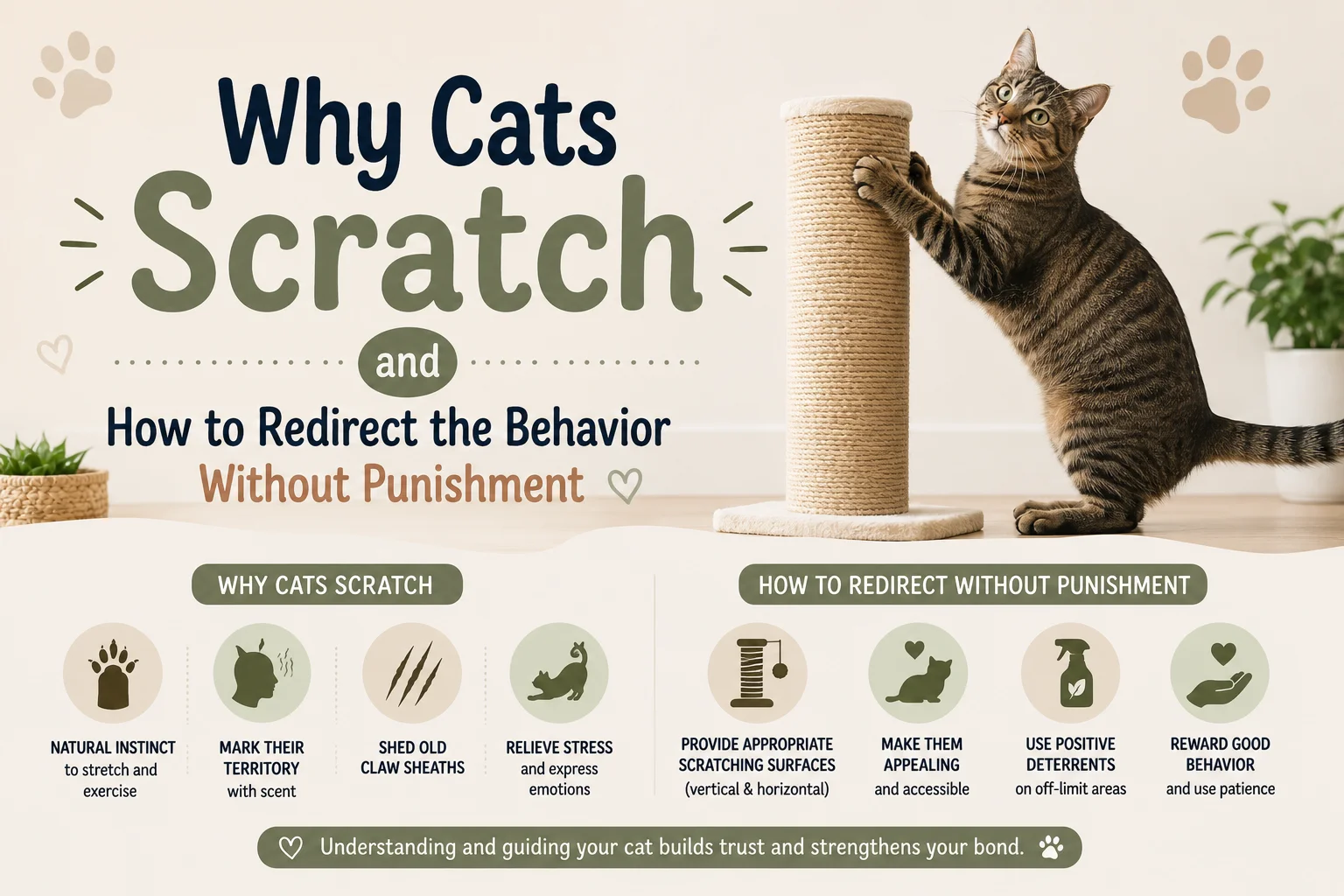
Cats scratch for several important reasons:
- To maintain healthy claws
- To mark territory
- To stretch muscles
- To relieve stress
- To communicate with other animals
- To express excitement
Because scratching is a natural need, the goal should never be to stop it completely. Instead, cat owners should provide appropriate outlets for scratching behavior.
The Importance of Scratching for Cats
Scratching plays a critical role in a cat’s physical and emotional well-being.
Claw Maintenance
A cat’s claws continuously grow.
Scratching helps:
- Remove dead outer claw layers
- Keep claws sharp
- Maintain claw health
Without opportunities to scratch, claw maintenance becomes difficult.
Stretching and Exercise
When cats scratch, they often stretch their:
- Back muscles
- Shoulder muscles
- Legs
- Paws
This activity helps maintain flexibility and overall physical health.
Stress Relief
Many cats scratch when they feel:
- Excited
- Frustrated
- Anxious
- Energetic
Scratching can serve as an emotional release.
Territory Marking
Cats have scent glands in their paws.
When they scratch, they leave:
- Visual marks
- Scent signals
These markings communicate ownership and familiarity.
Why Cats Scratch Furniture
Furniture often becomes a target because it provides qualities cats enjoy.
Ideal Texture
Many sofas and chairs offer:
- Resistance
- Durable fabric
- Vertical surfaces
These features make furniture attractive for scratching.
Prominent Location
Cats prefer scratching areas that are visible and meaningful within their territory.
Furniture is often located in:
- Living rooms
- Family spaces
- Frequently used areas
These locations help cats mark territory effectively.
Owner Attention
Sometimes scratching accidentally becomes reinforced because it gets an immediate reaction from owners.
Even negative attention can encourage repeated behavior.
Common Household Items Cats Scratch
Cats may target:
- Sofas
- Chairs
- Carpets
- Curtains
- Wooden furniture
- Door frames
- Beds
- Rugs
The choice often depends on texture, location, and personal preference.
Why Punishment Doesn’t Work
Many owners attempt to stop scratching through punishment.
Examples include:
- Yelling
- Spraying water
- Physical corrections
- Startling noises
These methods are generally ineffective and can create additional problems.
Increased Anxiety
Punishment may cause:
- Fear
- Stress
- Confusion
A stressed cat may scratch even more frequently.
Damaged Trust
Cats may begin associating their owner with unpleasant experiences.
This can weaken your bond.
Failure to Address the Cause
Punishment does not eliminate the natural need to scratch.
The behavior simply shifts elsewhere.
Understanding Your Cat’s Scratching Preferences
Before redirecting scratching behavior, observe your cat carefully.
Pay attention to:
Surface Preference
Does your cat prefer:
- Carpet
- Fabric
- Wood
- Cardboard
- Sisal rope
Position Preference
Some cats prefer:
- Vertical scratching
- Horizontal scratching
- Angled scratching
Location Preference
Cats often scratch in areas they use frequently.
Understanding preferences helps you choose effective alternatives.
Provide Appropriate Scratching Posts
The most effective solution is offering acceptable scratching surfaces.
Vertical Scratching Posts
These work best for cats that enjoy stretching upward.
Look for posts that are:
- Tall enough for full-body stretches
- Stable
- Covered with durable scratching material
Horizontal Scratchers
Some cats prefer scratching flat surfaces.
Examples include:
- Cardboard scratch pads
- Floor scratchers
Multiple Scratching Options
Many cats appreciate variety.
Provide several scratching stations throughout the home.
Choosing the Best Scratching Materials
Popular scratching materials include:
Sisal Rope
Highly durable and favored by many cats.
Cardboard
Affordable and widely loved.
Carpet
Some cats enjoy carpet-like textures.
Wood
Certain cats prefer natural wooden surfaces.
Experiment to determine your cat’s favorite material.
Strategic Placement of Scratching Posts
Placement is just as important as the scratching post itself.
Near Existing Scratching Areas
Place posts close to:
- Furniture corners
- Favorite scratching spots
This makes the transition easier.
Near Sleeping Areas
Cats often stretch and scratch after waking up.
Positioning a scratching post nearby increases usage.
In Social Areas
Cats like marking territory in important household locations.
Place scratching options in commonly used rooms.
Encourage Your Cat to Use Scratching Posts
Simply purchasing a scratching post may not be enough.
Use Catnip
Many cats are attracted to catnip.
Sprinkling a small amount on the post may increase interest.
Interactive Play
Encourage interaction around the scratching area using:
- Feather toys
- Wand toys
- Treats
Reward Usage
Whenever your cat uses the scratching post:
- Offer praise
- Provide treats
- Give attention
Positive reinforcement encourages repetition.
Protecting Furniture During Training
While redirecting behavior, protect vulnerable items.
Furniture Covers
Use:
- Blankets
- Throws
- Slipcovers
Double-Sided Tape
Many cats dislike sticky surfaces.
Temporary tape can discourage scratching.
Furniture Guards
Commercial protectors can shield furniture without harming your cat.
Keep Your Cat Mentally Stimulated
Bored cats often scratch more frequently.
Provide enrichment through:
Interactive Toys
Examples include:
- Puzzle feeders
- Feather wands
- Motion toys
Climbing Opportunities
Cat trees and shelves satisfy natural climbing instincts.
Daily Play Sessions
Regular play helps release energy and reduce unwanted behaviors.
Trim Your Cat’s Claws Regularly
Routine claw maintenance can minimize damage.
Benefits of Nail Trimming
- Reduced scratching impact
- Less furniture damage
- Improved claw health
Use cat-specific nail trimmers and proceed carefully.
Why Declawing Is Not Recommended
Declawing is sometimes considered by frustrated owners.
However, most veterinary and animal welfare organizations strongly discourage the procedure.
Declawing Is Not a Nail Trim
The surgery involves amputating part of each toe.
Potential Consequences
Declawing may cause:
- Chronic pain
- Behavioral problems
- Anxiety
- Litter box issues
Humane alternatives are always preferable.
Addressing Stress-Related Scratching
Sometimes scratching increases due to stress.
Common triggers include:
- Moving homes
- New pets
- New family members
- Changes in routine
Reduce Environmental Stress
Help your cat by:
- Maintaining consistency
- Providing hiding spaces
- Offering vertical territory
- Using calming products if recommended
Multi-Cat Households and Scratching
In homes with multiple cats, scratching may increase due to territorial concerns.
Ensure each cat has:
- Their own scratching options
- Separate resting areas
- Adequate resources
This reduces competition and stress.
Signs the Scratching Problem May Require Professional Help
Consult a veterinarian or feline behavior specialist if:
- Scratching becomes excessive
- Behavior changes suddenly
- Aggression develops
- Stress signs increase significantly
Medical conditions and anxiety disorders should be ruled out.
Creating a Cat-Friendly Home
A cat-friendly environment naturally reduces destructive scratching.
Include:
- Scratching posts
- Climbing structures
- Interactive toys
- Window perches
- Comfortable resting spots
Meeting your cat’s natural needs helps prevent behavioral problems.
Common Mistakes Cat Owners Make
Buying One Small Scratching Post
Many cats need multiple scratching options.
Placing Posts in Unused Areas
Cats prefer scratching in meaningful locations.
Punishing the Cat
Punishment creates stress without solving the problem.
Removing All Scratching Opportunities
Cats need acceptable places to scratch.
Ignoring Preferences
Every cat has unique scratching habits.
Final Thoughts
Scratching is a normal, healthy, and necessary behavior for cats. Rather than viewing scratching as a problem, it’s helpful to understand the important role it plays in claw maintenance, stretching, communication, and emotional well-being. Punishing your cat for scratching is rarely effective and may create fear, stress, and additional behavioral challenges.
The most successful approach involves providing appropriate scratching surfaces, understanding your cat’s preferences, rewarding desired behavior, and creating a stimulating environment. With patience, consistency, and positive reinforcement, you can protect your furniture while allowing your cat to express its natural instincts in a healthy and acceptable way.
Frequently Asked Questions (FAQs)
1. Why do cats scratch furniture?
Cats scratch furniture because it provides a satisfying texture, allows territory marking, and fulfills their natural scratching instincts.
2. Is scratching a sign of bad behavior?
No. Scratching is a normal and healthy feline behavior.
3. How can I stop my cat from scratching my couch?
Provide attractive scratching alternatives nearby and use furniture protectors while encouraging use of scratching posts.
4. Do scratching posts really work?
Yes. Most cats use scratching posts when they match their preferred texture, position, and location.
5. Should I punish my cat for scratching?
No. Punishment can increase stress and damage trust without solving the underlying issue.
6. How often should I trim my cat’s nails?
Most cats benefit from nail trimming every two to four weeks.
7. Is declawing safe?
Declawing is a major surgical procedure that can cause long-term physical and behavioral problems and is generally not recommended.
8. Why does my cat scratch more during stressful situations?
Scratching helps cats relieve stress and mark territory when they feel uncertain or anxious.