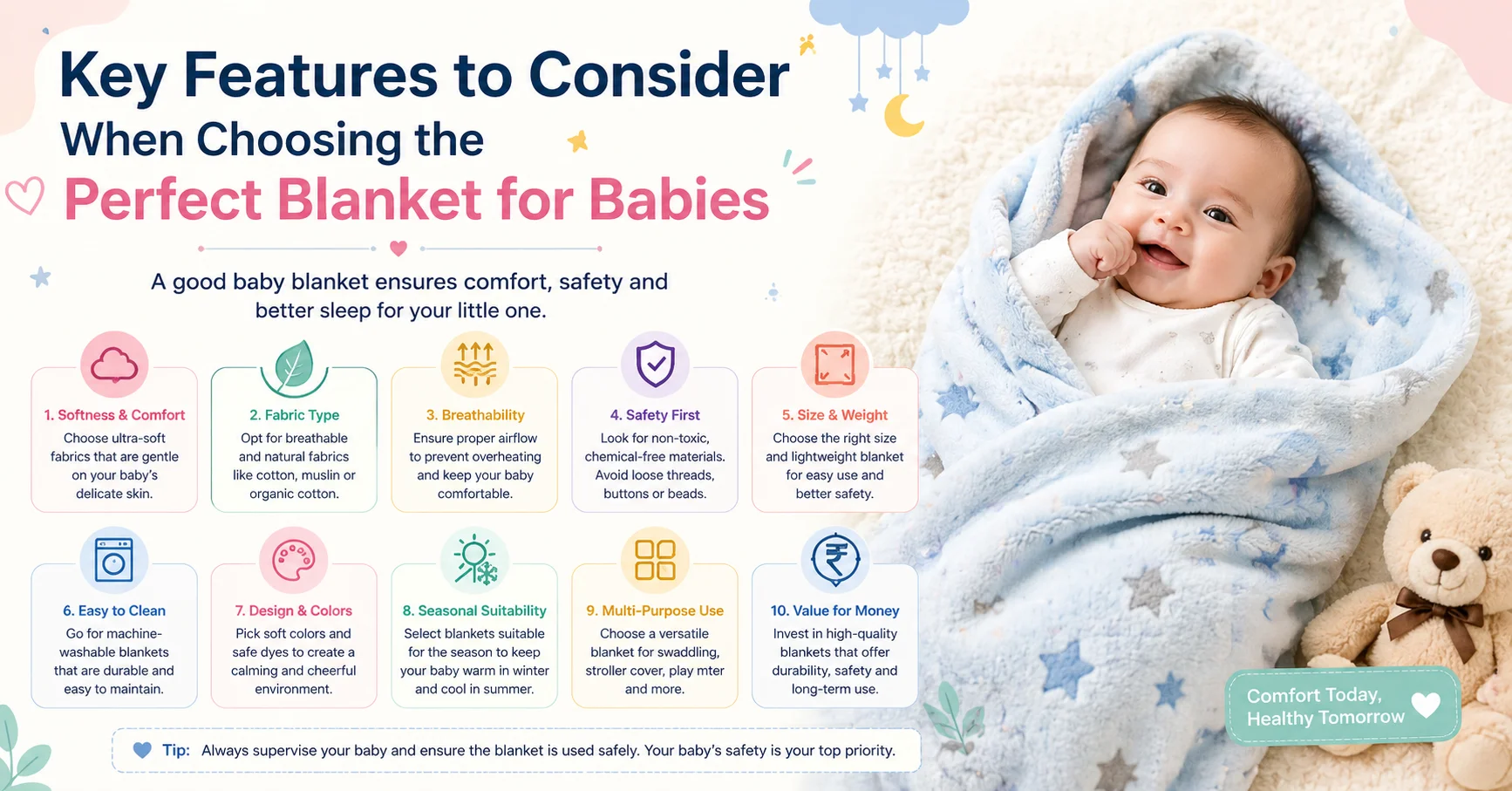
Choosing the perfect blanket for your baby is more than just picking a cute design. It plays a crucial role in your baby’s comfort, safety, and overall well-being. Since babies have delicate skin and are sensitive to temperature changes, selecting the right blanket becomes an important decision for every parent. In this guide, we will explore the key features to consider when choosing the perfect blanket for babies, helping you make a safe and smart choice.
1. Softness and Comfort
The first and most important factor is softness. A baby’s skin is extremely delicate and can easily get irritated by rough fabrics. That’s why you should always choose blankets made from ultra-soft materials.
Look for:
- Smooth texture
- Gentle fabric that doesn’t scratch
- Lightweight feel
Soft blankets ensure your baby feels cozy and comfortable, promoting better sleep. Materials like cotton and muslin are excellent choices because they are naturally soft and soothing.
2. Fabric Type and Material
The type of fabric used in a baby blanket directly impacts your baby’s comfort and health. Always prioritize natural and breathable fabrics.
Best fabric options:
- Cotton: Soft, breathable, and perfect for daily use
- Muslin: Lightweight and ideal for warmer climates
- Organic cotton: Free from harmful chemicals and dyes
Fabrics to avoid:
- Synthetic materials like polyester (can cause irritation and overheating)
Choosing the right material ensures your baby stays comfortable throughout the day and night.
3. Breathability and Temperature Control
Babies cannot regulate their body temperature as effectively as adults. This makes breathability a critical factor when choosing a blanket.
A good baby blanket should:
- Allow proper airflow
- Prevent overheating
- Keep the baby warm without making them sweaty
In a country like India, where temperatures can vary, lightweight and breathable blankets are ideal. Muslin and cotton blankets are especially suitable for maintaining a balanced temperature.
4. Safety and Non-Toxic Materials
Safety should always come first when buying anything for your baby. Blankets should be made from non-toxic, baby-safe materials.
Check for:
- Chemical-free dyes
- Hypoallergenic fabrics
- No loose threads or embellishments
Avoid blankets with buttons, beads, or decorative elements that could pose a choking hazard. A simple, clean design is always safer for infants.
5. Size and Weight
The size and weight of the blanket matter more than you might think. A blanket that is too heavy can make your baby uncomfortable, while one that is too large may pose safety risks.
Ideal features:
- Lightweight and easy to handle
- Appropriate size for crib, stroller, or swaddling
- Easy to fold and carry
Different sizes may be needed for different purposes, such as swaddling, sleeping, or travel.
6. Easy Maintenance and Durability
Babies can be messy, so it’s important to choose a blanket that is easy to clean. Look for blankets that are:
- Machine washable
- Quick drying
- Durable even after multiple washes
A good baby blanket should maintain its softness and quality even after frequent cleaning. This ensures long-term usability and value for money.
7. Design and Aesthetic Appeal
While safety and comfort come first, design also matters. Baby blankets come in a variety of colors, patterns, and prints.
You can choose:
- Soft pastel shades for a calming effect
- Fun prints like animals or cartoons
- Gender-neutral designs
However, avoid heavily dyed or overly bright fabrics that may contain harmful chemicals.
8. Seasonal Suitability
Not all blankets are suitable for every season. It’s important to choose a blanket based on the weather.
For summer:
- Lightweight cotton or muslin blankets
For winter:
- Slightly thicker blankets like fleece (ensure breathability)
For all seasons:
- Layering with light blankets works best
Having different blankets for different seasons ensures your baby stays comfortable year-round.
9. Multipurpose Usage
A good baby blanket should be versatile. It can be used for:
- Swaddling
- Stroller cover
- Play mat
- Nursing cover
Multipurpose blankets offer better value and convenience for parents.
10. Value for Money
While you don’t need to buy the most expensive blanket, quality should not be compromised. Investing in a good-quality blanket ensures:
- Better durability
- Enhanced comfort
- Long-term usage
Look for products that balance quality and affordability.
Also Read: The Comfort of Repetition in Daily Life
Common Mistakes to Avoid
Many parents unknowingly make mistakes while choosing baby blankets. Avoid these:
- Choosing heavy blankets for newborns
- Ignoring fabric quality
- Buying purely based on design
- Using adult blankets for babies
Being mindful of these mistakes can help ensure your baby’s safety and comfort.
Final Thoughts
Choosing the perfect baby blanket may seem simple, but it requires careful attention to detail. From softness and fabric to safety and breathability, every factor plays a role in your baby’s comfort.
Always prioritize:
- Soft and breathable materials
- Safe and chemical-free fabrics
- Lightweight and easy-to-maintain designs
By considering these key features, you can ensure that your baby stays warm, comfortable, and safe at all times.
FAQs
1. Which fabric is best for baby blankets?
Cotton and muslin are the best choices because they are soft, breathable, and gentle on a baby’s skin.
2. How many blankets does a baby need?
Ideally, you should have 3–5 blankets for different uses like sleeping, swaddling, and travel.
3. Are heavy blankets safe for babies?
No, heavy blankets can increase the risk of overheating and discomfort. Lightweight blankets are safer.
4. Can baby blankets be machine washed?
Yes, most baby blankets are machine washable. Always check the care label before washing.
5. How do I choose a blanket for different seasons?
Use lightweight blankets for summer and slightly thicker ones for winter while ensuring breathability.