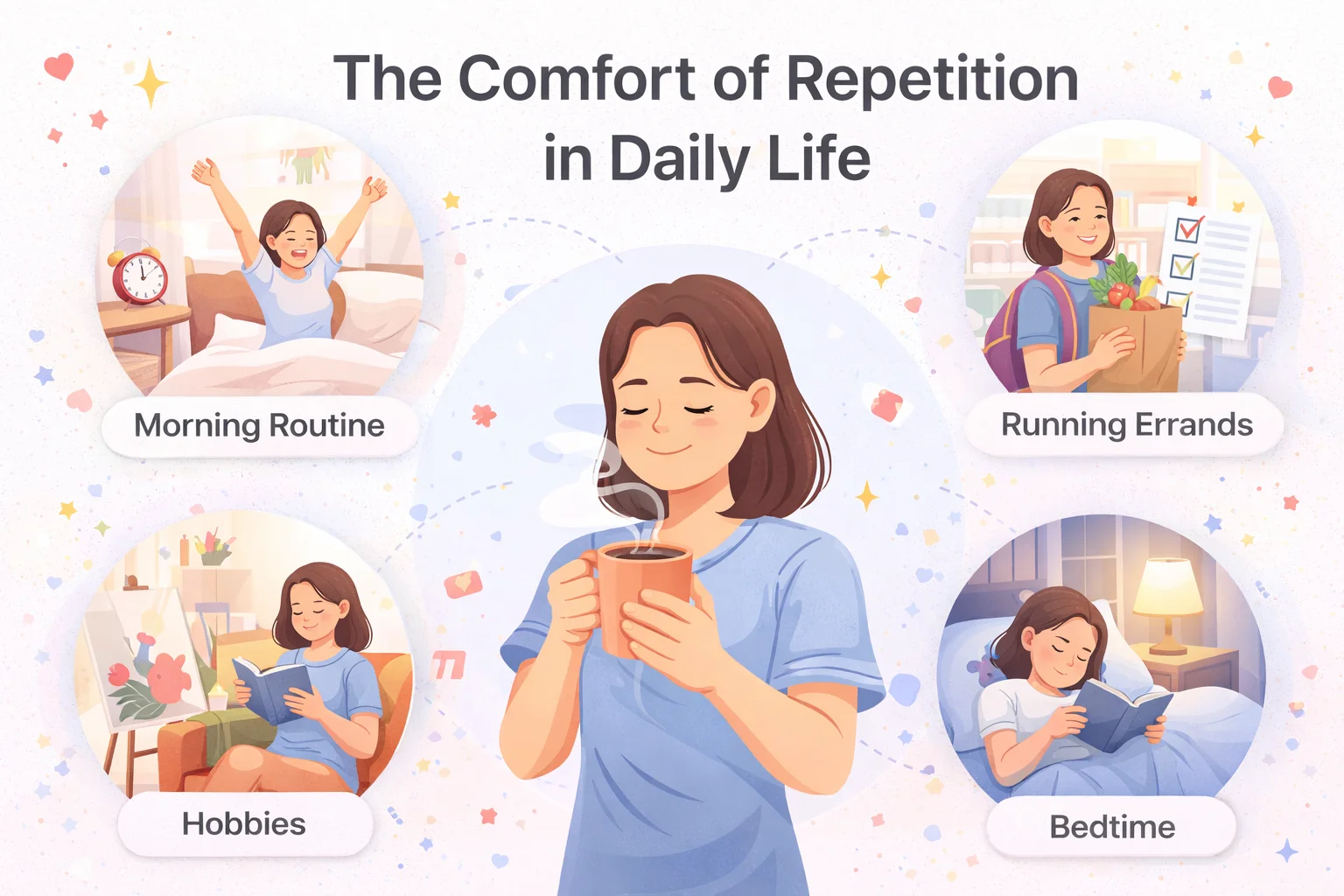
In a world that constantly pushes for change, innovation, and excitement, repetition might seem boring or unproductive. However, many people find deep comfort in repeating the same habits, routines, and activities every day. From morning rituals to daily schedules, repetition plays a powerful role in shaping our mental well-being and overall lifestyle.
Rather than being dull, repetition often creates a sense of control, peace, and stability. Let’s explore why repetition feels comforting and why it remains an essential part of modern life.
1. Creates a Sense of Stability
Life can be unpredictable, filled with sudden changes and uncertainties. Repetition offers a sense of stability in such situations. When you follow the same routine daily—waking up at a fixed time, having the same breakfast, or taking a regular walk—it creates a predictable structure.
This predictability helps reduce stress and makes life feel more manageable, even during difficult times.
2. Reduces Decision Fatigue
Every day, we make countless decisions, from small choices like what to wear to bigger ones related to work or family. Too many decisions can lead to mental exhaustion, often called decision fatigue.
Repetition eliminates the need to think about certain tasks repeatedly. When habits are automated, your brain saves energy for more important decisions. This is why many successful people stick to simple, repetitive routines.
3. Builds Strong Habits
Repetition is the foundation of habit formation. When you repeat an action consistently, it becomes automatic over time. Whether it’s exercising, reading, or maintaining a healthy diet, repetition helps turn actions into habits.
Once habits are formed, they require less effort and discipline, making it easier to maintain a healthy and productive lifestyle.
4. Provides Emotional Comfort
There is a unique emotional comfort in familiar activities. Listening to the same songs, watching favorite shows again, or revisiting old places can bring a sense of nostalgia and happiness.
Familiarity reduces anxiety because you know what to expect. This is why people often turn to repetitive activities during stressful times—they provide reassurance and emotional stability.
5. Improves Productivity
Repetition can significantly boost productivity. When tasks are repeated regularly, they become faster and more efficient. You don’t have to start from scratch each time, and you develop a rhythm that enhances performance.
For example, having a fixed work routine can help you stay focused and complete tasks more effectively without unnecessary distractions.
6. Enhances Skill Development
Practice makes perfect—and repetition is the key to mastering any skill. Whether it’s learning a new language, playing a musical instrument, or improving professional skills, repetition strengthens your abilities over time.
Each repetition builds muscle memory and deepens understanding, leading to continuous improvement.
7. Creates a Safe Mental Space
In a fast-paced world full of constant updates and changes, repetition acts as a mental anchor. It gives your mind a break from chaos and helps you feel grounded.
Simple repetitive actions like journaling, walking, or even organizing your workspace can create a calming effect and improve mental clarity.
8. Encourages Mindfulness
Repetitive activities often allow you to slow down and focus on the present moment. Tasks like cooking, cleaning, or gardening can become meditative when done regularly.
This mindfulness reduces stress and helps you stay connected with your thoughts and emotions.
9. Strengthens Identity and Lifestyle
Your daily routines reflect who you are. Repeated actions shape your identity over time. For example, if you exercise daily, you start seeing yourself as a healthy and disciplined person.
Repetition reinforces your values and helps you build a consistent lifestyle aligned with your goals.
10. Offers Comfort in Uncertain Times
During challenging periods, people naturally turn to routines and repetition for comfort. It provides a sense of normalcy when everything else feels uncertain.
Even small routines, like having tea at the same time each day or following a bedtime ritual, can bring a feeling of control and calmness.
Is Too Much Repetition a Problem?
While repetition has many benefits, too much of it can lead to boredom or lack of growth. It’s important to strike a balance between routine and variety.
Adding small changes or trying new experiences occasionally can keep life exciting while still maintaining the comfort of repetition.
Conclusion
The comfort of repetition in daily life is often underestimated. In reality, it plays a crucial role in reducing stress, improving productivity, and building strong habits. While the world continues to change rapidly, repetition provides a sense of stability and control.
By embracing simple routines and repetitive actions, you can create a more balanced, peaceful, and fulfilling life.
FAQs
1. Why do repetitive routines feel comforting?
Repetitive routines create predictability, which reduces stress and gives a sense of control over daily life.
2. Can repetition improve mental health?
Yes, repetition can improve mental health by reducing anxiety, creating stability, and promoting mindfulness.
3. Is repetition the same as boredom?
Not necessarily. While repetition can feel boring at times, it often provides comfort and helps build productive habits.
4. How can I balance repetition and change?
You can maintain core routines while introducing small variations or new activities occasionally to keep things interesting.
5. What are examples of healthy repetition?
Examples include daily exercise, reading, journaling, consistent sleep schedules, and mindful practices like meditation.
Why People Stay Broke Despite Earning Well (And How to Fix It)