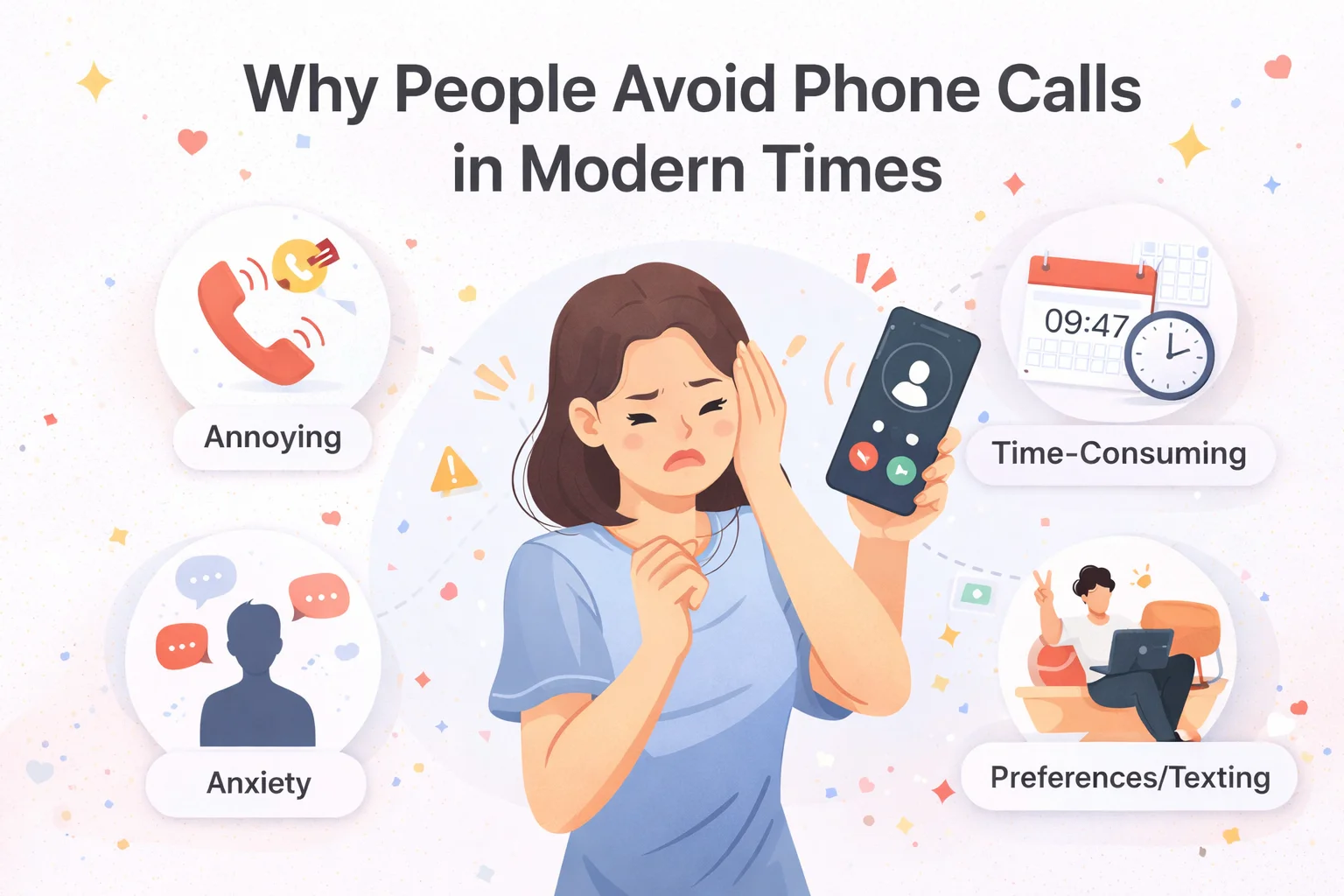
In today’s fast-paced digital world, communication has evolved dramatically. While phone calls were once the primary way to stay connected, many people now prefer texting, messaging apps, or emails. If you’ve ever ignored a ringing phone or felt hesitant to make a call, you’re not alone. Avoiding phone calls has become a common behavior, especially among younger generations.
Let’s explore the key reasons why people avoid phone calls in modern times and what this shift says about our changing communication habits.
1. Convenience of Texting and Messaging Apps
One of the biggest reasons people avoid phone calls is convenience. Texting allows individuals to respond at their own pace without interrupting their current activities. Messaging apps make it easy to send quick updates, share images, or communicate without the pressure of an immediate response.
Unlike phone calls, texts don’t require both people to be available at the same time. This flexibility makes messaging a preferred choice for busy lifestyles.
2. Fear of Unexpected Conversations
Phone calls can feel unpredictable. When you receive a call, you don’t always know what the conversation will be about or how long it will last. This uncertainty can make people uncomfortable.
Text messages, on the other hand, allow people to process information and respond thoughtfully. This sense of control reduces anxiety and makes communication less stressful.
3. Social Anxiety and Communication Pressure
Social anxiety plays a significant role in avoiding phone calls. Speaking on the phone requires real-time interaction, which can feel overwhelming for some people. There’s pressure to respond quickly, maintain conversation flow, and interpret tone correctly.
Texting removes much of this pressure. It gives individuals time to think before replying and reduces the fear of saying something wrong.
4. Preference for Written Communication
Many people simply prefer written communication over verbal conversations. Texting allows for clarity and documentation. You can re-read messages, check details, and avoid misunderstandings.
This is especially useful for important conversations, such as work-related discussions or sharing information. Written communication feels more organized and reliable.
5. Multitasking and Productivity
Modern lifestyles demand multitasking. Phone calls require full attention, making it difficult to do other tasks simultaneously. In contrast, texting allows people to communicate while working, commuting, or relaxing.
This ability to multitask makes messaging more efficient and aligns better with busy schedules.
6. Avoiding Long Conversations
Phone calls can sometimes turn into long, unplanned conversations. Many people avoid calls because they don’t want to spend too much time talking, especially when the information could be shared quickly through a message.
Texting provides control over the length of the conversation. You can keep it short and to the point.
7. Rise of Voice Notes and Alternatives
Interestingly, while people avoid calls, they are still open to voice communication in other forms. Voice notes have become popular because they combine the personal touch of voice with the convenience of asynchronous communication.
You can record a message and send it without requiring the other person to respond immediately. This hybrid approach is becoming a preferred alternative to phone calls.
8. Privacy and Personal Space
Phone calls can feel intrusive, especially when received at inconvenient times. Many people value their personal space and prefer communication methods that respect their boundaries.
Text messages allow individuals to choose when and how to respond, giving them greater control over their time and privacy.
9. Changing Cultural Norms
Communication norms have changed significantly over the years. Younger generations have grown up with smartphones and messaging apps, making texting their default mode of communication.
For them, phone calls may feel outdated or unnecessary unless it’s something urgent or important.
10. Better Record Keeping
Text messages provide a record of conversations that can be referred back to later. This is especially useful for remembering details like addresses, instructions, or plans.
Phone calls don’t offer this advantage unless they are recorded, which is not always practical or legal.
Is Avoiding Phone Calls a Bad Thing?
Not necessarily. Avoiding phone calls is more about adapting to new communication styles than a negative behavior. However, it’s important to recognize that phone calls still have their place.
For urgent matters, emotional conversations, or complex discussions, a phone call can be more effective than texting. The key is finding a balance between different communication methods.
Why People Stay Broke Despite Earning Well (And How to Fix It)
Conclusion
The shift away from phone calls reflects how technology has changed the way we interact. Convenience, control, and comfort are major factors driving this trend. While texting and messaging apps dominate modern communication, phone calls remain valuable in certain situations.
Understanding these preferences can help improve communication and reduce misunderstandings in both personal and professional relationships.
FAQs
1. Why do people feel anxious about phone calls?
People often feel anxious because phone calls require immediate responses and real-time interaction, which can create pressure and fear of saying the wrong thing.
2. Are phone calls becoming outdated?
Phone calls are not completely outdated, but they are used less frequently as messaging apps and texting have become more convenient alternatives.
3. Why do younger generations avoid phone calls more?
Younger generations grew up with digital communication tools, making texting and messaging their preferred and more natural way to communicate.
4. Is texting better than calling?
It depends on the situation. Texting is better for quick, non-urgent communication, while calling is more effective for urgent or emotional conversations.
5. How can I overcome phone call anxiety?
Start with short calls, prepare what you want to say, and practice regularly. Over time, your confidence in handling phone conversations will improve.