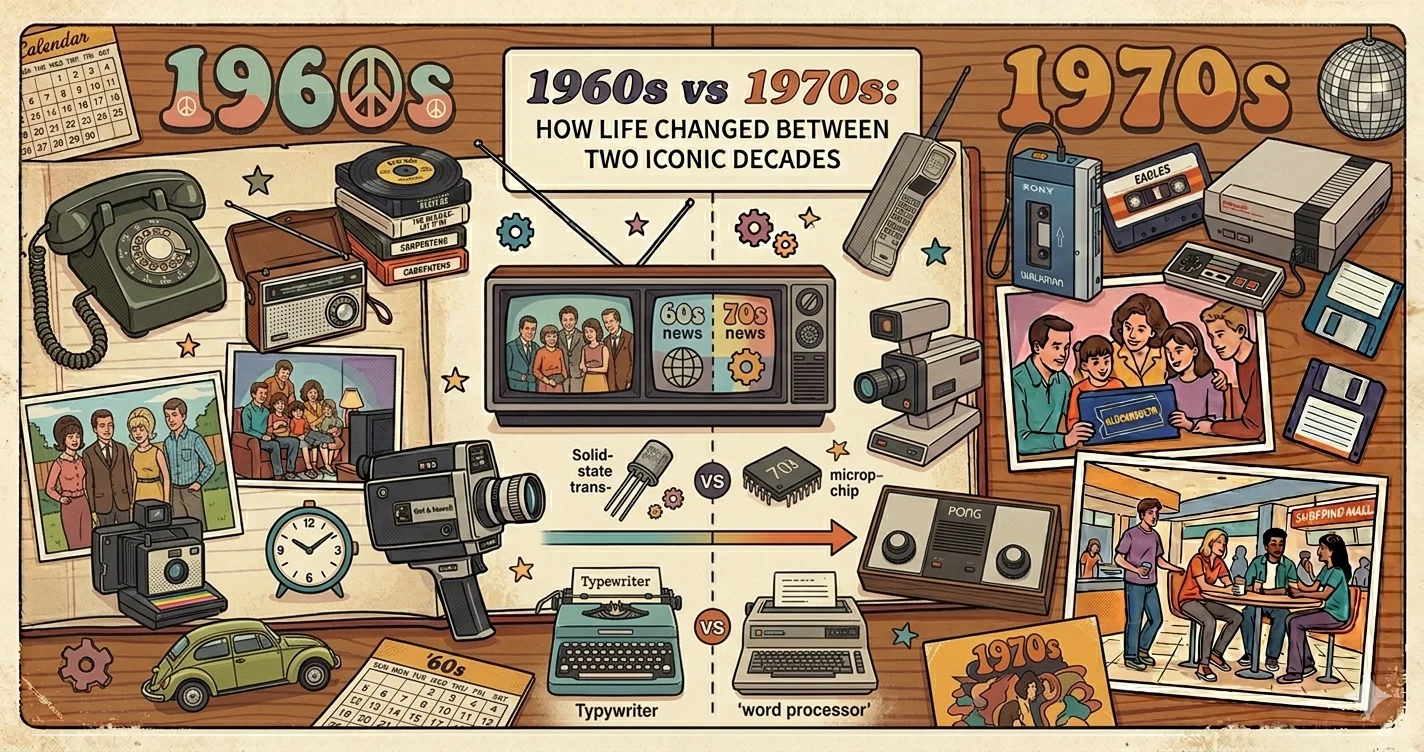
The 1960s and 1970s were among the most transformative decades in modern history. Both periods witnessed major social, cultural, and technological changes that influenced generations to come. However, despite being only ten years apart, life in the 1960s was significantly different from life in the 1970s.
The 1960s were a decade of optimism, social movements, and cultural revolutions. The 1970s built upon these changes while introducing new lifestyles, entertainment trends, and economic challenges. Together, these decades reshaped society and paved the way for the modern world.
Understanding Life in the 1960s
The 1960s are often remembered as a decade of change and idealism. Many countries experienced economic growth, and young people increasingly challenged traditional social norms.
Life in the 1960s was centered around:
- Family gatherings
- Community activities
- Television and radio
- Printed newspapers
- Face-to-face communication
Technology existed but was limited compared to later decades. Most households had a television, a telephone, and household appliances, but personal computers and mobile devices were still decades away.
Understanding Life in the 1970s
The 1970s inherited many cultural changes from the 1960s but developed a more independent and individualistic identity.
People became increasingly interested in:
- Self-expression
- New music styles
- Fashion experimentation
- Consumer electronics
- Modern lifestyles
The decade saw rapid changes in entertainment, fashion, and popular culture.
1. Social Attitudes and Culture
1960s
The 1960s were defined by social movements and cultural transformation.
Major themes included:
- Civil rights movements
- Youth activism
- Peace movements
- Social equality campaigns
Young people challenged traditional values and advocated for greater freedom and opportunity.
1970s
The social changes of the 1960s continued, but people focused more on personal lifestyles and individual expression.
Many individuals became interested in:
- Personal growth
- Self-discovery
- Alternative lifestyles
- New forms of entertainment
Key Difference
The 1960s focused on changing society, while the 1970s focused more on personal identity and lifestyle.
2. Technology
1960s
Technology was relatively simple.
Most households used:
- Black-and-white televisions
- Landline telephones
- Record players
- Film cameras
Computers existed primarily in government agencies, universities, and large corporations.
1970s
Technology advanced steadily.
New developments included:
- Color television becoming more common
- Improved home appliances
- Electronic calculators
- Early personal computer concepts
Key Difference
The 1970s saw the first signs of personal technology entering everyday life.
3. Music
1960s
The 1960s produced some of the most influential music in history.
Popular genres included:
- Rock and roll
- Folk music
- Soul music
- Motown
Music often reflected social and political issues.
1970s
The music scene diversified significantly.
Popular styles included:
- Disco
- Classic rock
- Funk
- Progressive rock
Dance culture became increasingly popular.
Key Difference
1960s music often carried social messages, while 1970s music emphasized entertainment, dance, and personal expression.
4. Fashion
1960s Fashion
Fashion reflected youthful energy and social change.
Popular trends:
- Mini skirts
- Slim suits
- Go-go boots
- Bright colors
- Mod fashion
Clothing styles became more youthful than previous generations.
1970s Fashion
Fashion became more relaxed and expressive.
Popular styles:
- Bell-bottom jeans
- Platform shoes
- Wide-collar shirts
- Denim outfits
- Earth-tone colors
Key Difference
The 1960s embraced modern and youthful styles, while the 1970s focused on individuality and freedom of expression.
5. Television and Entertainment
1960s
Television was becoming the center of family entertainment.
Most households watched:
- Variety shows
- Sitcoms
- News broadcasts
Television programming was relatively limited.
1970s
Television became more sophisticated.
Viewers enjoyed:
- More channels
- Diverse programming
- Popular talk shows
- Expanded sports coverage
Key Difference
Entertainment options expanded considerably during the 1970s.
6. Family Life
1960s
Family life was generally traditional.
Common characteristics included:
- Structured family roles
- Shared family meals
- Strong community involvement
Many households followed established social expectations.
1970s
Families became more flexible and diverse.
Social changes led to:
- Evolving family structures
- Greater independence for young adults
- More lifestyle choices
Key Difference
The 1970s brought greater flexibility in family and social roles.
7. Work and Careers
1960s
Many careers followed traditional paths.
Office environments relied on:
- Typewriters
- Paper records
- Filing systems
Professional opportunities were often influenced by established social norms.
1970s
Workplaces began modernizing.
Businesses adopted:
- Electronic calculators
- Improved office equipment
- More efficient administrative systems
Key Difference
The 1970s introduced workplace modernization and changing career opportunities.
8. Transportation and Travel
1960s
Travel was becoming more accessible, but international trips remained relatively uncommon for many families.
Most travel involved:
- Cars
- Trains
- Domestic flights
1970s
Travel expanded further.
People increasingly explored:
- International destinations
- Road trips
- Vacation tourism
Key Difference
The 1970s saw a rise in leisure travel and tourism.
9. Shopping Habits
1960s
Shopping typically occurred at:
- Local stores
- Department stores
- Neighborhood businesses
Consumer choices were more limited.
1970s
Shopping centers and malls became increasingly popular.
Consumers enjoyed:
- Larger product selections
- National brands
- New retail experiences
Key Difference
Shopping became more consumer-focused during the 1970s.
10. Children’s Lives
1960s
Children spent most of their free time:
- Playing outdoors
- Reading books
- Participating in community activities
Television was often their primary form of entertainment.
1970s
Children continued spending time outdoors but gained access to:
- More television programming
- Electronic toys
- New entertainment options
Key Difference
Children in the 1970s experienced a wider range of entertainment choices.
Quick Comparison Table
| Category | 1960s | 1970s |
|---|---|---|
| Culture | Social activism | Personal expression |
| Technology | Basic household electronics | Color TV and electronic devices |
| Music | Rock, folk, soul | Disco, funk, classic rock |
| Fashion | Mod styles, mini skirts | Bell-bottoms and platform shoes |
| Television | Limited programming | Expanded entertainment options |
| Family Life | Traditional structures | More flexible lifestyles |
| Workplaces | Typewriters and paper systems | Modern office equipment |
| Shopping | Local stores | Shopping malls |
| Travel | Mostly domestic | Increased tourism |
| Childhood | Outdoor activities and TV | More entertainment choices |
How the 1960s Influenced the 1970s
Many defining aspects of the 1970s originated in the 1960s.
The 1960s contributed:
- Social reforms
- Cultural experimentation
- New music movements
- Youth-driven fashion trends
The freedoms and social changes achieved during the 1960s allowed the 1970s to become a decade focused on individuality and personal expression.
Conclusion
The transition from the 1960s to the 1970s marked a major shift in culture and society. The 1960s were driven by social change, activism, and optimism, while the 1970s focused more on personal freedom, entertainment, and lifestyle choices.
Both decades left a lasting impact on music, fashion, technology, and culture. Together, they helped shape many aspects of modern society and remain some of the most fascinating periods in recent history.
FAQs
What was the biggest difference between the 1960s and 1970s?
The 1960s focused on social and cultural change, while the 1970s emphasized personal expression and lifestyle choices.
Was technology better in the 1970s than in the 1960s?
Yes. The 1970s introduced color television, electronic calculators, and early consumer technologies that were less common in the 1960s.
Which decade had more influential music?
Both decades were highly influential. The 1960s shaped modern rock and pop music, while the 1970s introduced disco, funk, and classic rock.
How was fashion different between the two decades?
The 1960s featured mod fashion and youthful styles, while the 1970s embraced bell-bottoms, platform shoes, and more relaxed clothing.
Why are the 1960s and 1970s still remembered today?
They were decades of major social, cultural, and technological transformation that continue to influence modern life, entertainment, and fashion.
Also Read: Why Do We Feel Lost in Our 20s? (Complete Guide for Clarity & Direction)