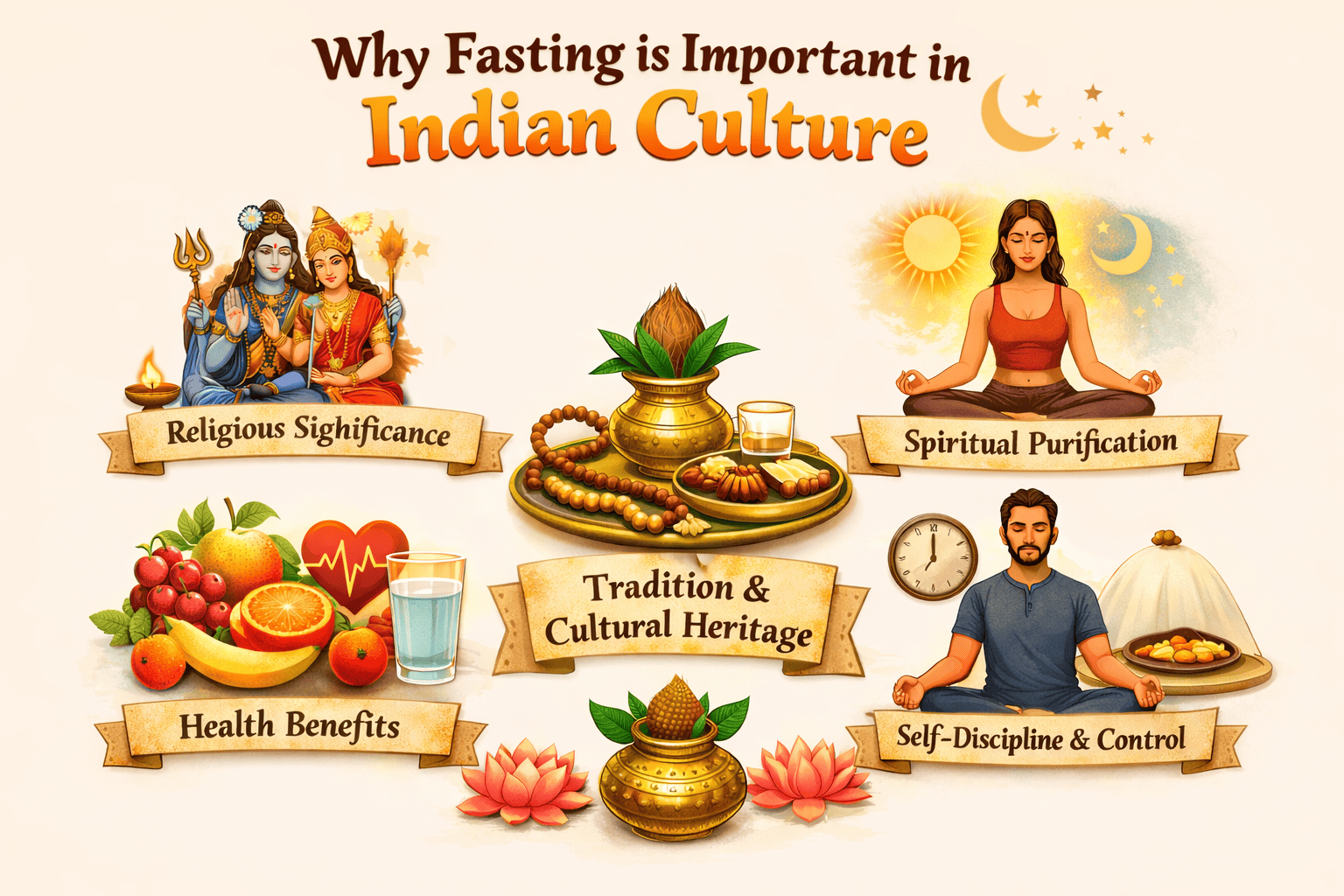
Fasting is an important tradition in India that has been followed for thousands of years. Many people in India observe fasts on religious days, festivals, or special occasions. Fasting is not only connected to religion but also to discipline, health, and spiritual growth.
In Indian culture, fasting is seen as a way to purify the body and mind, strengthen faith, and develop self-control. People believe that fasting helps them become closer to God and also improves their physical and mental well-being.
In this article, we will understand why fasting is important in Indian culture, its religious meaning, and the benefits associated with it.
What Is Fasting?
Fasting means avoiding certain foods or completely stopping eating for a specific period of time. In many cases, people may only drink water or eat limited foods like fruits, milk, or special fasting meals.
In India, fasting is often called “Vrat” or “Upvas.”
- Vrat means a religious promise or commitment.
- Upvas means staying close to God.
People observe fasts with devotion and prayer as part of their spiritual practice.
Religious Importance of Fasting
Fasting has a strong connection with religion in India. Many people fast to express devotion and seek blessings from God.
Different religions in India follow fasting traditions in different ways.
Hindu Fasting Traditions
In Hindu culture, people fast on special days dedicated to different gods and goddesses.
Some common fasting days include:
- Navratri
- Ekadashi
- Karva Chauth
- Maha Shivratri
People observe fasts on these days to show devotion and receive blessings for health, happiness, and prosperity.
Fasting in Other Religions
Fasting is also important in other religions practiced in India.
For example:
- Muslims observe fasting during Ramadan.
- Jains practice fasting during Paryushana.
- Some Christians fast during Lent.
This shows that fasting is a widely respected spiritual practice across many religions.
Spiritual Benefits of Fasting
One of the main reasons people fast is for spiritual growth. Fasting helps people focus more on prayer and meditation.
When people fast, they often spend more time in:
- Prayer
- Meditation
- Religious rituals
- Reading spiritual texts
This helps them feel more connected to their faith and spiritual beliefs.
Fasting is also believed to help control negative emotions and develop a peaceful mind.
Self-Control and Discipline
Fasting teaches self-control and discipline. Avoiding food or certain habits requires strong willpower.
By practicing fasting, people learn to control their desires and focus on inner strength. This discipline can also help in daily life by improving patience and mental balance.
Many people believe that fasting helps develop strong character and determination.
Health Benefits of Fasting
Apart from religious reasons, fasting is also believed to have several health benefits.
Many traditional beliefs and modern studies suggest that occasional fasting can help the body rest and reset.
Some possible health benefits include:
- Improved digestion
- Better metabolism
- Detoxification of the body
- Improved mental clarity
When people fast, they often eat lighter foods like fruits, nuts, and milk, which can also be healthier than regular heavy meals.
However, fasting should always be done carefully, especially for people with health conditions.
Why Do We Check Our Phone Immediately After Waking Up?
Fasting During Festivals
Fasting is often an important part of Indian festivals. Many people observe fasts as a way to prepare themselves spiritually before celebrations.
For example:
- During Navratri, many people fast for nine days.
- During Karva Chauth, married women fast for the well-being of their husbands.
- During Ramadan, Muslims fast from sunrise to sunset for a month.
These fasting traditions are deeply connected with faith and cultural values.
Types of Fasting in India
There are different types of fasting practiced in Indian culture.
Complete Fast
Some people avoid food and only drink water during the fast.
Fruit Fast
Many people eat only fruits, milk, and nuts during fasting days.
Partial Fast
Some people avoid specific foods like grains, salt, or cooked meals.
The type of fast depends on personal beliefs and religious traditions.
Social and Cultural Importance
Fasting also plays an important role in strengthening cultural traditions. Families often observe fasts together and participate in prayers or rituals.
This helps maintain cultural values and keeps traditions alive across generations.
It also creates a sense of unity and shared faith within families and communities.
Modern Perspective on Fasting
Even today, many people in India continue to follow fasting traditions. While some observe fasts strictly for religious reasons, others practice fasting for health or mental well-being.
In recent years, fasting methods like intermittent fasting have also become popular for health benefits. Interestingly, these modern practices are somewhat similar to traditional fasting methods followed in Indian culture.
This shows how ancient traditions often connect with modern health practices.
Conclusion
Fasting is an important part of Indian culture and spiritual life. It represents devotion, discipline, and self-control. People fast to strengthen their faith, seek blessings, and improve their mental and physical well-being.
Beyond religion, fasting also helps develop positive habits such as patience, mindfulness, and gratitude.
For generations, fasting has remained a meaningful tradition that connects people with their spiritual beliefs, cultural heritage, and inner strength.
FAQs
1. Why is fasting important in Indian culture?
Fasting is important because it helps people express devotion, develop discipline, and seek spiritual growth.
2. What is fasting called in India?
Fasting is commonly called Vrat or Upvas in Indian culture.
3. Is fasting only a religious practice?
No, fasting is also practiced for health benefits, mental clarity, and self-discipline.
4. Do all religions in India practice fasting?
Yes, many religions in India such as Hinduism, Islam, Jainism, and Christianity have fasting traditions.
5. Is fasting healthy?
When done properly, fasting can help improve digestion, metabolism, and overall well-being.