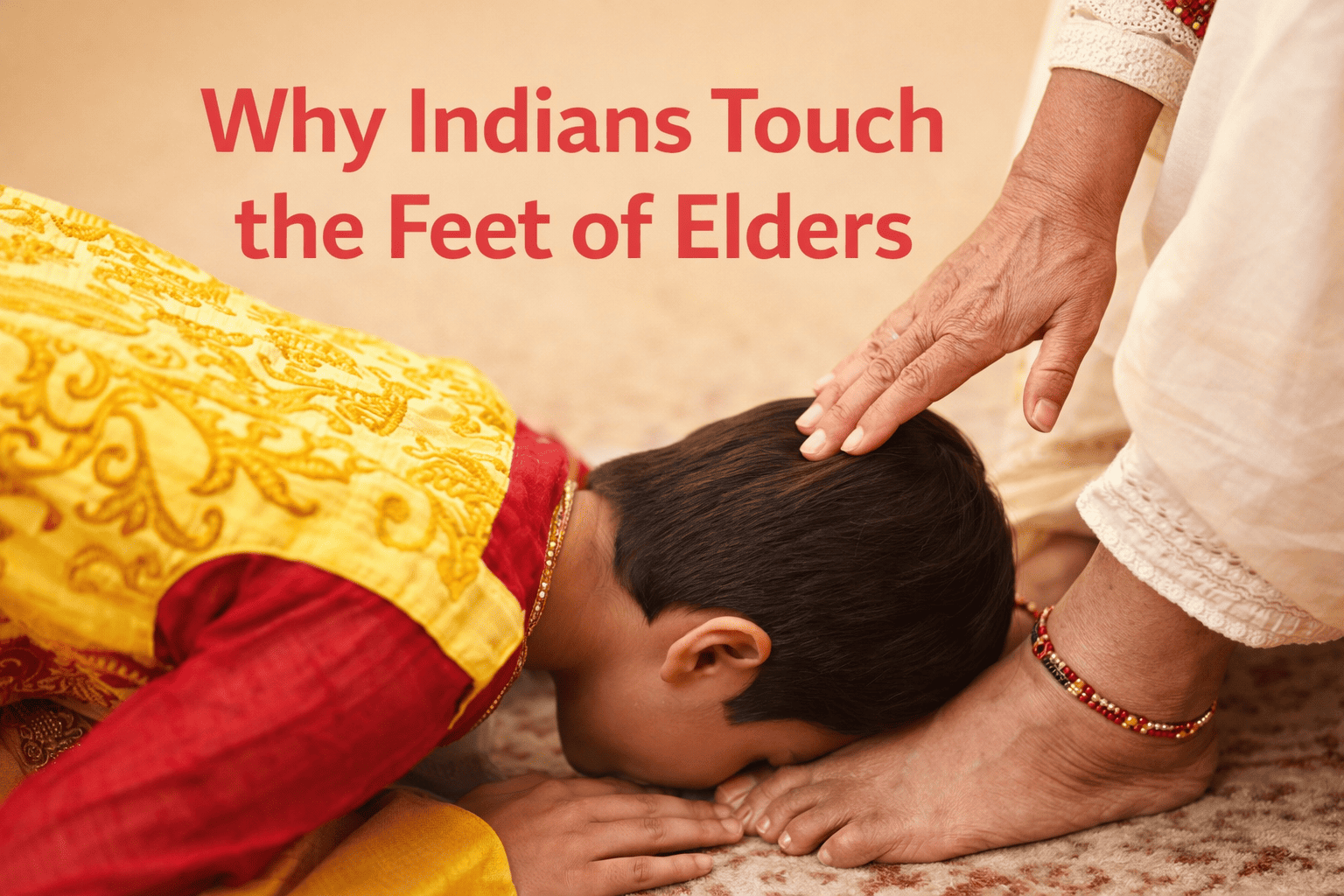
In many Indian families, touching the feet of elders is a common and respectful tradition. It is often seen during festivals, family gatherings, weddings, and important occasions. Younger people bend down and touch the feet of their parents, grandparents, teachers, or other respected elders to show respect and seek blessings.
This practice is deeply connected with Indian culture and traditions. It is not just a simple gesture but a symbol of humility, respect, and gratitude toward elders who have more life experience and wisdom.
In this article, we will understand why Indians touch the feet of elders, its cultural meaning, and the beliefs behind this long-standing tradition.
What Is Touching the Feet Called in India?
The act of touching the feet of elders is commonly called “Pranam” or “Charan Sparsh” in many parts of India.
- Pranam means greeting with respect.
- Charan Sparsh literally means touching someone’s feet.
When a younger person bends down and touches the feet of elders, the elder usually responds by placing their hand on the person’s head and giving blessings.
This exchange symbolizes respect from the younger person and blessings from the elder.
Cultural Significance of Touching Elders’ Feet
Indian culture places a strong emphasis on respecting elders. Elders are seen as people who have more experience, knowledge, and wisdom.
Touching their feet is a way of expressing:
- Respect
- Gratitude
- Humility
- Love
It shows that the younger person values the guidance and teachings of their elders.
This tradition has been followed for generations and is still practiced widely in many Indian families.
Spiritual Belief Behind the Tradition
In Indian spiritual beliefs, elders are considered a source of positive energy and blessings. When someone touches their feet, it is believed that the elder transfers positive energy and good wishes to the younger person.
The elder usually blesses the younger person by saying things like:
- “Khush raho” (Stay happy)
- “Jeete raho” (Live long)
- “Bhagwan tumhe safalta de” (May God give you success)
These blessings are believed to bring happiness, success, and protection in life.
Why Do We Check Our Phone Immediately After Waking Up?
Touching the Feet During Festivals and Special Occasions
This tradition becomes especially important during festivals and family events.
People often touch the feet of elders during:
- Diwali
- Holi
- Raksha Bandhan
- Weddings
- Birthdays
- Religious ceremonies
On these occasions, touching elders’ feet is seen as a way to begin the event with blessings and positivity.
Respect for Teachers and Gurus
In Indian culture, respect is not limited to parents and grandparents. Teachers and spiritual guides are also highly respected.
Students sometimes touch the feet of their teachers to show gratitude and respect for the knowledge they receive.
In traditional Indian philosophy, the Guru (teacher) is considered almost equal to God because they guide students toward knowledge and wisdom.
Scientific or Psychological Explanation
Some people also explain this tradition from a psychological and social perspective.
When someone bends down to touch the feet of elders, it shows humility and respect. This simple act strengthens family relationships and promotes positive values such as discipline and gratitude.
It also reminds younger generations to appreciate the experience and guidance of older people.
From a social point of view, traditions like these help maintain strong family bonds and respect within society.
How the Tradition Is Practiced
The way people touch the feet of elders may vary slightly across regions, but the general method is similar.
- The younger person bends down toward the elder.
- They lightly touch the elder’s feet with their hands.
- Then they touch their hands to their forehead or chest.
- The elder places their hand on the younger person’s head and gives blessings.
This simple act takes only a few seconds but carries deep cultural meaning.
Modern Changes in the Tradition
In modern times, not everyone practices this tradition in the same way. Some families may replace touching feet with folded hands or verbal greetings.
However, many Indian families still follow the tradition because it represents respect and connection with cultural values.
Even young people living in cities or abroad often follow this tradition when meeting elders during festivals or family gatherings.
Why This Tradition Still Matters Today
Although society has changed in many ways, respecting elders is still considered an important value in India.
Touching the feet of elders continues to remind people about:
- Respect for elders
- Appreciation for family
- Cultural traditions
- Humility and gratitude
These values help maintain harmony within families and communities.
Conclusion
Touching the feet of elders is a meaningful tradition in Indian culture. It represents respect, humility, and the desire to receive blessings from those who have more life experience.
The practice is not only cultural but also spiritual and emotional. It strengthens family bonds and reminds younger generations to value the wisdom and guidance of elders.
Even in modern times, this tradition continues to play an important role in Indian society, helping preserve the values of respect and gratitude that have been passed down through generations.
FAQs
1. Why do Indians touch the feet of elders?
Indians touch the feet of elders to show respect, humility, and to receive blessings.
2. What is the meaning of Charan Sparsh?
Charan Sparsh means touching someone’s feet as a gesture of respect in Indian culture.
3. When do people touch the feet of elders?
People usually touch the feet of elders during festivals, family gatherings, weddings, and important occasions.
4. Do all Indians follow this tradition?
Not everyone follows it, but it is still widely practiced in many Indian families.
5. What do elders say after someone touches their feet?
Elders usually give blessings for long life, happiness, and success.