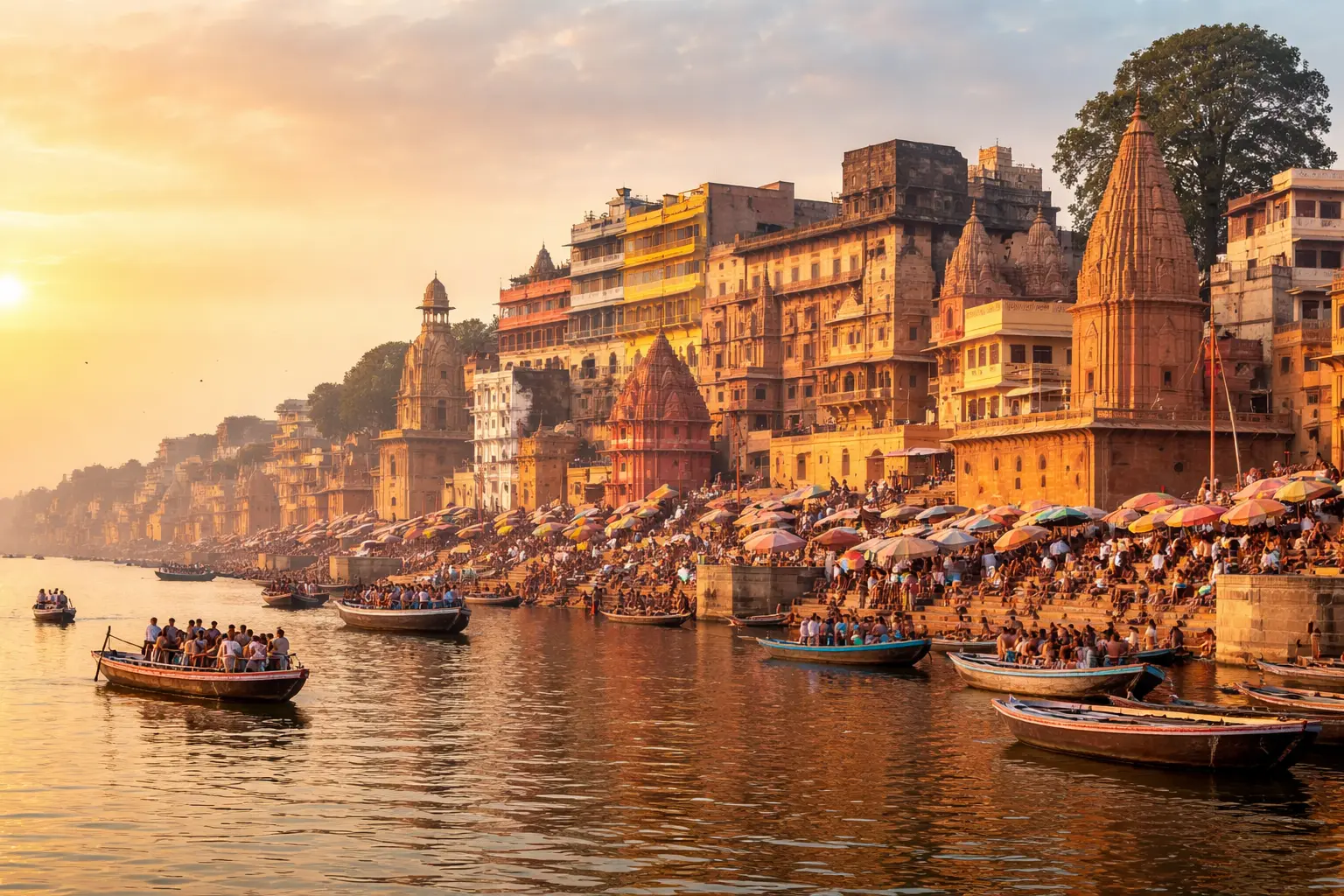
The ancient city of Varanasi is one of the oldest continuously inhabited cities in the world. Located along the sacred banks of the Ganges River, Varanasi is famous for its ghats—stone steps leading down to the river where spiritual, cultural, and daily life activities take place.
There are around 84 ghats in Varanasi, each with its own history, mythology, and significance. Some ghats are used for religious rituals, some for bathing, and others for cremation ceremonies. Pilgrims, tourists, saints, and locals gather here every day to witness the spiritual energy that defines this holy city.
In this article, we will explore the most important and well-known ghats of Varanasi, their history, and their spiritual importance.
1. Dashashwamedh Ghat
Dashashwamedh Ghat is the most famous and vibrant ghat in Varanasi. According to Hindu mythology, Lord Brahma performed a ritual of ten horse sacrifices (Dashashwamedha Yajna) here to welcome Lord Shiva.
The ghat is best known for the evening Ganga Aarti, a grand spiritual ceremony where priests perform synchronized rituals with lamps, incense, and chants dedicated to the Ganges. Thousands of devotees and tourists gather daily to witness this mesmerizing event.
Highlights:
- Famous Ganga Aarti ceremony
- Boat rides during sunrise and sunset
- One of the busiest ghats in the city
2. Manikarnika Ghat
Manikarnika Ghat is the most sacred cremation ghat in Varanasi. Hindus believe that being cremated here leads to liberation from the cycle of birth and death (moksha).
Legend says that a jewel (Manikarnika) from Goddess Parvati fell here while she and Lord Shiva were bathing in the Ganges.
The fires at this ghat are said to burn continuously for centuries, making it one of the most spiritually significant places in Hinduism.
Key facts:
- One of the oldest cremation grounds in India
- Burning pyres operate 24 hours a day
- Associated with the path to moksha
3. Harishchandra Ghat
Harishchandra Ghat is another important cremation ghat in Varanasi. It is named after King Harishchandra, a legendary ruler known for his truthfulness and integrity.
According to mythology, he worked here as a cremation ground attendant to fulfill a promise of truth.
This ghat is slightly quieter than Manikarnika but still holds deep spiritual importance.
4. Assi Ghat
Assi Ghat is located at the southern end of Varanasi, where the Assi River meets the Ganges. It is a popular gathering place for students, tourists, and spiritual seekers.
Every morning, Subah-e-Banaras, a cultural program with yoga, music, and prayers, takes place here.
Highlights:
- Yoga sessions and spiritual events
- Sunrise boat rides
- Popular among travelers and photographers
5. Panchganga Ghat
Panchganga Ghat is believed to be the meeting point of five sacred rivers: Ganga, Yamuna, Saraswati, Kirana, and Dhutpapa.
Historically, it was a center of learning where many scholars and saints delivered spiritual teachings.
Nearby stands the historic Alamgir Mosque, which adds to the cultural diversity of the area.
6. Tulsi Ghat
Tulsi Ghat is named after the famous poet-saint Tulsidas, who is believed to have composed parts of the epic Ramcharitmanas here.
This ghat is also known for cultural festivals, wrestling competitions, and religious events.
7. Kedar Ghat
Kedar Ghat is famous for the Kedareshwar Temple, dedicated to Lord Shiva.
The ghat is particularly popular among South Indian pilgrims, and the architecture reflects South Indian temple style.
The water here is considered very pure for ritual bathing.
8. Rana Mahal Ghat
Rana Mahal Ghat was built by the Maharaja of Udaipur. The ghat features a beautiful palace structure overlooking the river.
It is one of the quieter ghats, ideal for peaceful views and photography.
9. Darbhanga Ghat
Darbhanga Ghat is known for its grand palace built by the royal family of Darbhanga in Bihar.
The architecture resembles a fort and is one of the most photogenic spots in Varanasi.
Nearby is the famous Brijrama Palace, now converted into a heritage hotel.
10. Raj Ghat
Raj Ghat is located near the historic Malviya Bridge.
This ghat marks the area where the ancient city of Varanasi originally began. Archaeological excavations here have revealed remains dating back thousands of years.
All About Tirupati – Complete Travel Guide to Spiritual Heart of Andhra Pradesh
Other Important Ghats of Varanasi
Besides the major ghats mentioned above, several other ghats contribute to the spiritual landscape of the city:
- Scindia Ghat
- Ahilyabai Ghat
- Chet Singh Ghat
- Lalita Ghat
- Jain Ghat
- Hanuman Ghat
- Shivala Ghat
- Bhosale Ghat
- Ganga Mahal Ghat
- Meer Ghat
Each of these ghats has its own temples, legends, and local traditions.
Cultural Importance of Varanasi Ghats
The ghats are not just religious places—they are the heart of life in Varanasi.
Activities that happen daily at the ghats include:
- Ritual bathing in the Ganges
- Meditation and yoga
- Religious ceremonies and prayers
- Cremation rituals
- Boat rides for visitors
- Cultural performances and festivals
During major Hindu festivals like Dev Deepawali and Kartik Purnima, the ghats are illuminated with thousands of lamps, creating a magical spiritual atmosphere.
Best Time to Visit the Ghats
The ghats can be visited throughout the year, but the best times are:
Early Morning:
Sunrise boat rides offer breathtaking views of priests performing rituals and devotees bathing in the Ganges.
Evening:
The Ganga Aarti at Dashashwamedh Ghat is a must-see experience.
Winter Season (October–March):
The weather is pleasant and ideal for exploring the ghats.
Tips for Visitors
If you plan to explore the ghats of Varanasi, keep these tips in mind:
- Visit early morning for the most authentic experience.
- Respect local customs and religious practices.
- Photography may be restricted at cremation ghats.
- Take a boat ride to see multiple ghats at once.
- Wear comfortable footwear for walking along the riverfront.
Conclusion
The ghats of Varanasi are much more than just steps leading to a river—they represent centuries of faith, culture, and history. From the spiritual intensity of Manikarnika Ghat to the vibrant rituals at Dashashwamedh Ghat, every ghat tells a unique story.
Walking along the ghats or taking a boat ride on the Ganges River offers a glimpse into the timeless traditions of India. Whether you are a pilgrim seeking spiritual peace or a traveler exploring history, the ghats of Varanasi provide an unforgettable experience.
FAQs
1. How many ghats are there in Varanasi?
There are around 84 ghats along the banks of the Ganges River in Varanasi.
2. Which ghat is most famous in Varanasi?
Dashashwamedh Ghat is the most famous because of the daily Ganga Aarti ceremony.
3. Which ghat is used for cremation?
The main cremation ghats are Manikarnika Ghat and Harishchandra Ghat.
4. Which ghat is best for tourists?
Assi Ghat and Dashashwamedh Ghat are the most popular among tourists.
5. What is the best way to see all the ghats?
The best way is to take a boat ride on the Ganges, especially during sunrise.