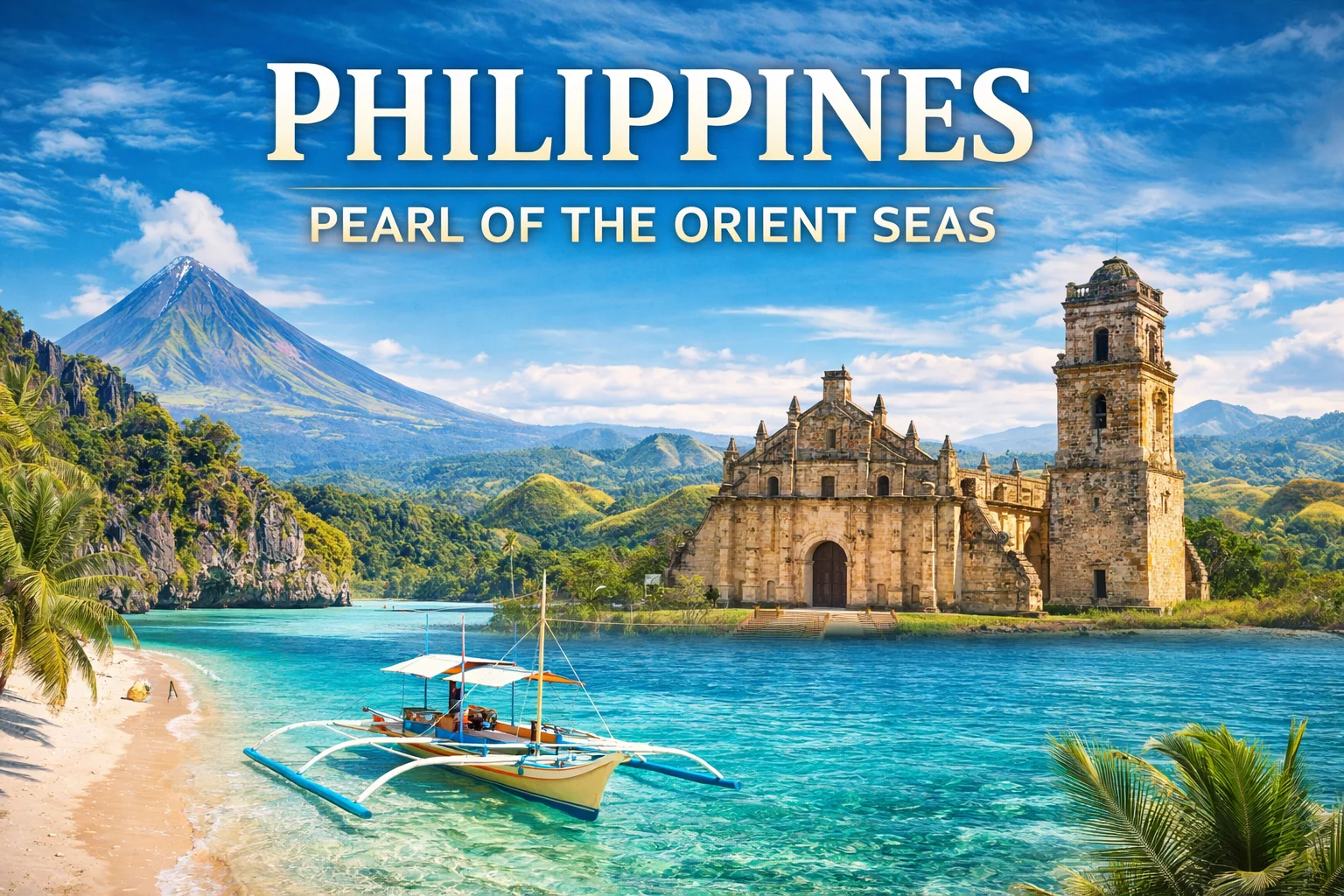
The Philippines, officially known as the Republic of the Philippines, is an archipelagic country in Southeast Asia that is famous for its breathtaking landscapes, rich culture, and vibrant history. Consisting of more than 7,600 islands, it stretches across the western Pacific Ocean and is divided into three main geographical divisions: Luzon, Visayas, and Mindanao. Known as the Pearl of the Orient Seas, the Philippines attracts millions of tourists, researchers, and adventurers each year.
This article provides a complete overview of the Philippines, from its geography and climate to its history, culture, economy, cuisine, tourism, and lifestyle, giving a holistic understanding of this remarkable country.
Geography of the Philippines
The Philippines is located in Southeast Asia, bordered by the Philippine Sea to the east, the South China Sea to the west, and the Celebes Sea to the south. Its unique archipelagic structure makes it one of the most geographically diverse nations in the world.
Major Regions
- Luzon – The largest island, home to Metro Manila, the capital region, and many historical and economic hubs.
- Visayas – Central islands known for their white sand beaches, diving spots, and cultural heritage.
- Mindanao – The southernmost region, rich in natural resources, mountains, and indigenous cultures.
Topography
The Philippines is predominantly mountainous, with volcanoes, rivers, and fertile plains. Notable mountains include Mount Apo (the highest peak), Mount Mayon, and Mount Pinatubo. The country lies in the Pacific Ring of Fire, making it prone to earthquakes and volcanic eruptions.
Climate
The country experiences a tropical maritime climate, generally warm and humid. There are three main seasons:
- Hot Dry Season: March to May
- Rainy Season: June to November
- Cool Dry Season: December to February
The Philippines is also subject to typhoons, with the eastern coastal regions being the most affected.
History of the Philippines
The Philippines has a complex and fascinating history, shaped by indigenous cultures, foreign colonization, and modern influences.
Pre-Colonial Period
Before foreign contact, the islands were inhabited by various ethnolinguistic groups with their own tribes, kingdoms, and chiefdoms. Indigenous people engaged in farming, fishing, and trading, with cultural links to China, India, and Southeast Asia.
Spanish Colonization (1521–1898)
- Ferdinand Magellan, a Portuguese explorer sailing for Spain, arrived in 1521.
- The Spanish established Manila as a major colonial city and introduced Christianity, particularly Catholicism, which remains dominant.
- Spanish rule brought fortresses, churches, and governance structures, shaping modern Filipino culture.
- The Philippine Revolution of 1896 led to resistance against Spain, culminating in the Philippine Declaration of Independence in 1898.
American and Japanese Periods
- After the Spanish-American War, the Philippines was ceded to the United States.
- The Americans introduced public education, English language, and democratic governance.
- During World War II, Japan occupied the Philippines, leading to widespread hardship and heroic resistance.
Independence and Modern Era
The Philippines gained full independence on July 4, 1946. Since then, it has developed as a democratic republic, experiencing periods of economic growth, political challenges, and cultural evolution. Today, it is a vibrant nation blending tradition and modernity.
Population and Demographics
The Philippines has a population of over 113 million people (2026), making it the 13th most populous country in the world. Key demographics include:
- Ethnic Groups: Tagalog, Cebuano, Ilocano, Bisaya, and more.
- Languages: Filipino (based on Tagalog) and English are official; over 170 languages are spoken.
- Religion: Predominantly Roman Catholic (around 80%), with Islam mainly in Mindanao and other Christian denominations spread across the country.
The population is young and dynamic, with a median age of approximately 25 years, fueling economic growth and cultural vibrancy.
Culture and Traditions
Filipino culture is a rich blend of indigenous, Spanish, American, and Asian influences. The Philippines is known for its warm hospitality, family-centered values, and festive spirit.
Festivals
- Sinulog Festival (Cebu) – Celebrates the Santo Niño with street dancing and religious parades.
- Ati-Atihan (Kalibo, Aklan) – Honoring the Santo Niño with vibrant costumes and dancing.
- Pahiyas Festival (Lucban, Quezon) – Showcasing bountiful harvests with colorful decorations.
Arts and Music
- Traditional dances like Tinikling (bamboo dance) and Singkil (Moro dance) reflect Filipino heritage.
- Contemporary music ranges from folk songs to pop and hip-hop, often blending Western and local styles.
Cuisine
Filipino cuisine is diverse, flavorful, and communal. Popular dishes include:
- Adobo – Chicken or pork stewed in vinegar, soy sauce, and spices.
- Sinigang – A sour soup made with tamarind and vegetables.
- Lechon – Roast pig, a staple at celebrations.
- Halo-Halo – A dessert of mixed fruits, shaved ice, and sweet beans.
Filipinos often share meals in a bayanihan (community) spirit, reflecting the importance of family and togetherness.
Economy of the Philippines
The Philippines has a mixed economy, combining agriculture, manufacturing, services, and tourism.
Key Sectors
- Agriculture – Major crops include rice, coconut, sugarcane, and corn.
- Industry – Electronics, textiles, garments, and food processing are significant.
- Services – The BPO (Business Process Outsourcing) industry, tourism, and banking drive economic growth.
- Tourism – Natural wonders, historical sites, and cultural festivals attract millions annually.
Trade and Investment
The Philippines exports electronics, machinery, coconut products, and garments. Key trading partners include the US, Japan, China, and ASEAN countries.
Currency and Standard of Living
- Currency: Philippine Peso (PHP)
- The country has a developing economy, with urban centers like Metro Manila, Cebu, and Davao enjoying higher standards of living, while rural areas are less developed.
Tourism in the Philippines
Tourism is a vital sector due to the country’s natural beauty, history, and cultural richness. Key attractions include:
Beaches and Islands
- Boracay – Famous for white sand beaches and water sports.
- Palawan – Known for underground rivers, limestone cliffs, and crystal-clear waters.
- Siargao – A surfing paradise with cloud 9 waves.
Historical Sites
- Intramuros (Manila) – Spanish-era walled city with forts and churches.
- Vigan – UNESCO World Heritage city showcasing colonial architecture.
- Rizal Park (Manila) – Memorial to national hero José Rizal.
Natural Wonders
- Chocolate Hills (Bohol) – Unique geological formations.
- Mayon Volcano (Albay) – Famous for its perfect cone shape.
- Taal Volcano (Batangas) – One of the world’s most picturesque volcanoes.
Adventure and Ecotourism
Filipinos and tourists enjoy diving, trekking, snorkeling, island hopping, and wildlife exploration in areas like Tubbataha Reefs Natural Park and Puerto Princesa Subterranean River.
Education and Language
The Philippines has a high literacy rate, with public and private schools offering primary, secondary, and tertiary education.
Education System
- Basic Education: Kindergarten to Grade 12 (K-12).
- Higher Education: Universities such as the University of the Philippines, Ateneo de Manila, and De La Salle University.
Language
- Filipino: National language based on Tagalog.
- English: Widely spoken, official language for business, government, and education.
- Regional languages include Cebuano, Ilocano, Hiligaynon, and Waray, reflecting the country’s diversity.
Lifestyle and Social Structure
Filipinos value family, community, and faith, forming a tightly knit social fabric.
- Family: Extended families often live together or maintain close relationships.
- Religion: Catholic traditions influence holidays, rituals, and festivals.
- Leisure: Karaoke, basketball, and fiestas are popular forms of recreation.
- Community Spirit: The concept of bayanihan (mutual cooperation) reflects communal values.
Transportation
Transportation in the Philippines varies from modern highways and airports to traditional local methods:
- Air Travel: International airports include Ninoy Aquino International Airport (Manila) and Mactan-Cebu International Airport.
- Rail: Limited rail systems in Metro Manila and Mindanao.
- Road: Jeepneys, buses, taxis, and ride-sharing services are common.
- Sea Travel: Ferries and boats connect islands, essential for archipelagic mobility.
Challenges Facing the Philippines
Despite its beauty and growth, the Philippines faces several challenges:
- Natural Disasters – Typhoons, earthquakes, and volcanic eruptions frequently impact lives.
- Economic Inequality – Urban-rural disparity affects income and access to services.
- Political and Social Issues – Governance, corruption, and regional conflicts remain areas of concern.
- Environmental Concerns – Deforestation, pollution, and coastal degradation threaten ecosystems.
Efforts by the government, NGOs, and communities aim to address these challenges through disaster preparedness, sustainable development, and social programs.
Sports and Recreation
Filipinos love sports, games, and outdoor activities:
- Basketball: Most popular sport, played in streets, schools, and professional leagues.
- Boxing: Legendary boxer Manny Pacquiao has brought global fame to the sport.
- Traditional Games: Sipa, patintero, and luksong tinik are part of cultural heritage.
- Water Sports: Surfing, diving, and sailing are popular in coastal areas.
Economy and Investment Opportunities
The Philippines offers investment opportunities in IT, manufacturing, agriculture, and tourism. The BPO sector, renewable energy, and infrastructure development attract foreign investors. Government programs like Build, Build, Build aim to modernize roads, airports, and urban areas, boosting economic competitiveness.
Philippines on the Global Stage
The Philippines is an active member of international organizations:
- ASEAN – Promoting regional cooperation.
- United Nations – Engaged in peacekeeping and humanitarian missions.
- World Trade Organization – Participating in global commerce.
Filipino culture, cuisine, and entertainment (such as music and cinema) are increasingly influencing global audiences.
Conclusion
The Philippines is a vibrant, diverse, and dynamic country, blending rich history, breathtaking landscapes, and a resilient people. From lush mountains and pristine beaches to ancient cities and lively festivals, it offers something for everyone—travelers, historians, nature enthusiasts, and culture seekers alike.
Despite challenges, the spirit, hospitality, and creativity of Filipinos ensure that the Philippines continues to shine as the Pearl of the Orient Seas, a nation of beauty, warmth, and promise.