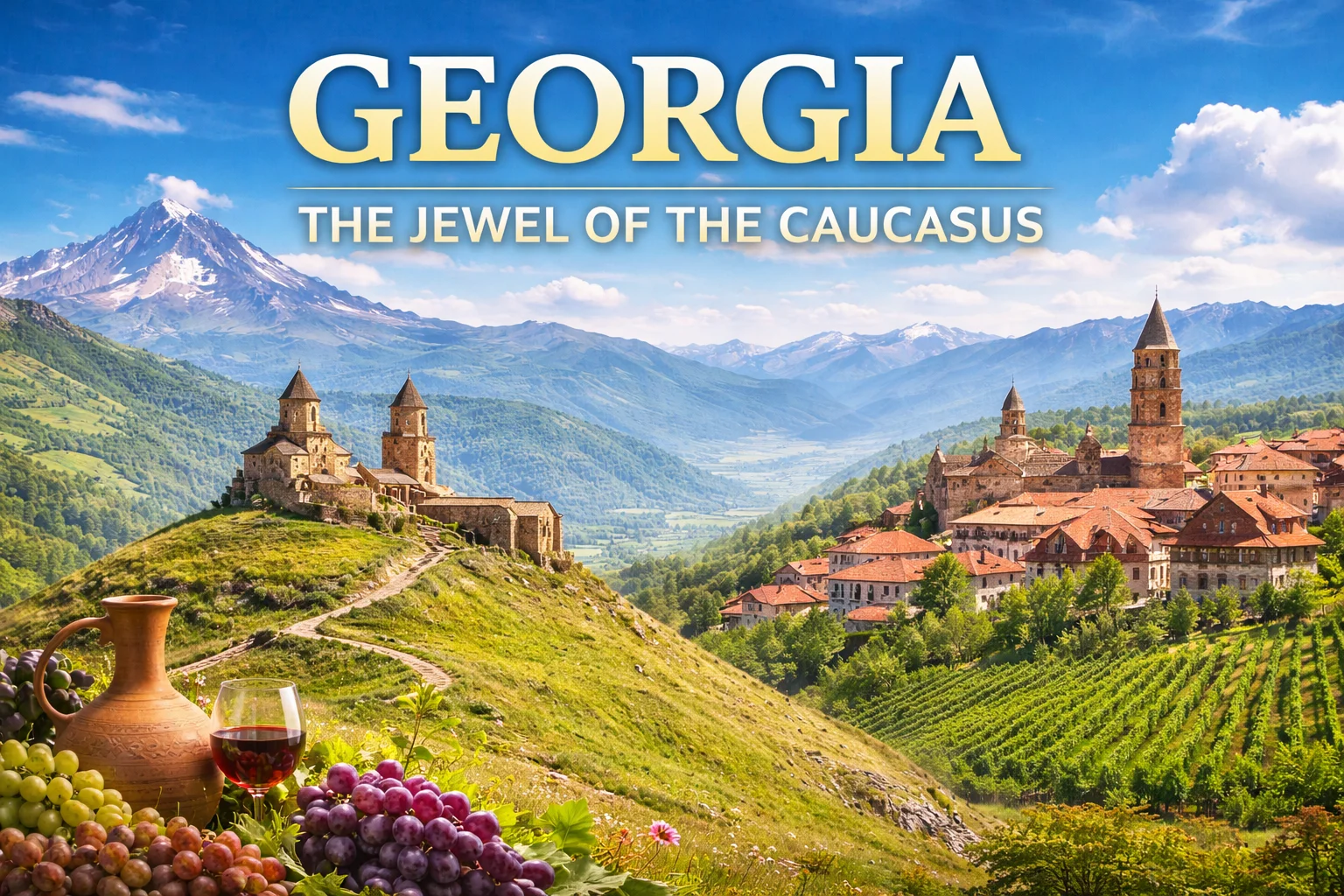
Georgia, officially the Republic of Georgia, is a country located at the crossroads of Eastern Europe and Western Asia. Known for its mountains, vineyards, ancient history, and unique culture, Georgia is a hidden gem of the Caucasus region. It is bordered by Russia to the north, Turkey and Armenia to the south, Azerbaijan to the southeast, and the Black Sea to the west.
This comprehensive guide explores Georgia’s geography, history, culture, cuisine, economy, tourism, lifestyle, and modern developments, giving readers a full understanding of this fascinating country.
Geography of Georgia
Georgia is a diverse and mountainous country, featuring fertile valleys, towering peaks, and Black Sea coastline. Its landscape contributes to its unique climate, agriculture, and tourism.
Regions
Georgia is traditionally divided into several regions:
- Western Georgia – Includes Adjara and Samegrelo, known for subtropical climate and coastal areas.
- Eastern Georgia – Includes Kakheti and Kartli, rich in agriculture, vineyards, and historical sites.
- Northern Georgia – Home to the Caucasus Mountains, including the Kazbegi region.
- Southern Georgia – Includes Samtskhe-Javakheti, known for natural landscapes and monasteries.
Topography
- Caucasus Mountains dominate the northern border, including Mount Shkhara (5,193 m), Georgia’s highest peak.
- Fertile plains like the Kolkhida Lowland support agriculture.
- Rivers such as the Mtkvari (Kura), Rioni, and Enguri flow through the country.
Climate
Georgia has varied climates due to topography:
- Western Georgia: Humid subtropical climate, abundant rainfall.
- Eastern Georgia: Continental climate, dry summers, cold winters.
- Mountainous regions: Alpine climate with snow in winter.
History of Georgia
Georgia has a rich history spanning thousands of years, blending European and Asian influences.
Ancient Georgia
- Known as Colchis and Iberia in antiquity, the region was famous for the Golden Fleece legend.
- Ancient civilizations developed agriculture, trade, and metallurgy.
- Christianity was introduced in 4th century AD, making Georgia one of the oldest Christian nations.
Medieval Period
- Georgia reached its golden age in the 11th-12th centuries under King David IV and Queen Tamar.
- Medieval Georgia was famous for fortresses, monasteries, and literature.
- It served as a strategic crossroads for trade and culture between Europe and Asia.
Modern Era
- Georgia faced invasions by Mongols, Persians, and Ottomans.
- Became part of the Russian Empire in the 19th century.
- Brief independence from 1918–1921, then Soviet rule until 1991.
- Today, Georgia is an independent democratic republic, working toward economic development and global integration.
Population and Demographics
Georgia has a population of approximately 3.7 million people. Key demographics include:
- Ethnic Groups: Predominantly Georgian (87%), with Armenians, Azeris, and Russians.
- Language: Georgian is the official language, with unique Mkhedruli script. Minor languages include Russian, Armenian, and Azeri.
- Religion: Predominantly Georgian Orthodox Christianity, with Muslim and Armenian Christian minorities.
Culture and Traditions
Georgian culture is ancient, proud, and uniquely Georgian, combining music, dance, wine-making, and cuisine.
Festivals
- Tbilisoba (Tbilisi Festival) – Celebrates the capital city with music, food, and arts.
- Rtveli – Annual grape harvest festival in Kakheti, reflecting Georgia’s winemaking heritage.
- Alaverdoba – Religious festival at the Alaverdi Monastery.
Music and Dance
- Traditional polyphonic singing, recognized by UNESCO.
- Dance: Kartuli (romantic), Khorumi (warrior dance), and Svanuri (mountain dance).
- Instruments include panduri, chonguri, and duduk.
Cuisine
- Khachapuri – Cheese-filled bread, a national staple.
- Khinkali – Dumplings with meat or vegetables.
- Pkhali – Spinach or vegetable pâté.
- Wine – Georgia is the birthplace of wine, using qvevri clay pots for traditional fermentation.
Economy of Georgia
Georgia has a developing market economy, with agriculture, tourism, and services driving growth.
Key Sectors
- Agriculture – Grapes, wine, citrus fruits, and hazelnuts.
- Tourism – Growing rapidly due to natural beauty, ski resorts, and historical sites.
- Industry – Mining, food processing, and construction materials.
- Services – Banking, logistics, and IT sectors expanding.
Trade and Investment
- Georgia is strategically located on the Silk Road corridor, linking Europe and Asia.
- Free trade agreements with EU, Turkey, and CIS countries.
- Investment incentives attract foreign businesses, especially in tourism, logistics, and energy.
Tourism in Georgia
Tourism is one of the most dynamic sectors, with attractions ranging from mountains to medieval churches and beaches.
Natural Wonders
- Caucasus Mountains – Trekking, skiing, and mountaineering.
- Kazbegi National Park – Featuring Mount Kazbek and Gergeti Trinity Church.
- Prometheus Caves – Stalactites, stalagmites, and underground rivers.
Historical and Cultural Sites
- Tbilisi Old Town – Narrow streets, colorful balconies, sulfur baths.
- Uplistsikhe – Ancient cave city carved into rock.
- Mtskheta – UNESCO World Heritage city, Georgia’s ancient capital.
Adventure and Ecotourism
- Svaneti – Remote mountainous region with towers, glaciers, and hiking trails.
- Batumi – Black Sea resort city with beaches, casinos, and nightlife.
- Wine Tourism – Kakheti vineyards offer tastings, tours, and harvest participation.
Education and Language
Education is public and compulsory, with universities in Tbilisi, Kutaisi, and Batumi.
- Primary and Secondary: 12-year basic education system.
- Higher Education: Tbilisi State University, Ilia State University, and Georgian Technical University.
- Languages: Georgian is official; Russian and English are widely spoken.
Lifestyle and Social Structure
Georgians value family, hospitality, and tradition:
- Family: Close-knit and extended families are common.
- Hospitality: Guests are treated with supreme respect, often with feasts and wine.
- Festivities: Supra (feast) with a toastmaster (Tamada) leading traditional toasts.
- Religion: Georgian Orthodox Church plays a central role in life and traditions.
Transportation
- Airports: Tbilisi International Airport and Batumi Airport connect internationally.
- Roads: Well-developed highways link major cities; mountain roads require careful navigation.
- Rail: Rail networks connect Tbilisi with regional cities.
- Public Transport: Buses, minibuses (marshrutkas), and taxis are common.
Challenges Facing Georgia
Despite progress, Georgia faces challenges:
- Political Tensions – Disputed territories of Abkhazia and South Ossetia.
- Economic Development – Rural areas lag behind urban centers.
- Environmental Concerns – Deforestation, soil erosion, and water pollution.
- Infrastructure – Mountainous terrain makes connectivity difficult.
Efforts to address these include government reforms, foreign investment, and environmental programs.
Sports and Recreation
- Football (Soccer) – Most popular sport.
- Rugby – Georgian national rugby team is highly competitive internationally.
- Mountaineering and Skiing – Popular in the Caucasus region.
- Traditional games include Lelo Burti (ancient rugby-like sport).
Economy and Global Position
Georgia benefits from strategic location, rich culture, and tourism potential:
- Part of Silk Road Economic Belt, attracting trade and logistics investment.
- Tourism, wine exports, and IT sector are growth drivers.
- Membership in Council of Europe, GUAM, and Eastern Partnership strengthens global ties.
Conclusion
Georgia is a country of extraordinary landscapes, ancient history, and vibrant culture. From majestic mountains, ancient churches, and UNESCO heritage sites to wine regions, beaches, and modern cities, Georgia offers adventure, culture, and hospitality.
Despite economic and political challenges, Georgia’s spirit, traditions, and natural beauty make it a unique destination for travelers, historians, and culture enthusiasts alike.
Whether exploring Tbilisi’s streets, hiking the Caucasus, or tasting world-class wines, Georgia promises an unforgettable experience, blending ancient charm with modern allure.