Providing your dog with proper nutrition is one of the most important responsibilities of pet ownership. Just like humans, dogs have different dietary requirements throughout their lives. A growing puppy needs nutrients to support development, an active adult dog requires balanced energy, and a senior dog benefits from food designed to support aging joints and overall health.
In addition to age, breed size plays a significant role in determining the ideal diet. A small-breed Chihuahua and a large-breed Labrador Retriever have very different nutritional needs, feeding habits, and growth patterns.
Choosing the right food can improve your dog’s health, maintain a healthy weight, support immune function, and potentially extend their lifespan. This guide explains how to select the best food based on your dog’s life stage and breed size, helping you make informed decisions for your furry companion.
Why Proper Nutrition Matters
A balanced diet supports nearly every aspect of your dog’s health.
Benefits include:
- Strong bones and muscles
- Healthy skin and coat
- Improved digestion
- Better immune function
- Healthy weight management
- Increased energy levels
- Longer life expectancy
Poor nutrition can contribute to obesity, nutrient deficiencies, digestive problems, and chronic health conditions.
Understanding Dog Life Stages
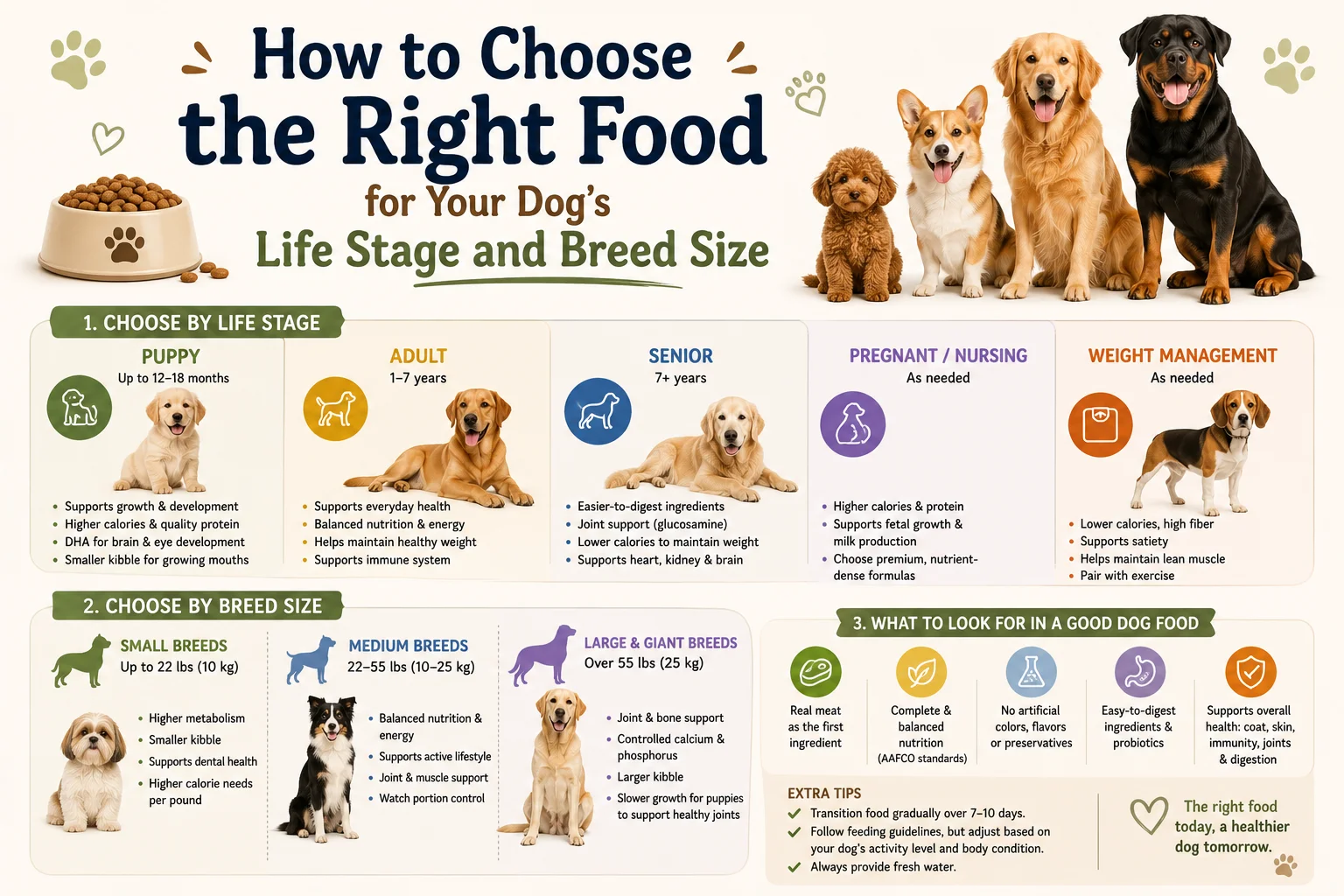
Most veterinarians divide a dog’s life into three primary stages:
Puppy
Birth to approximately 12–24 months, depending on breed size.
Adult
Fully grown dogs with stable nutritional requirements.
Senior
Older dogs that may require dietary adjustments to support aging.
Each stage requires different nutrient levels and calorie intake.
Puppy Nutrition: Building a Strong Foundation
Puppies experience rapid growth and development.
They require:
- Higher protein levels
- Increased calories
- Essential vitamins and minerals
- DHA for brain development
- Calcium and phosphorus for bone growth
Why Puppy Food Matters
Puppy formulas are specifically designed to support:
- Growth
- Muscle development
- Immune system function
- Cognitive development
Feeding adult dog food too early may result in nutritional deficiencies.
Key Nutrients for Puppies
Protein
Supports muscle growth and tissue repair.
Fat
Provides energy for active puppies.
Calcium and Phosphorus
Essential for healthy bone development.
DHA
Supports brain and vision development.
Feeding Frequency for Puppies
Generally:
- 8–12 weeks: 4 meals daily
- 3–6 months: 3 meals daily
- 6–12 months: 2 meals daily
Always follow veterinary recommendations.
Adult Dog Nutrition
Adult dogs require balanced nutrition to maintain health and energy.
Goals include:
- Weight management
- Muscle maintenance
- Organ health
- Digestive support
What Adult Dog Food Should Contain
A high-quality adult formula typically includes:
- Quality animal protein
- Healthy fats
- Fiber
- Vitamins
- Minerals
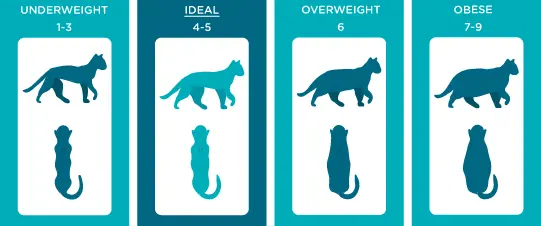
Monitoring Weight
Overfeeding is a common issue among adult dogs.
Signs of healthy weight include:
- Visible waistline
- Easily felt ribs without excessive fat
- Good energy levels
Senior Dog Nutrition
As dogs age, their nutritional needs change.
Common challenges include:
- Reduced activity
- Joint issues
- Slower metabolism
- Dental concerns
Benefits of Senior Dog Food
Senior formulas often contain:
- Lower calorie content
- Joint-supporting nutrients
- Increased fiber
- Easily digestible ingredients
Important Nutrients for Senior Dogs
Glucosamine and Chondroitin
Help support joint health.
Omega-3 Fatty Acids
May reduce inflammation and support mobility.
Antioxidants
Support immune function and healthy aging.
Why Breed Size Matters
Breed size influences:
- Growth rate
- Metabolism
- Lifespan
- Calorie requirements
- Nutrient balance
Choosing food designed for your dog’s size can help prevent health problems.
Nutrition for Small-Breed Dogs
Examples include:
- Chihuahua
- Pomeranian
- Yorkshire Terrier
- Shih Tzu
Characteristics of Small Breeds
Small dogs typically have:
- Faster metabolism
- Higher calorie needs per pound
- Smaller stomachs
Best Food Features
Look for:
- Small kibble size
- High nutrient density
- Quality protein sources
Feeding Considerations
Small breeds often benefit from multiple smaller meals throughout the day.
Nutrition for Medium-Breed Dogs
Examples include:
- Border Collie
- Cocker Spaniel
- Australian Shepherd
Nutritional Needs
Medium breeds generally require:
- Balanced calorie intake
- Moderate protein levels
- Weight management support
Their needs are often less specialized than those of very small or very large breeds.
Nutrition for Large-Breed Dogs
Examples include:
- Labrador Retriever
- Golden Retriever
- German Shepherd
Growth Considerations
Large-breed puppies grow rapidly.
Improper nutrition can contribute to:
- Joint problems
- Skeletal abnormalities
- Developmental issues
Large-Breed Puppy Food
These formulas often contain controlled levels of:
- Calcium
- Phosphorus
- Calories
This helps support healthy growth.
Adult Large-Breed Nutrition
Large breeds often benefit from:
- Joint support ingredients
- Weight management formulas
- High-quality protein
Nutrition for Giant Breeds
Examples include:
- Great Dane
- Saint Bernard
- Mastiff
Special Considerations
Giant breeds are prone to:
- Joint disorders
- Mobility challenges
- Rapid growth issues
Proper nutrition is critical throughout life.
Understanding Dog Food Labels
Reading labels helps you evaluate food quality.
First Ingredient
Look for identifiable protein sources such as:
- Chicken
- Beef
- Lamb
- Fish
Guaranteed Analysis
Provides information on:
- Protein
- Fat
- Fiber
- Moisture
Nutritional Adequacy Statement
Indicates whether the food meets established nutritional standards.
Dry Food vs. Wet Food
Dry Dog Food
Benefits:
- Convenient
- Affordable
- Longer shelf life
- Supports dental health
Wet Dog Food
Benefits:
- Higher moisture content
- Increased palatability
- Easier chewing
Many owners combine both options.
Grain-Free vs. Grain-Inclusive Diets
Grain-free diets have become popular, but they are not necessary for most dogs.
Grain-Inclusive Diets
Healthy grains can provide:
- Fiber
- Vitamins
- Energy
Grain-Free Diets
May benefit dogs with specific allergies or sensitivities.
Always consult your veterinarian before making major dietary changes.
Common Signs Your Dog’s Food Is Working Well
Indicators of good nutrition include:
- Healthy weight
- Shiny coat
- Normal stools
- Good energy levels
- Healthy skin
- Strong muscles
Signs Your Dog’s Food May Not Be Suitable
Watch for:
- Digestive upset
- Excessive shedding
- Dull coat
- Itchy skin
- Weight gain
- Weight loss
Consult your veterinarian if these issues persist.
Transitioning to a New Dog Food
Sudden diet changes can upset digestion.
Recommended Transition Schedule
Day 1–2:
- 75% old food
- 25% new food
Day 3–4:
- 50% old food
- 50% new food
Day 5–6:
- 25% old food
- 75% new food
Day 7:
- 100% new food
This gradual transition minimizes digestive disturbances.
Treats and Snacks
Treats should complement a balanced diet.
Follow the 10% Rule
Treats should account for no more than 10% of daily calorie intake.
Healthy Treat Options
Examples include:
- Carrots
- Apples (without seeds)
- Commercial dog treats
- Freeze-dried protein snacks
Special Dietary Considerations
Some dogs may require specialized diets due to:
- Food allergies
- Diabetes
- Kidney disease
- Obesity
- Gastrointestinal disorders
Veterinary guidance is essential in these situations.
How Often Should You Feed Your Dog?
Puppies
Three to four meals daily.
Adults
Typically two meals daily.
Seniors
Often continue with two meals daily unless otherwise recommended.
Consistency supports healthy digestion.
Common Feeding Mistakes
Overfeeding
One of the leading causes of canine obesity.
Ignoring Breed Size
Different breeds have different nutritional needs.
Feeding Table Scraps
Human foods can contribute to weight gain and digestive issues.
Frequent Food Changes
Constantly changing diets can upset digestion.
Final Thoughts
Choosing the right food for your dog involves more than simply selecting a popular brand. Your dog’s age, breed size, activity level, health status, and individual needs all play important roles in determining the most appropriate diet. Puppies require growth-supporting nutrition, adults need balanced maintenance formulas, and seniors often benefit from specialized ingredients that support aging bodies.
Similarly, small, medium, large, and giant breeds have different nutritional requirements that should not be overlooked. By understanding these differences and reading food labels carefully, you can provide nutrition that supports your dog’s health throughout every stage of life.
When in doubt, consult your veterinarian. A personalized nutrition plan is one of the best investments you can make in your dog’s long-term health and happiness.
Frequently Asked Questions (FAQs)
1. How do I know if my dog is eating the right food?
Healthy weight, shiny coat, good energy levels, and normal digestion are positive signs.
2. Should puppies eat adult dog food?
No. Puppies need specialized nutrition to support growth and development.
3. Do large-breed dogs need special food?
Yes. Large breeds often benefit from formulas designed to support controlled growth and joint health.
4. Is wet food better than dry food?
Both can be healthy choices. The best option depends on your dog’s needs and preferences.
5. How often should adult dogs eat?
Most adult dogs do well with two meals per day.
6. Are grain-free diets better?
Not necessarily. Most dogs can safely consume grain-inclusive diets unless specific sensitivities exist.
7. When should I switch my dog to senior food?
This varies by breed and health status, but many dogs transition around 7–10 years of age.
8. Can I change my dog’s food suddenly?
It’s best to transition gradually over 7–10 days to prevent digestive upset.
Also Read: Bull Terrier Puppies: The Goofballs of the Dog Family