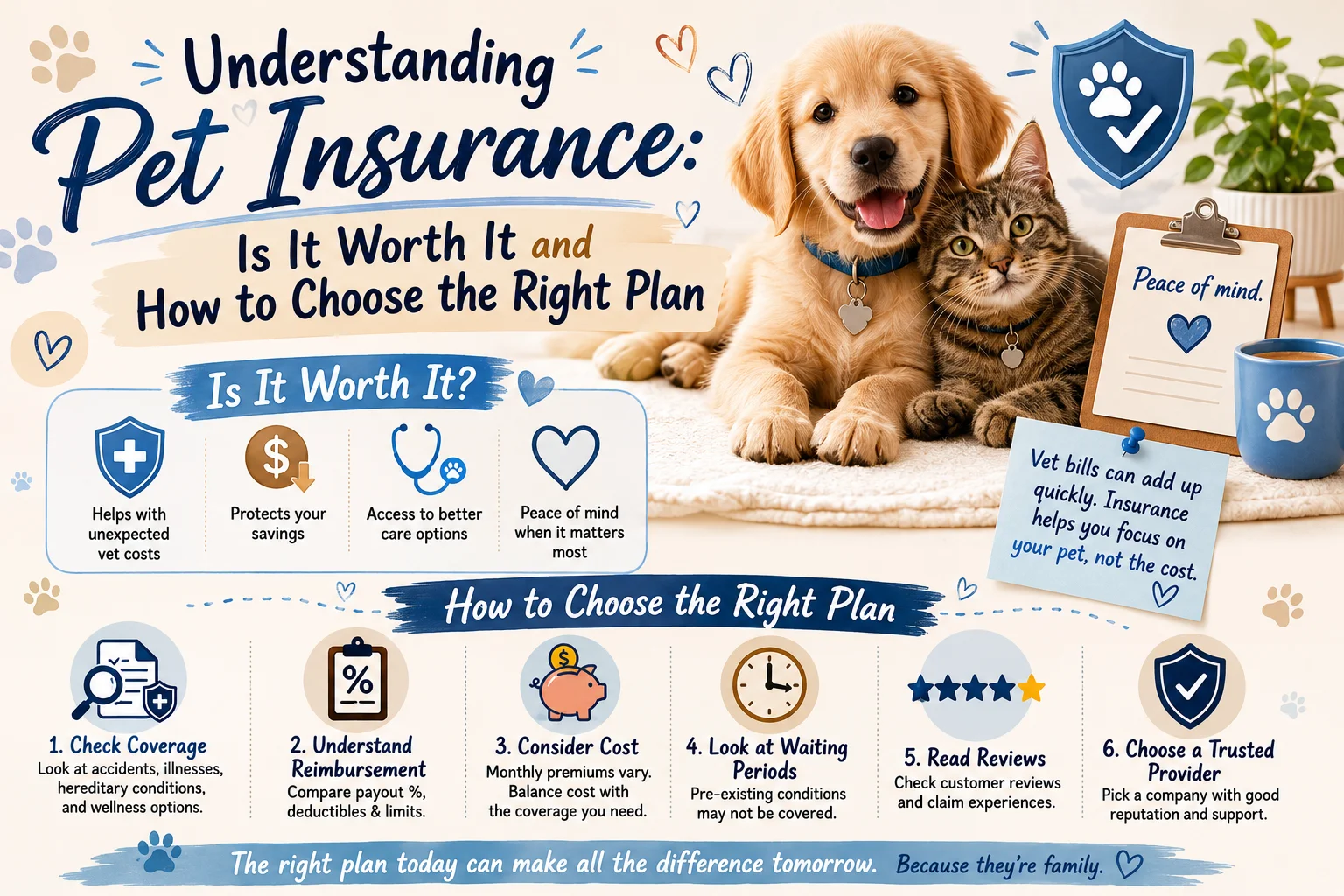
For many pet owners, dogs and cats are more than just animals—they are beloved family members. Just like humans, pets can experience illnesses, injuries, accidents, and chronic health conditions that require medical treatment. While veterinary care has advanced significantly in recent years, these advancements often come with higher costs. A single emergency surgery or hospitalization can result in bills running into thousands of dollars.
This is where pet insurance comes in. Pet insurance is designed to help pet owners manage unexpected veterinary expenses and ensure their pets receive necessary care without causing significant financial stress.
But is pet insurance really worth it? What does it cover, what doesn’t it cover, and how do you choose the best policy?
This comprehensive guide will help you understand pet insurance, evaluate its value, and select a plan that suits both your pet’s needs and your budget.
What Is Pet Insurance?
Pet insurance is a health insurance policy designed specifically for pets. It helps reimburse veterinary expenses related to illnesses, accidents, surgeries, medications, and sometimes preventive care.
Unlike human health insurance, most pet insurance plans work on a reimbursement model.
Typically:
- You pay the veterinarian directly.
- Submit a claim to the insurance company.
- The insurer reimburses eligible expenses according to your policy.
Pet insurance is available for:
- Dogs
- Cats
- Some exotic pets (depending on the provider)
Why Veterinary Costs Are Increasing
Modern veterinary medicine now offers treatments that were unavailable a decade ago.
Examples include:
- MRI scans
- Cancer treatments
- Orthopedic surgeries
- Specialist consultations
- Advanced diagnostic testing
While these treatments can significantly improve a pet’s quality of life, they can also be expensive.
Common veterinary costs may include:
| Treatment | Estimated Cost |
|---|---|
| Emergency Visit | High |
| Surgery | Very High |
| Fracture Repair | Very High |
| Cancer Treatment | Very High |
| Diagnostic Testing | Moderate to High |
Pet insurance helps offset some of these expenses.
How Pet Insurance Works
Most policies include the following components:
Premium
The amount you pay monthly or annually to maintain coverage.
Deductible
The amount you must pay before insurance reimbursement begins.
Reimbursement Rate
Typically ranges from:
- 70%
- 80%
- 90%
Example:
If your veterinary bill is ₹50,000 and your reimbursement rate is 80%, you may receive ₹40,000 back after meeting your deductible.
Annual Coverage Limit
Some policies have annual payout limits, while others offer unlimited coverage.
Types of Pet Insurance Plans
Accident-Only Coverage
This is the most basic type of policy.
Typically covers:
- Broken bones
- Bite wounds
- Poisoning
- Vehicle accidents
- Emergency injuries
Usually more affordable but provides limited protection.
Accident and Illness Coverage
The most common pet insurance option.
Typically covers:
- Accidents
- Infections
- Digestive issues
- Cancer
- Chronic diseases
- Hospitalization
This type provides broader protection.
Comprehensive Coverage
Includes accident and illness protection plus wellness benefits.
May cover:
- Vaccinations
- Routine exams
- Preventive care
- Dental cleaning
Comprehensive plans often have higher premiums.
What Pet Insurance Usually Covers
Coverage varies by provider, but common inclusions are:
Emergency Care
Unexpected emergencies such as:
- Trauma
- Accidents
- Poisoning
Surgery
Coverage may include:
- Orthopedic surgery
- Soft tissue surgery
- Emergency procedures
Hospitalization
Costs associated with:
- Overnight stays
- Monitoring
- Intensive care
Diagnostic Tests
Such as:
- Blood tests
- X-rays
- Ultrasounds
- CT scans
Prescription Medications
Many plans reimburse eligible medications prescribed by veterinarians.
Chronic Conditions
Depending on the policy, coverage may continue for long-term illnesses.
What Pet Insurance Usually Doesn’t Cover
Pet owners should carefully review exclusions.
Common exclusions include:
Pre-Existing Conditions
Conditions diagnosed before policy enrollment are generally excluded.
Cosmetic Procedures
Examples include:
- Tail docking
- Ear cropping
Breeding Expenses
Most policies exclude breeding-related costs.
Experimental Treatments
Certain therapies may not qualify for reimbursement.
Routine Care
Unless wellness coverage is included.
Benefits of Pet Insurance
Financial Protection
Unexpected veterinary bills can be significant.
Insurance helps reduce financial stress.
Better Medical Decisions
Without insurance, owners may decline treatment due to cost concerns.
Coverage allows decisions to be based more on medical needs.
Peace of Mind
Knowing you’re prepared for emergencies provides reassurance.
Access to Advanced Care
Insurance may make specialized treatment options more affordable.
Potential Drawbacks of Pet Insurance
Monthly Cost
Premiums add up over time.
Reimbursement Process
You typically pay upfront before receiving reimbursement.
Exclusions
Not every treatment is covered.
Waiting Periods
Most policies include waiting periods before coverage begins.
Is Pet Insurance Worth It?
The answer depends on several factors.
It May Be Worth It If:
- You want financial protection against emergencies.
- Your pet is young and healthy.
- Your breed is prone to health issues.
- You prefer predictable monthly expenses.
It May Be Less Valuable If:
- You have significant savings specifically for pet emergencies.
- Your pet is already older with multiple pre-existing conditions.
Ultimately, pet insurance functions similarly to other forms of insurance: you hope you never need it, but it’s valuable when unexpected problems arise.
Pet Insurance for Dogs
Dogs often face risks related to:
- Injuries
- Joint problems
- Digestive issues
- Allergies
- Cancer
Certain breeds are more prone to medical conditions, making insurance particularly attractive for some dog owners.
Pet Insurance for Cats
Cats generally experience:
- Urinary tract issues
- Kidney disease
- Dental problems
- Diabetes
- Cancer
Indoor cats may have lower accident risks but can still develop expensive medical conditions.
When Should You Buy Pet Insurance?
The best time is usually when your pet is:
- Young
- Healthy
- Free from diagnosed conditions
Waiting until a health problem develops may result in exclusions.
Factors That Affect Pet Insurance Cost
Age
Older pets generally have higher premiums.
Breed
Certain breeds have increased health risks.
Location
Veterinary costs vary by region.
Coverage Level
More comprehensive plans typically cost more.
Deductible Amount
Higher deductibles often reduce premiums.
How to Choose the Right Pet Insurance Plan
Compare Coverage Details
Don’t focus solely on price.
Review:
- Covered conditions
- Exclusions
- Reimbursement rates
Check Annual Limits
Higher limits offer greater protection.
Review Waiting Periods
Understand when coverage begins.
Read Customer Reviews
Research:
- Claim processing
- Customer service
- Reimbursement speed
Examine Exclusions Carefully
Many disputes arise from misunderstood exclusions.
Questions to Ask Before Buying
- What conditions are excluded?
- Are hereditary conditions covered?
- What is the reimbursement percentage?
- Is there an annual payout limit?
- Are medications covered?
- How quickly are claims processed?
Common Pet Insurance Myths
“My Pet Is Healthy, So I Don’t Need Insurance”
Healthy pets can still experience unexpected accidents.
“Insurance Covers Everything”
All policies contain exclusions and limitations.
“Pet Insurance Is Too Expensive”
The cost of one major emergency can exceed years of premiums.
“Older Pets Can’t Get Coverage”
Many insurers offer coverage for senior pets, although premiums may be higher.
Alternatives to Pet Insurance
Some owners prefer alternative approaches.
Emergency Savings Fund
Setting aside money monthly for pet care.
Veterinary Payment Plans
Some clinics offer installment options.
Wellness Membership Programs
Certain veterinary practices provide preventive care plans.
However, these alternatives may not fully replace comprehensive insurance protection.
Final Thoughts
Pet insurance can be a valuable financial tool for pet owners who want protection against unexpected veterinary expenses. While it may not cover every situation, a well-chosen policy can significantly reduce the financial burden associated with accidents, illnesses, surgeries, and emergency care.
Whether pet insurance is worth it depends on your financial circumstances, risk tolerance, and your pet’s specific needs. By purchasing coverage early, carefully comparing plans, and understanding policy details, you can make an informed decision that supports both your pet’s health and your financial well-being.
Ultimately, the best pet insurance plan is one that provides peace of mind, fits your budget, and ensures your furry companion receives the care they deserve when they need it most.
Frequently Asked Questions (FAQs)
1. What is pet insurance?
Pet insurance is a policy that helps reimburse veterinary expenses related to accidents, illnesses, and certain medical treatments.
2. Is pet insurance worth it?
For many pet owners, yes. It can help manage unexpected veterinary costs and provide financial peace of mind.
3. Does pet insurance cover vaccinations?
Only if preventive or wellness coverage is included in the policy.
4. Are pre-existing conditions covered?
Most pet insurance providers do not cover pre-existing conditions.
5. When should I buy pet insurance?
The ideal time is when your pet is young and healthy.
6. Does pet insurance cover surgeries?
Most accident and illness plans cover eligible surgical procedures.
7. Can older pets get pet insurance?
Yes, although premiums are often higher and coverage options may be more limited.
8. How do pet insurance claims work?
Typically, you pay the veterinarian first, submit a claim, and receive reimbursement based on your policy terms.
How Often Do You Take a Cat to The Vet: A Complete Guide to Your Pet’s Health