Introduction
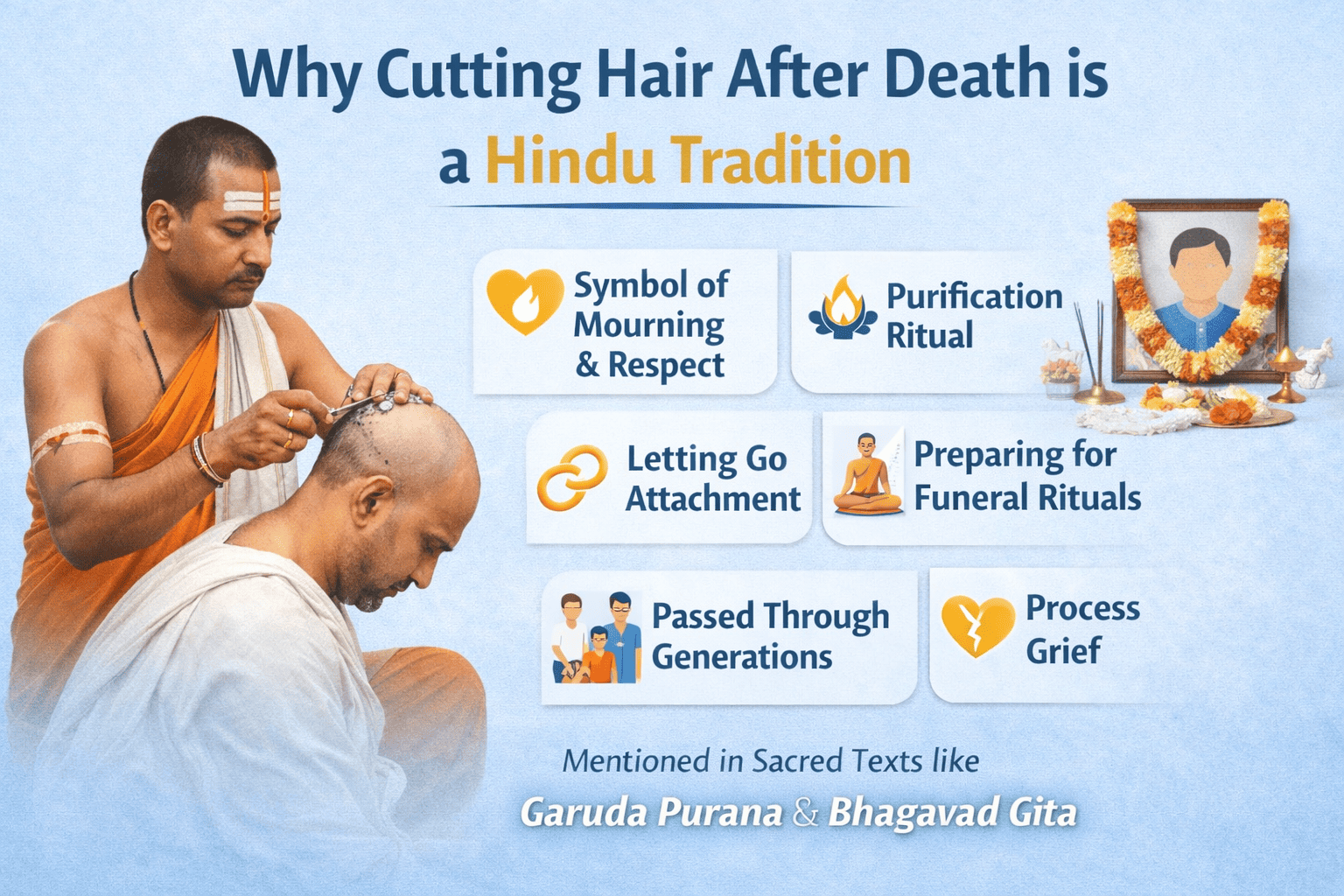
In many Hindu families, it is common for male relatives to cut or shave their hair after the death of a close family member. This ritual is especially followed after the death of parents, grandparents, or other close relatives.
This tradition is part of the funeral rituals described in ancient Hindu scriptures and customs. In Hindu culture, death is not considered the end of life but a transition of the soul to another form. Many rituals are performed to help the soul move peacefully to the next stage.
The practice of cutting hair is connected to traditions mentioned in sacred texts like the Garuda Purana and other Hindu scriptures that describe funeral rites.
1. Symbol of Mourning and Respect
One of the main reasons for cutting hair after death is to show mourning and respect for the deceased person.
Hair is considered a symbol of personal appearance and pride. By shaving or cutting hair, family members show that they are in a period of grief and are temporarily giving up worldly comforts.
This act expresses love and respect for the departed soul.
2. Letting Go of Attachment
Hindu philosophy teaches that life and death are part of the cycle of birth and rebirth, known as Samsara.
According to teachings in the Bhagavad Gita, the soul never dies; it only changes the body.
Cutting hair symbolizes detachment from material attachments and emotional bonds. It reminds the family members that they must accept the reality of death and continue their spiritual journey.
3. Purification Ritual
In many Hindu traditions, death in the family is believed to bring a period of ritual impurity, known as “Ashauch”.
During this period, family members follow certain rules, such as:
- Avoiding celebrations
- Performing daily prayers for the soul
- Following simple living
Shaving or cutting hair is seen as a purification ritual that helps remove impurity and prepares the person for performing funeral rites.
4. Preparing for Funeral Rituals
In many Hindu communities, the eldest son or close male relative performs the main funeral rituals for the deceased.
These rituals include the cremation ceremony and offerings known as “Pind Daan.” These practices are performed to help the soul reach peace and move toward liberation, also known as Moksha.
The idea of Moksha is deeply connected with Hindu spiritual teachings explained in texts like the Upanishads.
Cutting hair before performing these rituals symbolizes humility and spiritual responsibility.
5. A Tradition Passed Through Generations
The practice of shaving hair after death has been followed for thousands of years in Hindu society.
Over time, different regions in India developed slightly different customs. For example:
- Some families shave the entire head
- Some only cut a small portion of hair
- In certain communities, the ritual is performed on the 10th or 13th day after death
Despite these variations, the meaning of the ritual remains the same—honoring the deceased and accepting the cycle of life and death.
6. Psychological Meaning of the Ritual
Apart from religious reasons, this ritual also has a psychological purpose.
Losing a loved one can be emotionally overwhelming. Rituals help family members process grief and come together for support.
By performing symbolic acts like shaving hair, people acknowledge their loss and begin the process of emotional healing.
7. Modern Changes in the Tradition
Today, many families still follow this tradition, but some practices have changed with time.
In modern urban societies:
- Some people only trim their hair instead of shaving completely
- Some families focus more on prayers and charity instead of physical rituals
Even with these changes, the cultural significance of honoring ancestors and remembering loved ones remains strong.
A Guide to Choosing the Best Rural Management College
Conclusion
The tradition of cutting hair after death in Hindu culture is deeply connected to respect, purification, and spiritual beliefs.
It represents mourning for the deceased, acceptance of the cycle of life and death, and preparation for performing important funeral rituals.
Teachings from sacred texts like the Garuda Purana and the Bhagavad Gita explain that the soul continues its journey after death.
Through rituals such as cutting hair, Hindu families express their love, respect, and prayers for the departed soul while also finding strength to move forward in life.
FAQs
1. Why do Hindus shave their heads after someone dies?
Hindus shave their heads as a sign of mourning, respect, and detachment from worldly attachments after the death of a close family member.
2. Who usually performs the hair-cutting ritual?
Traditionally, the eldest son or close male relatives perform this ritual after the death of parents or elders.
3. Is this tradition followed everywhere in India?
The tradition is widely followed, but the exact practice may vary between different regions and communities.
4. Is cutting hair mandatory in Hindu funerals?
It is a traditional custom but not strictly mandatory. Some families choose to follow it symbolically.
5. What is the spiritual meaning of this ritual?
The ritual symbolizes purification, respect for the deceased, and acceptance of the cycle of life and death.