Introduction
Today we live in a world full of technology. People can connect instantly through smartphones, social media, and video calls. Apps like Facebook, Instagram, and WhatsApp allow us to communicate with friends and family anytime.
However, many people still feel lonely. In fact, loneliness has become more common in the modern world. Even with hundreds of online connections, people often feel emotionally disconnected.
This raises an important question: Why do people feel lonely even in the digital age?
In this article, we will explore the reasons behind modern loneliness and what people can do to improve their social well-being.
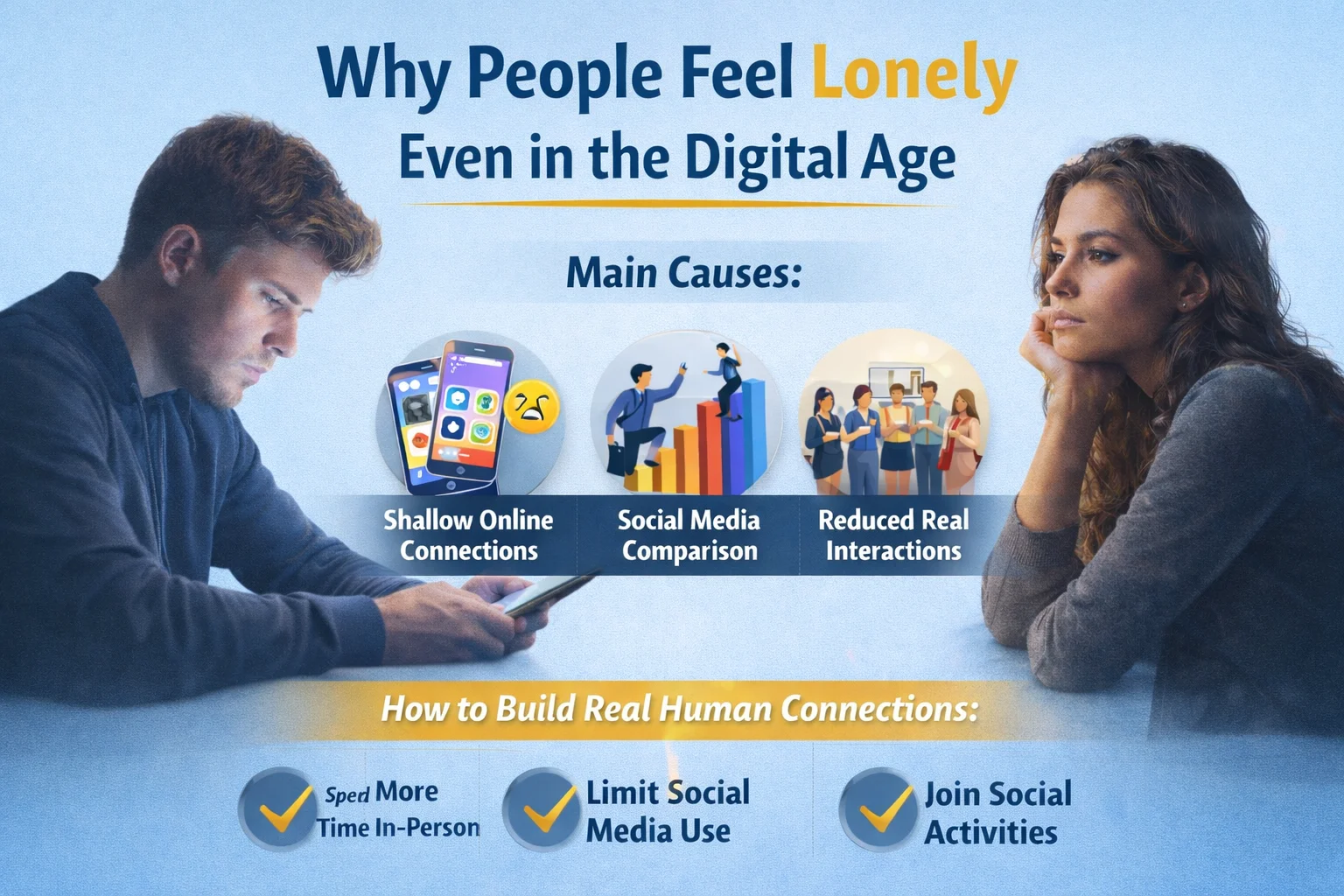
1. Online Connections Are Not Always Real Connections
Social media allows people to interact quickly, but many of these interactions are superficial.
For example:
- Liking a post
- Sending emojis
- Commenting briefly
These activities do not replace deep conversations or emotional support. Real friendships require time, trust, and face-to-face interaction.
Because of this, people may have many online contacts but still lack meaningful relationships.
2. Social Media Comparison
Another reason for loneliness is constant comparison.
On platforms like Instagram and Facebook, people often share only the best moments of their lives:
- Vacations
- Success stories
- Happy relationships
When others see these posts, they may feel that their own lives are less exciting or successful. This can create feelings of insecurity and isolation, which increase loneliness.
3. Reduced Face-to-Face Interaction
Technology has changed the way people communicate.
In the past, people spent more time:
- Talking with neighbors
- Visiting relatives
- Meeting friends in person
Today, many conversations happen through messaging apps like WhatsApp instead of real-life meetings.
While digital communication is convenient, it cannot fully replace human presence, eye contact, and physical interaction.
4. Busy Modern Lifestyle
Modern life is often very busy. Many people focus on:
- Career growth
- Financial stability
- Personal goals
Because of work pressure and long working hours, people may not have enough time to maintain friendships or social relationships.
This busy lifestyle can slowly lead to social isolation.
5. Fear of Judgement Online
Social media can sometimes create pressure to appear perfect.
People worry about:
- What others will think
- How many likes their posts get
- Whether they are popular online
This fear of judgment can make people hide their true feelings, which prevents genuine connections from forming.
6. Technology Replacing Real Experiences
Technology provides many forms of entertainment such as streaming platforms, video games, and social media.
People may spend hours watching content on platforms like Netflix or scrolling through social feeds.
While this can be enjoyable, too much screen time reduces the time spent building real-world relationships.
7. Smaller Social Communities
In the past, people often lived in large communities with strong social bonds.
For example:
- Joint families
- Close neighborhood relationships
- Community gatherings
Today many people live alone in cities or far away from family. This can increase feelings of loneliness even when they are connected online.
Effects of Loneliness
Long-term loneliness can affect both mental and physical health. Some possible effects include:
- Stress and anxiety
- Depression
- Low self-confidence
- Sleep problems
- Reduced life satisfaction
Because of these effects, experts consider loneliness an important public health issue.
How to Reduce Loneliness in the Digital Age
Although technology can contribute to loneliness, people can still use it in healthy ways.
1. Build Real Relationships
Spend time with family and friends in person whenever possible.
2. Limit Social Media Use
Reducing time on social platforms can improve mental health and reduce comparison.
3. Join Social Activities
Participate in community events, clubs, or sports groups to meet new people.
4. Practice Honest Communication
Share real feelings with trusted people instead of hiding emotions.
5. Balance Online and Offline Life
Technology should support relationships, not replace them.
Conclusion
Even though technology has made communication easier than ever, true connection requires more than digital interaction.
Platforms like Facebook, Instagram, and WhatsApp allow us to stay connected, but they cannot replace genuine human relationships.
Loneliness in the digital age often happens because of superficial online interactions, social comparison, busy lifestyles, and reduced face-to-face communication.
By focusing on meaningful relationships and balancing technology use, people can build stronger connections and live healthier, happier lives.
FAQs
1. Why do people feel lonely even with social media?
People may have many online connections, but social media interactions often lack deep emotional connection.
2. Can technology cause loneliness?
Technology itself is not the main cause, but excessive use and reduced real-life interactions can contribute to loneliness.
3. Is loneliness common in modern society?
Yes, loneliness has become increasingly common due to busy lifestyles and reduced community interaction.
4. How can someone reduce loneliness?
Building strong friendships, limiting social media use, and participating in social activities can help reduce loneliness.
5. Are online friendships real?
Online friendships can be meaningful, but they are often stronger when combined with real-life interaction.