Pets are family, and every pet owner wants to provide the best nutrition for their furry companions. However, the internet is full of misinformation about pet diets, making it difficult to separate fact from fiction. Understanding the truth behind common nutrition myths can help keep your cat or dog healthy and happy.
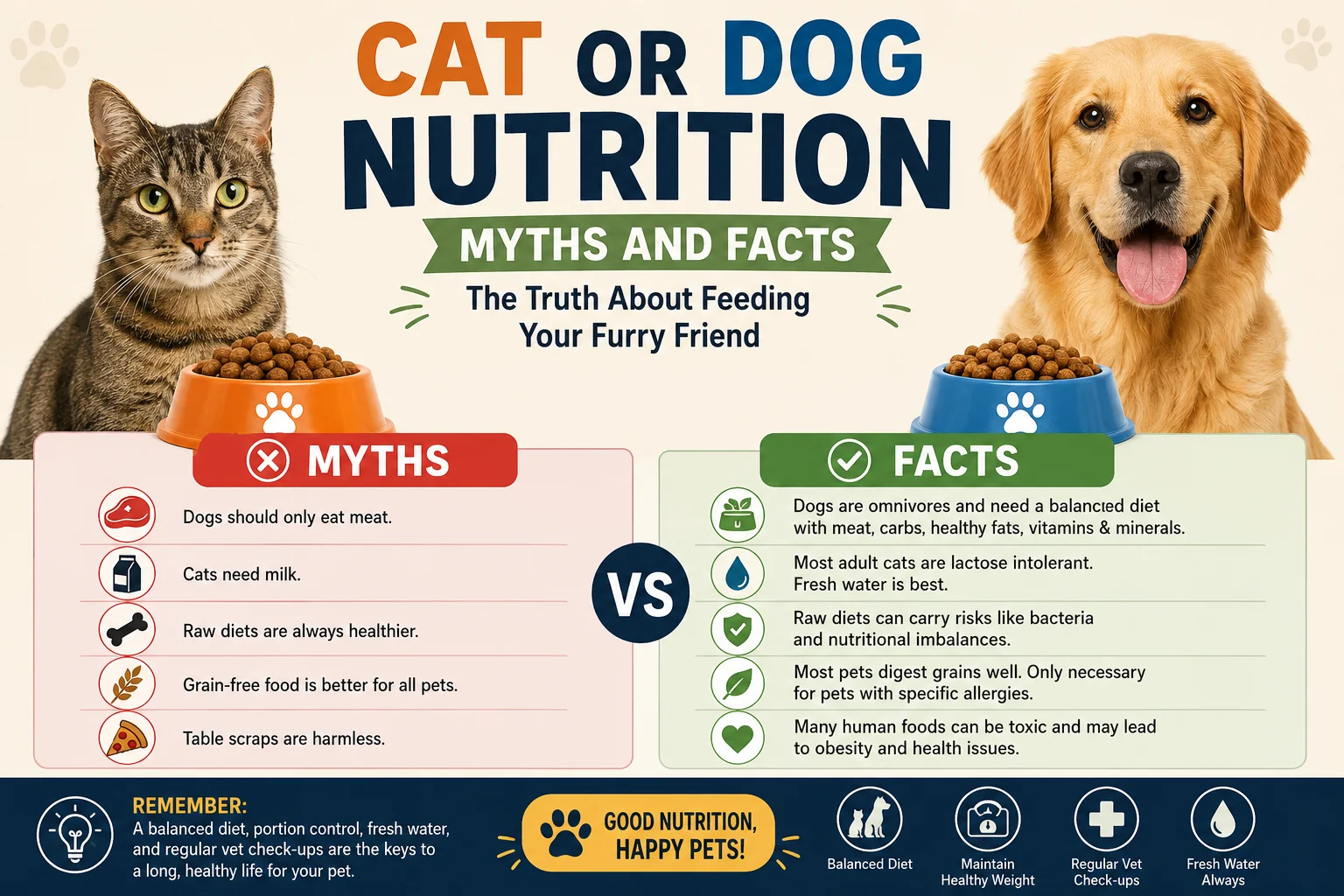
Myth 1: Dogs Should Only Eat Meat
Fact: Dogs are omnivores, meaning they can digest and benefit from both animal and plant-based foods.
While high-quality protein is essential, dogs also need:
- Carbohydrates for energy
- Healthy fats for skin and coat health
- Vitamins and minerals from fruits and vegetables
A balanced diet is more important than a meat-only diet.
Myth 2: Cats and Dogs Can Eat the Same Food
Fact: Cats and dogs have different nutritional needs.
Cats are obligate carnivores and require nutrients such as:
- Taurine
- Arachidonic acid
- Vitamin A from animal sources
Dog food lacks sufficient amounts of these nutrients, making it unsuitable as a regular diet for cats.
Myth 3: Raw Diets Are Always Healthier
Fact: Raw diets can carry risks.
Potential concerns include:
- Bacterial contamination (Salmonella, E. coli)
- Nutritional imbalances
- Risk of choking on bones
If considering a raw diet, consult a veterinarian or veterinary nutritionist first.
Myth 4: Grain-Free Food Is Better for All Pets
Fact: Most pets digest grains perfectly well.
Whole grains such as:
- Brown rice
- Oats
- Barley
can provide valuable nutrients and fiber. Grain-free diets are only necessary for pets with specific allergies or sensitivities diagnosed by a veterinarian.
Myth 5: Table Scraps Are Harmless
Fact: Many human foods can be dangerous.
Foods that can be toxic include:
- Chocolate
- Grapes and raisins
- Onions
- Garlic
- Xylitol-containing products
Even non-toxic table scraps can contribute to obesity and digestive issues.
Myth 6: Cats Need Milk
Fact: Most adult cats are lactose intolerant.
While kittens can digest their mother’s milk, many adult cats struggle to process dairy products, which may cause:
- Diarrhea
- Stomach upset
- Gas
Fresh water is the best beverage for cats.
Myth 7: Dry Food Cleans a Dog’s Teeth
Fact: Dry kibble provides only limited dental benefits.
Proper dental care should include:
- Regular brushing
- Veterinary dental checkups
- Approved dental chews
Food alone cannot prevent dental disease.
Myth 8: A Fat Pet Is a Healthy Pet
Fact: Excess weight can shorten a pet’s lifespan.
Obesity increases the risk of:
- Diabetes
- Arthritis
- Heart disease
- Breathing problems
Maintaining a healthy body condition is one of the best ways to support long-term health.
Myth 9: Homemade Diets Are Automatically Better
Fact: Homemade diets can be excellent, but only if properly balanced.
Many homemade recipes found online lack essential nutrients, leading to deficiencies over time. A veterinarian can help formulate a complete and balanced meal plan.
Myth 10: Supplements Are Necessary for Every Pet
Fact: Healthy pets eating a complete and balanced diet often don’t need additional supplements.
Unnecessary supplementation may sometimes:
- Cause nutrient imbalances
- Lead to toxicity
- Interfere with medications
Always consult your veterinarian before adding supplements.
Signs Your Pet Is Getting Proper Nutrition
A well-nourished cat or dog typically has:
✔ A shiny coat
✔ Healthy skin
✔ Good energy levels
✔ Healthy weight
✔ Regular digestion
✔ Bright eyes and alert behavior
Final Thoughts
Pet nutrition is constantly evolving, but one principle remains the same: a balanced diet tailored to your pet’s age, breed, activity level, and health condition is essential. Rather than following popular trends or online myths, rely on evidence-based advice from veterinary professionals to make informed feeding decisions.
FAQs
Q1. Is grain-free food better for dogs?
Not necessarily. Most dogs can digest grains without problems, and grain-free diets are only beneficial for specific medical conditions.
Q2. Can cats drink cow’s milk?
Most adult cats are lactose intolerant and may experience digestive issues after drinking milk.
Q3. Are raw diets safe for pets?
Raw diets can carry risks such as bacterial contamination and nutritional deficiencies if not carefully managed.
Q4. How often should I feed my dog?
Most adult dogs do well with two meals per day, though requirements vary by age and breed.
Q5. What is the biggest pet nutrition myth?
One of the most common myths is that grain-free or raw diets are automatically healthier for every pet. The best diet depends on the individual pet’s needs.