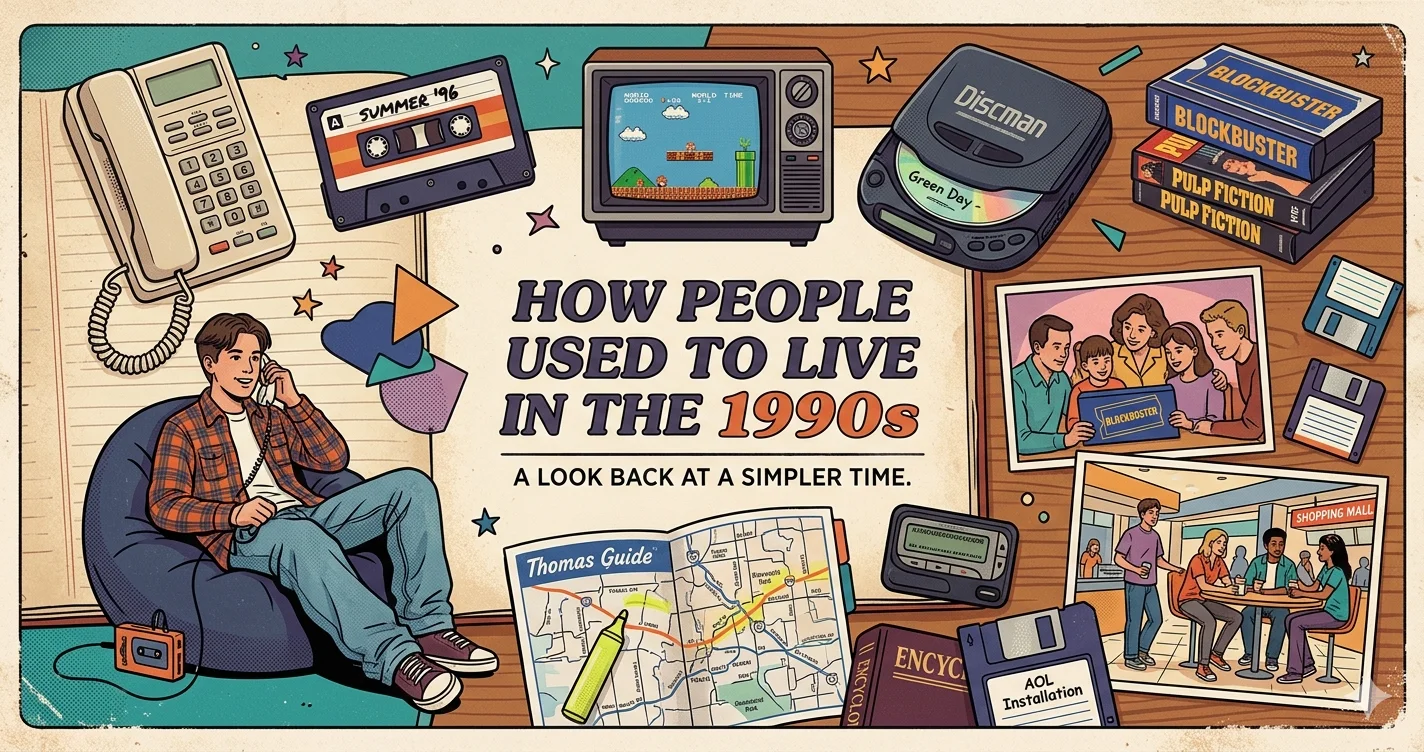
The 1990s were a fascinating decade that bridged the gap between the traditional world and the digital age. While technology was beginning to emerge, most people still lived without smartphones, social media, online shopping, or high-speed internet. Life in the 1990s was slower, more personal, and centered around real-world interactions.
For many people, the decade represents a time of simplicity, strong family connections, outdoor activities, and memorable cultural experiences. Whether you grew up in the 1990s or are curious about what life was like before modern technology took over, understanding how people lived during this era provides valuable insight into a world that was very different from today.
Communication Was Slower but More Personal
One of the biggest differences between life in the 1990s and today was communication.
Most households had a landline telephone. Family members often shared a single phone, and if someone was using it, others had to wait their turn. Long conversations with friends often took place after school or work, and many teenagers spent hours talking on the phone.
Text messaging was not common, and smartphones did not exist. If people wanted to communicate, they either called, wrote letters, or met in person.
When someone was away from home, it was difficult to contact them immediately. There were no instant messaging apps, video calls, or social media notifications. As a result, people often planned their meetings in advance and respected schedules more carefully.
Entertainment Was Completely Different
Entertainment in the 1990s was centered around television, radio, music players, and outdoor activities.
Families often gathered together to watch their favorite television shows at a specific time because streaming services did not exist. Missing an episode meant waiting for a rerun.
Popular forms of entertainment included:
- Watching television programs
- Listening to FM radio
- Renting movies from video stores
- Playing board games
- Reading magazines and comics
- Listening to cassette tapes and CDs
Movie rental stores were extremely popular. Families would visit these stores on weekends to rent films and enjoy movie nights together.
Children spent much of their free time outdoors, playing sports, riding bicycles, and participating in neighborhood games rather than spending hours on digital devices.
The Internet Was Rare and Slow
Although the internet became available during the 1990s, it was far from the essential tool it is today.
Most people did not have internet access at home during the early years of the decade. Those who did often used dial-up connections, which were extremely slow.
Connecting to the internet required using the telephone line. While someone was online, nobody else could use the phone.
Websites were simple and mostly text-based. Online videos, social media platforms, and cloud storage services were virtually nonexistent.
People relied on:
- Libraries
- Newspapers
- Encyclopedias
- Television news
- Magazines
for information and research.
Education Relied on Books and Libraries
Students in the 1990s completed assignments without the help of search engines or AI tools.
Research projects often involved:
- Visiting libraries
- Reading books
- Using encyclopedias
- Taking handwritten notes
Teachers emphasized handwriting, note-taking, and memorization.
Classrooms typically featured:
- Chalkboards
- Printed textbooks
- Overhead projectors
- Physical maps and charts
Computers were present in some schools but were not widely integrated into everyday learning.
Group projects usually required students to meet in person rather than collaborating online.
Shopping Required Visiting Stores
Before online shopping transformed consumer behavior, people had to visit physical stores to buy almost everything.
Shopping malls were major social destinations where families and friends spent hours browsing stores, eating food, and enjoying entertainment.
Common shopping experiences included:
- Department stores
- Local markets
- Grocery stores
- Shopping malls
- Specialty shops
Product reviews were not available online. People often relied on recommendations from friends, family members, or sales representatives.
Comparing prices required visiting multiple stores instead of checking websites instantly.
Family Time Played a Bigger Role
Family life in the 1990s was often more focused on shared activities.
Without constant digital distractions, family members spent more time together.
Common family activities included:
- Eating meals together
- Watching television
- Going on road trips
- Playing board games
- Visiting relatives
- Attending community events
Children generally had fewer screens competing for their attention, which encouraged stronger face-to-face interactions.
Many families maintained traditions that brought everyone together regularly.
Children Enjoyed More Outdoor Play
One of the most noticeable aspects of life in the 1990s was the amount of time children spent outdoors.
After school, many children immediately went outside to play with friends.
Popular activities included:
- Cricket
- Football
- Cycling
- Hide and seek
- Tag
- Skating
- Kite flying
Parents often encouraged outdoor play because digital entertainment options were limited.
Children developed social skills by interacting directly with their peers rather than through online platforms.
Music Was Experienced Differently
Music lovers in the 1990s consumed music through physical media.
People listened to:
- Cassette tapes
- Compact discs (CDs)
- Radio stations
- Music television channels
Creating a personal music collection required purchasing albums rather than subscribing to streaming services.
Many teenagers spent hours recording songs from the radio onto blank cassette tapes.
Music stores were popular gathering places where fans could discover new artists and albums.
Travel Was Less Technology-Driven
Travel in the 1990s required more planning and preparation.
Without GPS navigation systems, travelers relied on:
- Printed maps
- Travel guides
- Road signs
- Local directions
Booking flights and hotels often involved contacting travel agents or making phone calls.
People carried physical tickets and printed itineraries.
Despite these limitations, travel often felt more adventurous because travelers had to navigate unfamiliar locations without digital assistance.
Workplaces Operated Differently
The modern remote work culture was almost nonexistent during the 1990s.
Most employees worked from offices and used desktop computers primarily for basic tasks.
Communication within workplaces relied heavily on:
- Face-to-face meetings
- Telephone calls
- Fax machines
- Printed documents
Emails were becoming popular but had not yet replaced traditional communication methods entirely.
Employees often maintained clear boundaries between work and personal life because work rarely followed them home.
News and Information Spread More Slowly
In today’s world, news travels instantly through smartphones and social media.
During the 1990s, people received news through:
- Newspapers
- Television broadcasts
- Radio programs
- Magazines
Most households had a routine for consuming news, such as reading the morning newspaper or watching the evening news.
Because information spread more slowly, people had more time to process events before reacting.
Photography Was More Meaningful
Taking photographs in the 1990s was a different experience.
Most people used film cameras rather than digital devices.
A roll of film had a limited number of exposures, so people carefully chose what to photograph.
After taking pictures, the film needed to be developed before anyone could see the results.
This process often took several days.
As a result, photographs felt more special and intentional compared to today’s endless stream of smartphone images.
Social Life Was Centered Around Real Interactions
Friendships in the 1990s were built primarily through face-to-face interaction.
People met friends:
- At school
- At work
- In neighborhoods
- Through family connections
- At community events
Social media did not exist to maintain constant contact.
Meeting someone usually required making plans and physically showing up.
This encouraged stronger personal relationships and more meaningful conversations.
Fashion Reflected the Culture of the Decade
The 1990s had a distinctive fashion identity.
Popular styles included:
- Denim jackets
- Baggy jeans
- Graphic T-shirts
- Sneakers
- Flannel shirts
- Tracksuits
Fashion trends were influenced by music, movies, television, and celebrities.
Unlike today’s fast-paced online fashion cycles, trends often lasted longer and spread more gradually.
Why People Feel Nostalgic About the 1990s
Many people look back on the 1990s with nostalgia because life felt less rushed and less connected to technology.
Some reasons include:
- Stronger face-to-face relationships
- Fewer digital distractions
- More outdoor activities
- Greater privacy
- Simpler lifestyles
- More family interaction
While the decade had its challenges, many people remember it as a period when life felt more balanced and personal.
Lessons Modern Society Can Learn from the 1990s
Although today’s technology offers countless advantages, the 1990s remind us of the value of slowing down.
Important lessons include:
- Spending quality time with family
- Limiting screen usage
- Enjoying outdoor activities
- Building real-world relationships
- Being present in the moment
By combining the convenience of modern technology with the meaningful habits of the 1990s, people can create healthier and more fulfilling lifestyles.
Conclusion
Life in the 1990s was dramatically different from today’s digital world. Communication was slower, entertainment was more communal, and daily life revolved around personal interactions rather than screens.
People relied on face-to-face conversations, physical media, libraries, and local communities. Children played outdoors, families spent more time together, and technology occupied a much smaller role in everyday life.
While modern innovations have transformed society in countless positive ways, the 1990s continue to hold a special place in people’s hearts because they represent a simpler era where relationships, experiences, and human connection often took center stage.
FAQs
What was daily life like in the 1990s?
Daily life in the 1990s involved more face-to-face interactions, outdoor activities, landline phones, television, and physical shopping. Technology existed but was not central to everyday life.
Did people use the internet in the 1990s?
Yes, but internet access was limited and slow. Most users connected through dial-up services, and many households did not have internet access at all.
How did students study in the 1990s?
Students primarily used textbooks, libraries, encyclopedias, and handwritten notes. Online research tools were largely unavailable.
What did people do for entertainment in the 1990s?
Popular entertainment included watching television, listening to music, renting movies, reading magazines, and playing outdoor games.
Why do people miss the 1990s?
Many people miss the 1990s because of stronger personal connections, less screen time, more outdoor activities, and a slower pace of life.
Also Read: Why Do We Feel Lost in Our 20s? (Complete Guide for Clarity & Direction)