Planning a family is one of the most exciting phases of life—but it also comes with significant financial responsibilities. With rising healthcare costs, especially in private hospitals, maternity expenses can put a strain on your savings. This is where maternity insurance becomes essential.
Maternity insurance is either a standalone policy or an add-on to your health insurance plan that covers pregnancy-related expenses, including delivery, hospitalization, and newborn care.
In this article, we’ll explore the top 5 advantages of buying maternity insurance and why it’s a smart financial decision.
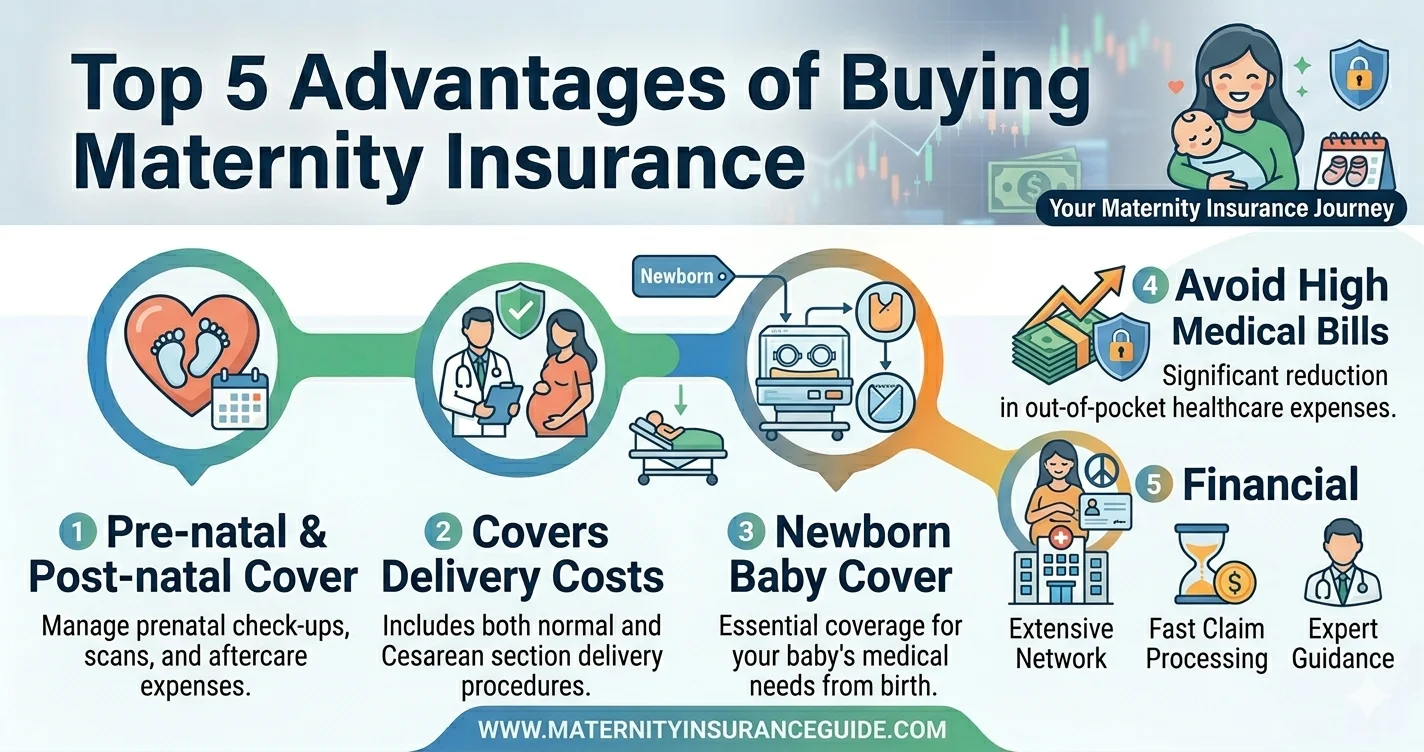
1. Covers High Delivery Costs
One of the biggest advantages of maternity insurance is that it covers the high cost of childbirth.
In India, delivery expenses can vary widely:
- Normal delivery: ₹30,000 to ₹1,00,000
- C-section delivery: ₹80,000 to ₹2,50,000 or more
Maternity insurance helps you manage these costs by covering:
- Hospital room charges
- Doctor’s fees
- Operation theatre expenses
- Pre and post-natal care
This ensures you don’t have to dip into your savings during such an important time.
2. Cashless Hospitalization Facility
Most maternity insurance plans are tied up with a network of hospitals, allowing you to avail cashless treatment.
Benefits include:
- No need to arrange cash during emergencies
- Direct settlement between insurer and hospital
- Hassle-free claim process
This feature is especially helpful during delivery when quick decisions and stress-free processes are crucial.
3. Covers Pre and Post-Natal Expenses
Pregnancy involves regular doctor visits, tests, and medications—not just delivery costs.
Maternity insurance typically covers:
- Doctor consultations
- Ultrasound scans
- Diagnostic tests
- Medicines
- Post-delivery recovery care
These expenses can add up quickly, and having insurance ensures comprehensive financial support throughout the pregnancy journey.
4. Newborn Baby Coverage
Another major benefit is coverage for your newborn baby from day one.
This may include:
- Vaccination expenses
- Medical treatment for the newborn
- Hospitalization if required
Some plans even offer extended coverage for congenital conditions (depending on policy terms), giving your child a secure start in life.
5. Financial Planning and Peace of Mind
Maternity insurance is not just about covering expenses—it’s about planning ahead.
Key benefits:
- Reduces financial stress
- Helps in better budgeting
- Ensures access to quality healthcare
- Allows you to focus on your health and baby
However, it’s important to note that most maternity insurance plans come with a waiting period of 9 months to 4 years. That’s why experts recommend buying it well in advance of planning a baby.
Also Read: Budgeting Apps in India: Why jUMPP is a Smart Choice for Managing Your Money
Things to Consider Before Buying Maternity Insurance
Before purchasing a plan, keep these factors in mind:
- Waiting Period: Choose a plan with a shorter waiting period if possible
- Coverage Limit: Check the maximum claim amount for maternity expenses
- Network Hospitals: Ensure good hospitals are included
- Premium Cost: Compare different insurers for affordability
- Inclusions & Exclusions: Read policy details carefully
Who Should Buy Maternity Insurance?
Maternity insurance is ideal for:
- Newly married couples
- Couples planning a baby in the next few years
- Individuals without sufficient savings for medical emergencies
Buying early ensures you complete the waiting period before you actually need the coverage.
FAQs: Maternity Insurance
1. What is maternity insurance?
Maternity insurance is a type of health insurance that covers pregnancy-related expenses, including delivery and newborn care.
2. Does maternity insurance cover normal and C-section delivery?
Yes, most plans cover both normal and cesarean deliveries, subject to policy limits.
3. Is there a waiting period for maternity insurance?
Yes, typically between 9 months to 4 years depending on the insurer.
4. Can I buy maternity insurance after getting pregnant?
No, most insurers do not cover pregnancy if the policy is purchased after conception.
5. Does it cover IVF or fertility treatments?
Some plans may cover fertility treatments, but many exclude them. Always check policy terms.
6. Are newborn vaccinations covered?
Yes, many plans include vaccination expenses for the newborn.
7. Is maternity insurance expensive?
Premiums are higher than regular health insurance but provide valuable coverage during pregnancy.
8. Can I add maternity cover to my existing policy?
Yes, many insurers offer maternity benefits as an add-on rider.
Conclusion
Maternity insurance is a smart investment for anyone planning to start a family. With rising healthcare costs, having a dedicated insurance plan ensures that you can focus on what truly matters—your health and your baby—without worrying about expenses.
By buying early and choosing the right plan, you can enjoy a stress-free and financially secure pregnancy journey.
Also Read: Best Apps for Saving Money in India