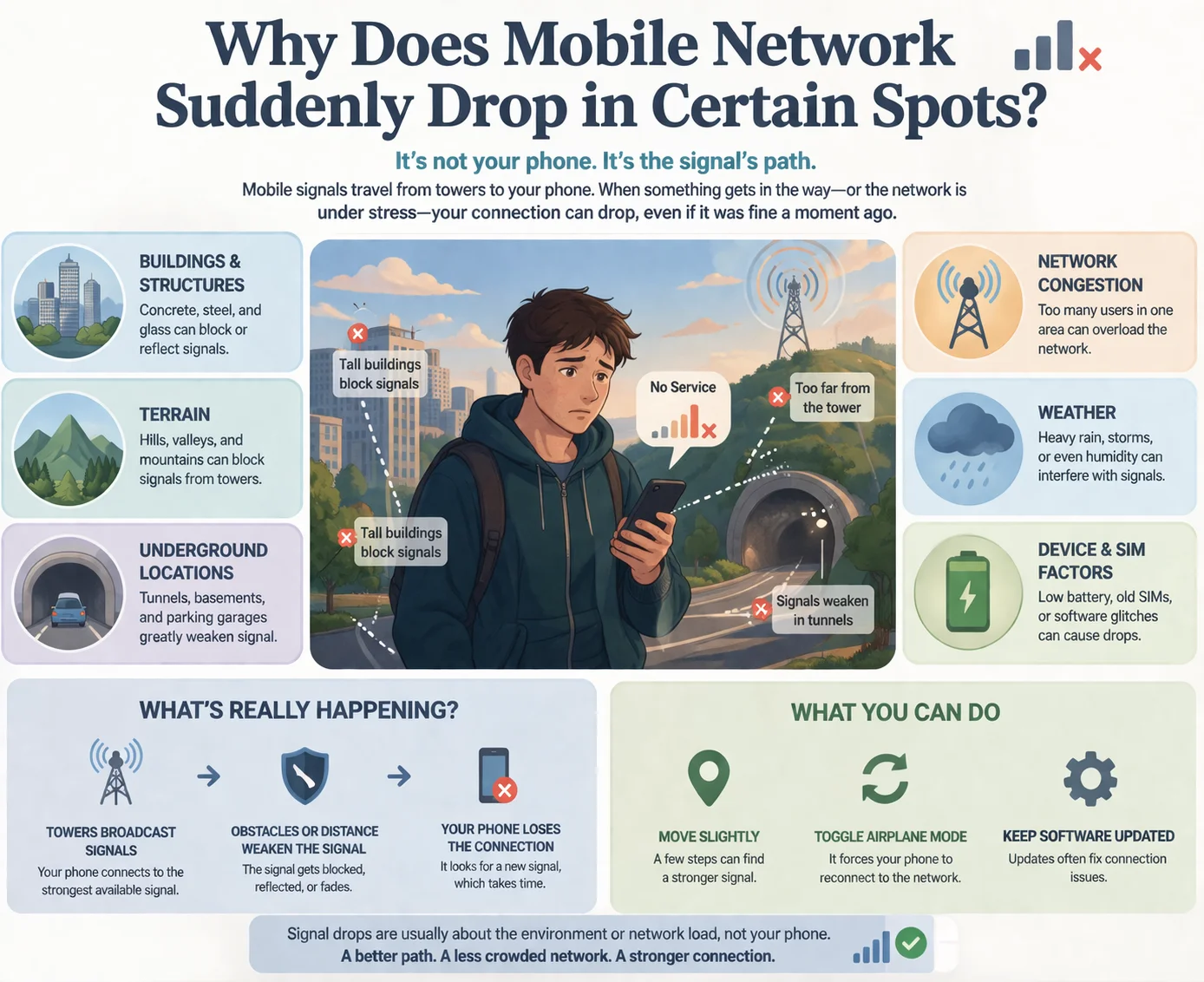
Have you ever noticed your mobile signal suddenly disappearing in specific locations—like inside buildings, elevators, or even certain streets? This can be frustrating, especially when you’re on an important call or using the internet.
Mobile network drops are actually quite common, and they happen due to a mix of physical, technical, and environmental factors. Let’s break down the main reasons behind it.
1. Distance from Cell Towers
Mobile phones connect to nearby towers to get signal. The farther you are from a tower, the weaker the signal becomes.
If you’re in a remote area or at the edge of a tower’s range, your network may drop or become unstable.
2. Physical Obstacles
Buildings, walls, and other structures can block or weaken signals.
Common obstacles include:
- Thick concrete walls
- Basements and underground areas
- Elevators
- Large buildings
Signals struggle to pass through dense materials, which leads to sudden drops.
3. Network Congestion
In crowded places like markets, events, or public transport, many people use the network at the same time.
This creates congestion, causing:
- Slower internet speeds
- Call drops
- Weak signals
Even if the signal is strong, heavy usage can reduce performance.
4. Interference from Surroundings
Electronic devices, weather conditions, and even nearby signals can interfere with your mobile network.
For example:
- Wi-Fi routers
- Other mobile devices
- Metal structures
These can disrupt signal quality and cause sudden drops.
5. Terrain and Geography
Natural landscapes also affect signal strength.
Areas with:
- Hills or mountains
- Dense forests
- Valleys
can block or reflect signals, leading to poor connectivity in certain spots.
6. Network Coverage Gaps
Not all areas have equal network coverage. Some locations may fall into “dead zones” where signal strength is very weak or nonexistent.
These gaps can occur due to:
- Limited infrastructure
- Low population areas
- Planning limitations
7. Building Design and Materials
Modern buildings often use materials that block signals more effectively, such as:
- Glass with metal coating
- Reinforced concrete
- Steel structures
This is why signals are often weaker indoors compared to outdoors.
8. Switching Between Towers
As you move, your phone constantly switches between towers to maintain connection.
Sometimes, this handover is not smooth, causing:
- Temporary signal drops
- Call interruptions
This is common while traveling in cars or trains.
9. SIM Card or Device Issues
Sometimes the problem is not the network but your device.
Possible issues include:
- Damaged SIM card
- Outdated phone software
- Weak antenna in the phone
These can affect how well your device receives signals.
10. Weather Conditions
Extreme weather like heavy rain, storms, or fog can weaken signal transmission.
While this is usually temporary, it can still cause noticeable network drops.
Why People Feel Lonely Even in the Digital Age
How to Improve Mobile Signal
If you frequently face network issues, here are some simple tips:
1. Move to an Open Area
Signals are stronger outdoors or near windows.
2. Restart Your Phone
This can refresh your network connection.
3. Switch Network Mode
Try switching between 4G, 5G, or 3G if available.
4. Use Wi-Fi Calling
If supported, it can improve call quality indoors.
5. Change Your Location Slightly
Even a few steps can make a difference in signal strength.
Conclusion
Mobile network drops in certain spots are usually caused by physical barriers, distance from towers, congestion, or environmental factors. While it may feel random, there’s always a technical reason behind it.
Understanding these factors can help you find better signal areas and improve your overall mobile experience.
FAQs
1. Why does my signal drop in the same place every time?
That location may be a coverage gap or blocked by physical obstacles.
2. Why is signal weak inside buildings?
Walls and construction materials block or weaken signals.
3. Can weather affect mobile networks?
Yes, extreme weather can temporarily reduce signal strength.
4. Does phone quality matter for signal?
Yes, better devices usually have stronger antennas and better reception.
5. How can I fix frequent call drops?
Try moving to open areas, restarting your phone, or switching network modes.