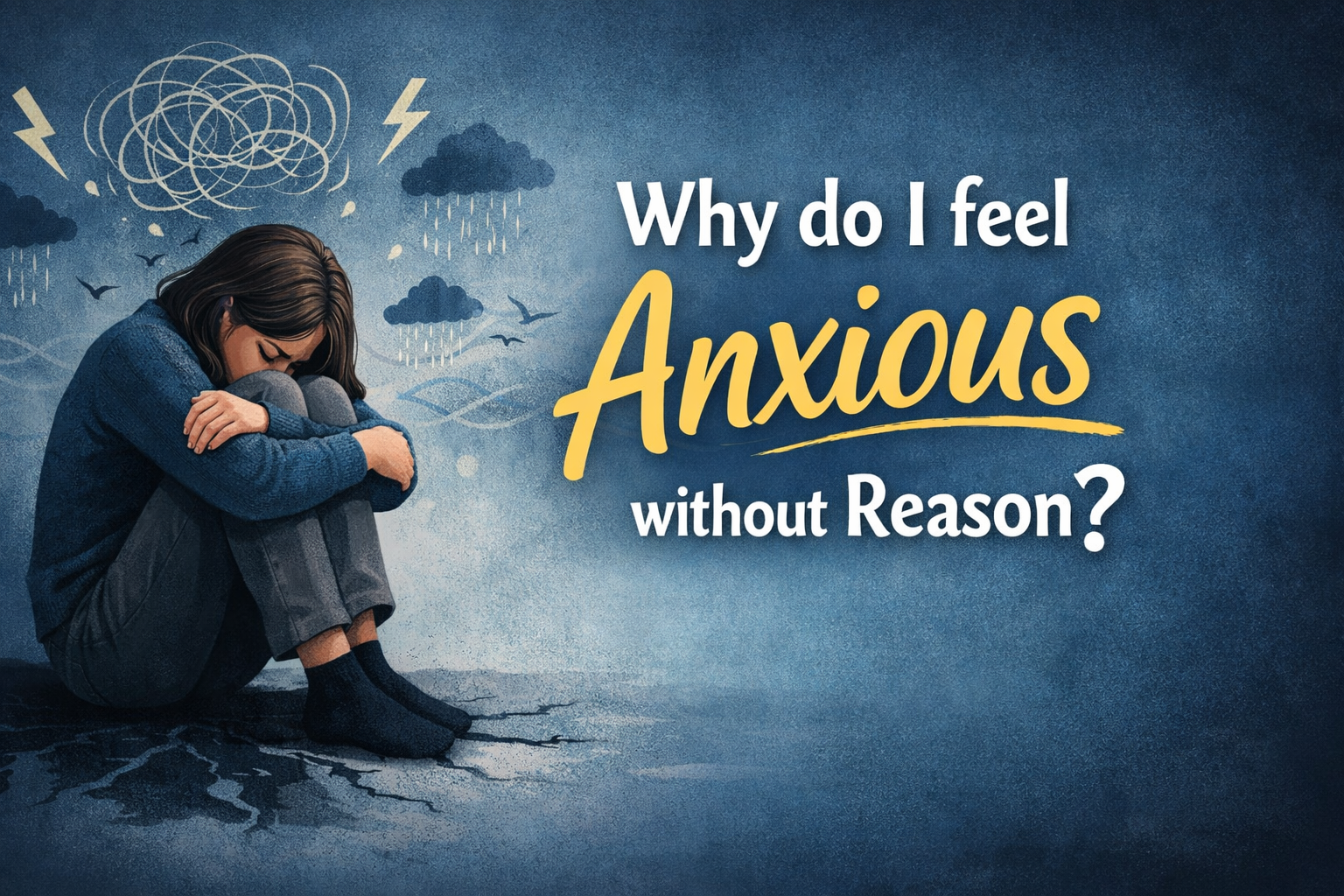
Have you ever been sitting quietly—scrolling your phone, watching TV, or lying in bed—when suddenly your chest feels tight, your thoughts start racing, and an uneasy feeling appears for no obvious reason? Nothing bad is happening, yet your body feels like something is wrong.
If you’ve ever thought:
Why am I anxious when everything is fine?
There’s no reason for this—so why do I feel like this?
Am I overthinking or is something wrong with me?
You are not weak, broken, or imagining things. Feeling anxious for “no reason” is extremely common, and there are real psychological and physical explanations behind it.
This article explains why anxiety can appear suddenly, what is happening inside your mind and body, and how to manage it in a healthy way.
Understanding Anxiety Beyond Worry
Anxiety is not just stress or nervousness. It is your body’s built-in protection system. Long ago, this system helped humans survive danger. Today, the same system reacts to emotional stress, mental overload, past experiences, and even internal body changes.
This means anxiety does not always need an external threat. Your nervous system can go into alert mode even when life seems calm.
Is Anxiety Without a Reason Really Random?
Anxiety rarely comes without a cause. The reason is usually hidden, unconscious, or delayed.
Think of anxiety as a signal from your body saying something needs attention. The trigger may not be obvious, but it exists.
Common Reasons You Feel Anxious for No Clear Reason
Chronic Stress Stored in the Body
Stress does not disappear once a stressful situation ends. When you stay busy, suppress emotions, or remain tense for long periods, your body stores that stress.
Later, when you finally slow down, anxiety may appear unexpectedly. This is not failure. It is your nervous system releasing built-up tension.
Overthinking and Mental Exhaustion
Your mind may look calm on the surface, but background thoughts may still be running. Constant planning, replaying conversations, worrying about the future, or imagining worst-case scenarios can keep your brain in a constant state of alert.
Your body reacts to imagined danger the same way it reacts to real danger.
Suppressed Emotions
Emotions that are ignored do not disappear. Sadness, anger, fear, disappointment, or grief that you never fully processed can surface later as anxiety.
Anxiety is often the body’s way of expressing emotions you never allowed yourself to feel.
Past Trauma or Emotional Memory
You do not need to consciously remember trauma for it to affect you. Your nervous system remembers feelings, tones, and situations.
A smell, sound, or situation can trigger anxiety even when you do not know why. The body reacts before the mind understands.
Hormonal Changes
Hormones strongly influence anxiety levels. Changes related to menstrual cycles, PMS, thyroid issues, lack of sleep, excess caffeine, or general fatigue can trigger anxiety without emotional reasons.
Sometimes anxiety is not psychological. It is chemical.
Lack of Sleep
Sleep helps regulate emotions. When sleep is poor, the brain becomes more reactive and less capable of handling stress.
Even a few nights of poor sleep can cause unexplained anxiety.
Constant Stimulation and Digital Overload
Continuous exposure to notifications, social media, news, and screens keeps the nervous system overstimulated.
Your body never fully relaxes, and anxiety appears as a result of mental overload.
Fear of Uncertainty and Control
People who try to control everything or fear uncertainty often experience anxiety without a clear trigger. The nervous system stays alert because it does not feel safe letting go.
Physical Symptoms of Anxiety Without a Reason
Anxiety often shows up physically, not mentally.
Common symptoms include:
- Tight chest
- Racing heart
- Shortness of breath
- Dizziness Nausea
- Muscle tension
- Restlessness
- Head pressure
These symptoms can feel scary and may increase anxiety further.
Why Anxiety Often Gets Worse at Night
At night, distractions reduce and the mind becomes louder. Fatigue lowers emotional strength, and unprocessed thoughts from the day surface.
This is why many people experience anxiety before sleeping.
Is Anxiety Without a Reason Dangerous?
Anxiety itself is uncomfortable but not dangerous. However, ignoring ongoing anxiety can affect sleep, focus, emotional health, and physical well-being.
Understanding and managing anxiety is more effective than fighting it.
What Not to Do When Anxiety Appears
- Do not shame yourself for feeling anxious.
- Do not panic about the anxiety itself.
- Do not suppress or ignore the feeling.
- Do not immediately search for worst-case explanations.
Resistance makes anxiety stronger.
What Helps When Anxiety Comes Suddenly
Acknowledge the Feeling
Say to yourself, “I am feeling anxious right now, and that is okay.” Naming the emotion reduces fear.
Ground the Body
Slow breathing, placing your feet firmly on the floor, or washing your face with cool water helps signal safety to your nervous system.
Stop Forcing a Reason
You do not need to solve anxiety immediately. Let it exist without interrogation.
Reduce Stimulation
Lower screen brightness, step away from your phone, or sit quietly for a few minutes. Calm environments help the nervous system settle.
Allow It to Pass
Anxiety naturally rises and falls like a wave. When not fueled by fear, it usually peaks and fades within 20 to 30 minutes.
Long-Term Ways to Reduce Unexplained Anxiety
- Maintain regular sleep routines
- Limit caffeine intake
- Practice gentle physical activity like walking or yoga
- Journal your thoughts and emotions
- Practice mindfulness or meditation
- Talk openly with someone you trust
- Consider therapy for recurring anxiety
Small daily habits make a big difference over time.
When to Seek Professional Help
Seek help if anxiety is frequent, intense, or interfering with daily life. Panic attacks, constant fear, or physical symptoms should not be ignored.
Asking for help is a sign of self-care, not weakness.
Final Thoughts
Feeling anxious for no reason does not mean something is wrong with you. It means your body and mind are asking for attention, rest, or emotional processing.
Instead of asking what is wrong with you, ask what you need right now. Compassion often calms anxiety faster than control.
FAQs
Why do I feel anxious when nothing is wrong?
Anxiety can come from unconscious stress, suppressed emotions, or nervous system overload even when life appears calm.
Can anxiety happen without stress?
Yes. Hormones, lack of sleep, trauma, or mental exhaustion can trigger anxiety without obvious stress.
Is anxiety without a reason a disorder?
Not always. Occasional anxiety is normal. It becomes a disorder only when it is persistent and disruptive.
Why does anxiety feel physical?
Anxiety activates the nervous system, affecting breathing, heart rate, muscles, and digestion.
Should I ignore anxiety if there is no reason?
No. Acknowledge it gently instead of ignoring or obsessing over it.
Can lifestyle changes reduce anxiety?
Yes. Sleep, nutrition, movement, and mental boundaries greatly influence anxiety levels.
When should I see a therapist?
If anxiety is frequent, overwhelming, or affecting your quality of life.