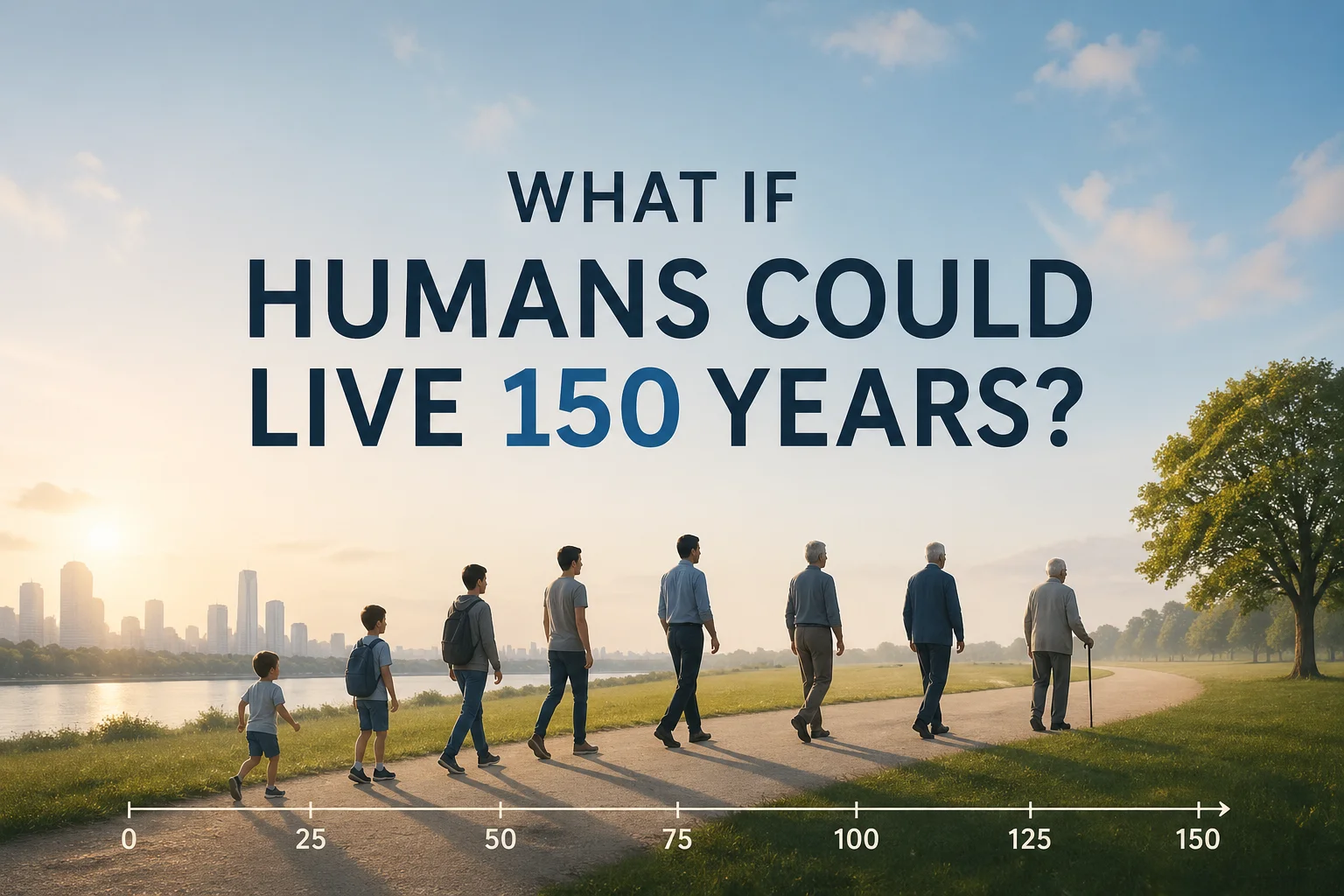
Imagine a world where living to 150 years old is normal. Instead of thinking of life as short and limited, people would have decades more to grow, explore, and experience. While it sounds exciting, a longer lifespan would bring both opportunities and challenges.
Let’s explore how life might change if humans could live up to 150 years.
1. Careers Would Last Much Longer
Today, most people work for about 30–40 years. In a 150-year lifespan, careers could extend over many decades.
People might:
- Change careers multiple times
- Take long breaks for learning or travel
- Retire much later
The idea of a “one-time career” would likely disappear, replaced by continuous growth and reinvention.
2. Education Would Be Lifelong
With more time to live, learning wouldn’t stop after your 20s. People might return to education multiple times throughout life.
You could:
- Study new subjects at 50, 80, or even 120
- Develop multiple skills and professions
- Focus more on passion-driven learning
Education systems would need to evolve to support lifelong learners.
3. Relationships Would Change
Living longer would deeply impact relationships. Marriage, friendships, and family structures would look very different.
For example:
- Marriages might not last a lifetime in the traditional sense
- People could form multiple long-term relationships over time
- Friendships may evolve across different life phases
The meaning of commitment and connection would likely shift.
4. Health Would Become More Important
Living longer doesn’t just mean more years—it means maintaining good health for those years.
There would be a stronger focus on:
- Preventive healthcare
- Fitness and mental well-being
- Slowing down aging processes
A longer life would only be enjoyable if those extra years are healthy and active.
5. Population Growth Challenges
If people live longer, the global population would increase significantly unless birth rates decline.
This could lead to:
- Resource shortages
- Housing challenges
- Environmental pressure
Governments might need to create policies to manage population balance.
6. Financial Planning Would Be Complex
Saving money for a longer life would be more challenging. Retirement planning would need a complete rethink.
People might:
- Work longer before retiring
- Save more over time
- Invest in long-term financial security
Traditional retirement at 60 or 65 may no longer be practical.
7. More Time for Personal Growth
One of the biggest advantages of a longer life is the opportunity for self-improvement.
You could:
- Explore different passions
- Travel extensively
- Build deeper understanding of life
People may feel less pressure to “figure everything out” early in life.
8. Slower Life Decisions
With more time available, people might take longer to make major life decisions like career choices, marriage, or having children.
This could reduce stress but also lead to delays in important milestones.
9. Innovation and Experience
A longer lifespan means more experience. People could accumulate decades of knowledge and expertise.
This could lead to:
- Greater innovation
- Better decision-making
- Stronger leadership
Society could benefit from highly experienced individuals contributing for longer periods.
10. Psychological Impact
Living 150 years could also affect how people view life and time.
Possible effects:
- Less urgency to achieve goals
- Risk of boredom or lack of motivation
- Need for stronger mental resilience
Finding purpose over such a long lifespan would become very important.
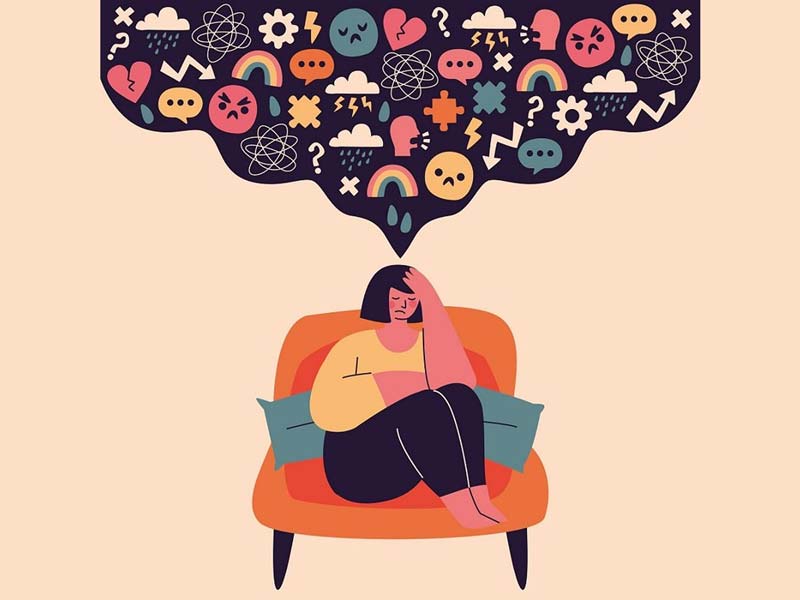
Why Do We Get Negative Vibes from Some People?
Would Living 150 Years Make Us Happier?
Not necessarily. Happiness depends more on quality of life than quantity of years. A longer life could bring more opportunities, but also more responsibilities and challenges.
The key would be balance—ensuring that extra years are meaningful, healthy, and fulfilling.
Conclusion
Living up to 150 years would completely transform how we work, learn, love, and plan our lives. While it offers exciting possibilities like extended careers and personal growth, it also brings challenges such as population pressure and financial planning.
Ultimately, a longer life would not just be about adding years—but making those years truly worth living.
FAQs
1. Is it possible for humans to live 150 years?
Currently, it is not common, but scientific research is exploring ways to extend human lifespan.
2. How would retirement change with longer lifespans?
People would likely retire later or adopt flexible working patterns throughout life.
3. Would longer life increase population problems?
Yes, unless balanced by lower birth rates or new policies, population growth could become a challenge.
4. Would relationships become more complex?
Yes, longer lifespans could change how people view long-term commitments and relationships.
5. What is more important—long life or good life?
A good, healthy, and meaningful life is more important than simply living longer.