EPFO 3.0: A New Era for PF Withdrawals in India
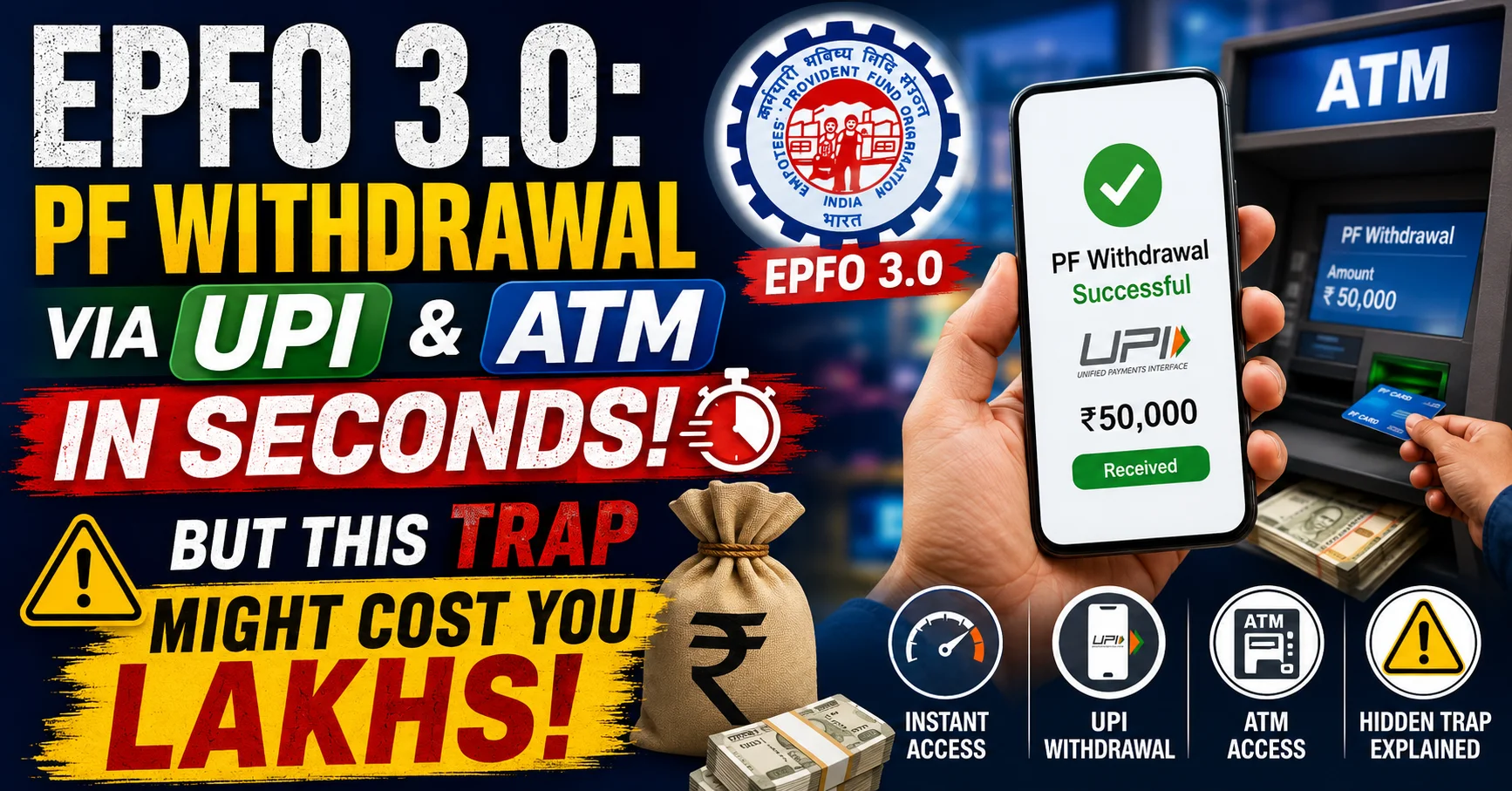
The Employees’ Provident Fund Organisation (EPFO) is preparing for a major digital transformation with the launch of EPFO 3.0. One of the biggest highlights of this upgrade is the possibility of instant PF withdrawals through UPI and ATMs.
For crores of salaried employees in India, this sounds revolutionary. No lengthy waiting periods, no paperwork, and no complicated claim processes. Just a few taps on your smartphone or a quick ATM transaction, and your PF money could reach your account within seconds.
But while this convenience is exciting, financial experts are warning users about a dangerous side effect — easy withdrawals could encourage people to dip into their retirement savings too frequently. What seems like quick money today could become a massive financial loss tomorrow.
Let’s understand everything about EPFO 3.0, how PF withdrawals through UPI and ATM may work, and the hidden trap that could cost you lakhs over time.
What Is EPFO 3.0?
EPFO 3.0 is expected to be the next-generation digital upgrade of India’s provident fund system. The goal is to make EPF services:
- faster,
- paperless,
- user-friendly,
- and digitally integrated.
The upgrade focuses heavily on automation and instant settlement systems.
Some expected features include:
- PF withdrawal through UPI
- ATM-enabled PF access
- Faster claim settlements
- Improved mobile integration
- Reduced manual verification
- Better KYC syncing
- Real-time account services
The government and EPFO have been actively modernizing digital financial infrastructure, and this move aligns with India’s larger fintech ecosystem.
PF Withdrawal Through UPI: How It May Work
Under the proposed system, EPF subscribers may be able to withdraw funds directly through UPI-linked platforms.
Instead of waiting several days for claim approval, users could:
- Log into the EPFO portal or app
- Verify identity using Aadhaar-linked authentication
- Select withdrawal amount
- Choose UPI ID
- Receive funds instantly
This could significantly reduce processing delays that currently frustrate many employees.
ATM-Based PF Withdrawals Could Become Reality
Another major feature being discussed is ATM-based PF access.
This means EPFO users may receive:
- EPFO-linked cards,
- or banking integration allowing PF access through ATMs.
Employees may be able to:
- check PF balance,
- withdraw eligible amounts,
- and access account services directly through ATM networks.
For workers in remote areas or users less comfortable with digital apps, ATM-based access could become extremely useful.
Why EPFO 3.0 Is a Big Deal
India has millions of salaried employees relying on EPF as their primary retirement savings instrument.
Current PF withdrawal processes can sometimes take:
- several days,
- document verification,
- employer approval,
- and multiple portal interactions.
EPFO 3.0 aims to eliminate these friction points.
Key Benefits Expected
1. Faster Access to Funds
Emergency financial situations may become easier to handle.
2. Better Digital Experience
Users may no longer struggle with complex claim filing systems.
3. Reduced Paperwork
Automation and Aadhaar verification can reduce manual dependency.
4. Financial Inclusion
Workers across different regions may benefit from simplified access.
5. Improved Transparency
Real-time updates and digital tracking can improve user confidence.
The Dangerous Trap: Easy PF Withdrawal Habit
While instant PF access sounds beneficial, experts believe this convenience could create a serious long-term financial problem.
Provident Fund is designed primarily for:
- retirement,
- long-term savings,
- and financial security.
If withdrawing money becomes as easy as using a UPI app, many people may begin treating PF like a regular savings account.
This is where the real danger begins.
How Early PF Withdrawals Can Cost You Lakhs
The biggest strength of EPF is compound interest.
When money stays invested for decades, it grows significantly through annual interest accumulation.
But frequent withdrawals interrupt this growth cycle.
Let’s understand with an example.
Example: The Real Cost of Early PF Withdrawal
Suppose:
- You withdraw ₹2 lakh from your PF at age 30.
- EPF annual interest remains around 8%.
If that ₹2 lakh stayed invested until age 58, it could potentially grow to more than ₹17–18 lakh through compounding.
That means:
- a small withdrawal today
- could reduce your retirement corpus by lakhs in the future.
Now imagine multiple withdrawals over your career.
The long-term impact can become massive.
Why Young Employees Are Most at Risk
Younger employees are more likely to:
- use instant money for lifestyle spending,
- vacations,
- gadgets,
- shopping,
- or impulsive financial decisions.
Because EPFO 3.0 may remove friction from the withdrawal process, users may underestimate the long-term consequences.
Financial discipline becomes even more important in this new system.
Tax Risks You Should Know
Another major trap is taxation.
Many employees don’t realize that premature PF withdrawals can become taxable under certain conditions.
PF Withdrawal Tax Rules
PF withdrawals may attract tax if:
- the employee withdraws before completing 5 continuous years of service,
- PAN is not linked,
- or certain conditions are not met.
Possible consequences include:
- TDS deduction,
- taxable income addition,
- reduced final payout.
Before withdrawing funds, employees should always check:
- service duration,
- tax implications,
- and withdrawal eligibility.
When PF Withdrawal Actually Makes Sense
Not every PF withdrawal is bad.
There are legitimate situations where using PF savings can be helpful.
Valid Reasons Include:
- medical emergencies,
- home purchase,
- higher education,
- marriage expenses,
- unemployment,
- critical family needs.
EPF was designed to provide financial support during important life situations.
The key is avoiding unnecessary or impulsive withdrawals.
Smart Ways to Use EPFO 3.0 Responsibly
As digital access improves, financial discipline becomes more important than ever.
1. Treat PF as Retirement Money
Avoid using it for temporary lifestyle upgrades.
2. Build Separate Emergency Savings
Create an emergency fund so you don’t depend on PF frequently.
3. Understand Compounding
The longer your money stays invested, the larger your retirement corpus becomes.
4. Withdraw Only When Necessary
Use PF strategically, not casually.
5. Monitor Tax Implications
Always verify tax impact before initiating withdrawals.
How EPFO 3.0 Could Change Financial Behavior in India
India is rapidly moving toward real-time digital finance:
- instant banking,
- UPI ecosystems,
- digital lending,
- and AI-driven fintech systems.
EPFO 3.0 is another major step in that direction.
However, easier access to long-term savings could fundamentally change how people think about retirement planning.
The challenge will be balancing:
- convenience,
- accessibility,
- and financial discipline.
If managed properly, EPFO 3.0 could become one of the most impactful employee-friendly reforms in India’s financial ecosystem.
But if users misuse easy withdrawals, retirement security could weaken significantly.
Should You Withdraw PF Through UPI or ATM?
The answer depends entirely on your financial situation.
You SHOULD consider withdrawal if:
- it’s a genuine emergency,
- you lack alternative funds,
- or the withdrawal aligns with long-term financial planning.
You SHOULD AVOID withdrawal if:
- it’s for luxury spending,
- short-term wants,
- or non-essential purchases.
Convenience should not replace financial planning.
Final Thoughts
EPFO 3.0 has the potential to completely transform the provident fund experience in India. Instant PF withdrawals through UPI and ATMs could save time, reduce bureaucracy, and improve accessibility for millions of employees.
But the same convenience also creates a dangerous temptation.
Your PF is not just another bank balance — it is your retirement foundation. Every unnecessary withdrawal today could reduce your future wealth dramatically because of lost compounding.
Before using instant PF withdrawal features, think beyond immediate needs and consider the long-term impact on your financial security.
In the digital era, easy access to money is powerful — but financial discipline is even more powerful.
FAQs
What is EPFO 3.0?
EPFO 3.0 is the upcoming digital upgrade of the EPFO ecosystem aimed at enabling faster, paperless, and more user-friendly PF services.
Can PF be withdrawn through UPI?
EPFO is expected to introduce UPI-based PF withdrawals to allow faster fund transfers directly into users’ bank accounts.
Will ATM PF withdrawals be available?
ATM-based PF access is being discussed as part of EPFO’s modernization efforts for easier account access and withdrawals.
Is PF withdrawal taxable?
PF withdrawals may become taxable if made before completing 5 continuous years of service or under certain conditions.
Why is frequent PF withdrawal risky?
Frequent withdrawals reduce the power of compound interest, potentially shrinking your retirement savings by lakhs over time.
Should I withdraw PF for non-essential expenses?
Financial experts generally advise against using PF savings for lifestyle or non-essential spending unless absolutely necessary.
Also Read: SIP Investment Plan Calculator: Maximise Returns with Precision Forecasting