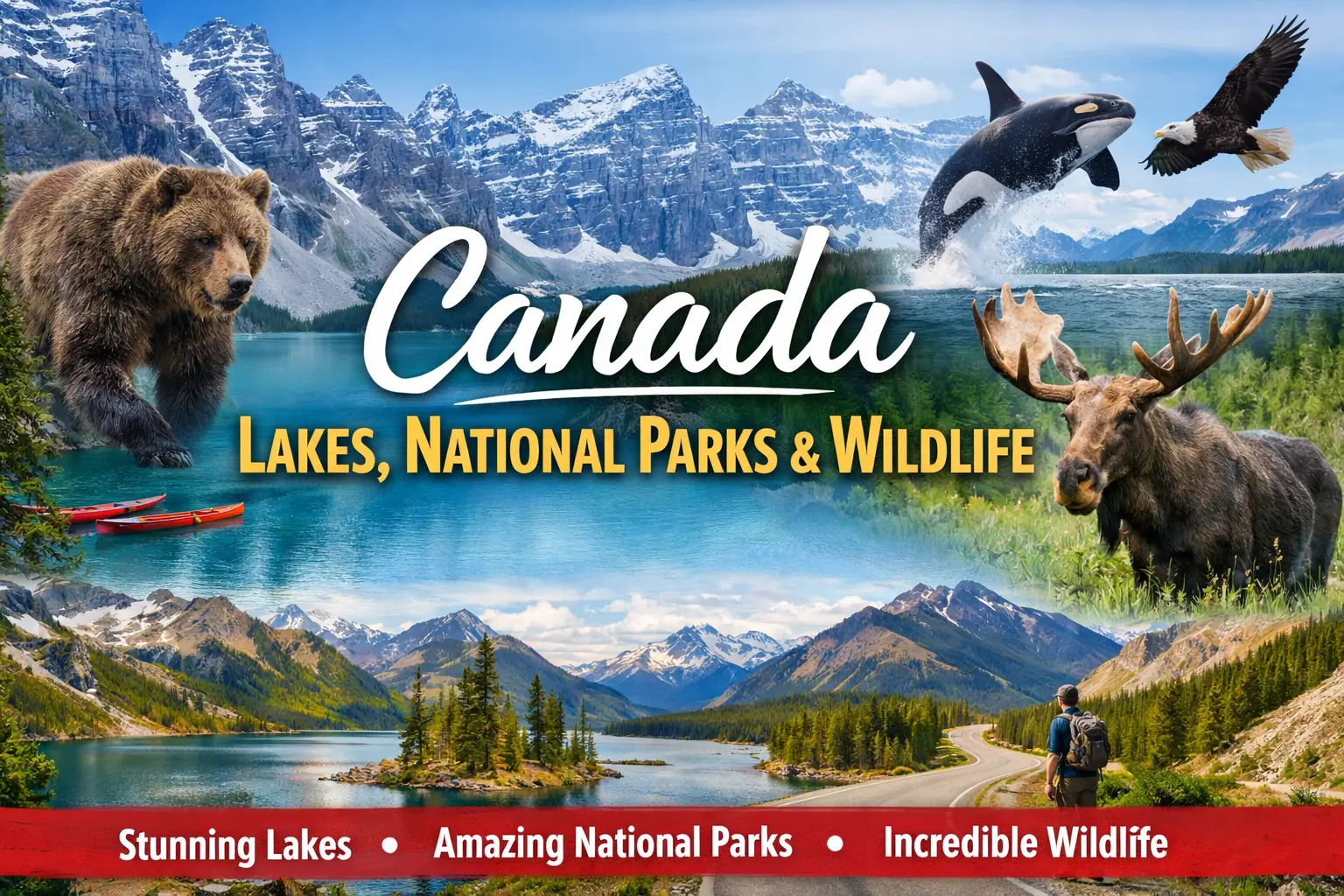
Canada is a country of incredible natural beauty. From sparkling lakes to vast forests, from majestic mountains to rich wildlife, Canada offers experiences that nature lovers dream about. This article will guide you through Canada’s lakes, national parks, and wildlife, giving you all the information you need for travel, exploration, and learning about this stunning country.
Introduction to Canada’s Natural Beauty
Canada is the second-largest country in the world and is famous for its clean air, vast wilderness, and pristine landscapes. It is home to thousands of lakes, hundreds of national parks, and a wide variety of wildlife species. For travelers, photographers, and adventurers, Canada is a paradise.
Some of the most famous natural attractions include Lake Louise, Banff National Park, and the Rocky Mountains, but there are countless hidden gems waiting to be explored. Whether you enjoy canoeing, hiking, wildlife spotting, or simply relaxing by a lake, Canada has something for everyone.
Canada’s Lakes
Canada is often called the land of lakes because it has over 2 million lakes. These lakes vary in size, shape, and beauty, offering opportunities for water sports, fishing, camping, and scenic photography.
Famous Lakes in Canada
- Lake Louise (Alberta)
Known for its turquoise blue water and the backdrop of the Rocky Mountains, Lake Louise is a top tourist destination. Visitors can canoe in summer or ski nearby in winter. - Moraine Lake (Alberta)
Moraine Lake is famous for its striking blue color and the Valley of the Ten Peaks surrounding it. Hiking trails around the lake offer breathtaking views. - Great Bear Lake (Northwest Territories)
One of the largest lakes in Canada, Great Bear Lake is remote and mostly untouched. It is perfect for fishing, kayaking, and observing wildlife. - Lake Ontario (Ontario)
Part of the Great Lakes, Lake Ontario is popular for boating, fishing, and lakeside cities like Toronto. - Maligne Lake (Alberta)
Maligne Lake is known for Spirit Island, one of the most photographed locations in Canada. It’s also great for wildlife spotting, including bears and moose.
Activities at Canadian Lakes
- Canoeing and Kayaking: Most Canadian lakes allow visitors to rent boats.
- Fishing: Lakes are home to fish like trout, salmon, and bass.
- Swimming: Some lakes are safe for swimming in summer months.
- Photography: The reflection of mountains in lakes like Moraine Lake and Lake Louise is perfect for photos.
Canada’s National Parks
Canada has 48 national parks and national park reserves, protecting natural landscapes and wildlife. National parks offer hiking, camping, wildlife viewing, and a chance to experience Canada’s wilderness safely.
Famous National Parks
- Banff National Park (Alberta)
Canada’s first national park, Banff is famous for mountains, glaciers, and turquoise lakes. Popular activities include hiking, skiing, and wildlife spotting. - Jasper National Park (Alberta)
Jasper is known for its vast wilderness, glaciers, and the Columbia Icefield. Visitors can hike, camp, and spot animals like elk and bears. - Yoho National Park (British Columbia)
Yoho features waterfalls, caves, and mountain landscapes. It is a quieter alternative to Banff but equally stunning. - Gros Morne National Park (Newfoundland and Labrador)
Famous for fjords, cliffs, and marine wildlife, Gros Morne is a UNESCO World Heritage Site. - Cape Breton Highlands National Park (Nova Scotia)
This park offers coastal views, hiking trails, and the famous Cabot Trail.
Activities in National Parks
- Hiking: From easy trails to multi-day treks.
- Camping: Parks offer tents, cabins, and RV sites.
- Wildlife Watching: Parks are safe places to observe moose, bears, wolves, and eagles.
- Photography: Capture mountains, lakes, forests, and wildlife.
Wildlife in Canada
Canada’s wildlife is diverse and abundant due to its large forests, lakes, and mountains. Wildlife includes large mammals, birds, fish, and unique species found nowhere else.
Mammals
- Moose: Often found in forests and near lakes.
- Bears: Both black bears and grizzly bears live in Canada’s wilderness.
- Wolves: Found in northern regions and national parks.
- Caribou: Roam northern territories and tundra regions.
Birds
- Bald Eagles: Found near lakes and rivers.
- Loons: Known for their haunting calls on Canadian lakes.
- Canada Geese: A symbol of the country, migrating seasonally.
Marine Life
- Whales: Humpback and orca whales are common along Canada’s coasts.
- Seals: Found near Newfoundland and Labrador coasts.
- Salmon: Canadian rivers are famous for salmon runs.
Wildlife Safety Tips
- Keep a safe distance from all wild animals.
- Avoid feeding animals.
- Use binoculars for close observation.
- Follow park rules and guidelines to protect both wildlife and visitors.
Best Seasons to Visit Canada’s Natural Attractions
Canada’s climate varies, so the best time to visit depends on your interests:
- Spring (March–May): Melting snow, blooming flowers, fewer tourists.
- Summer (June–August): Ideal for hiking, canoeing, camping, and wildlife viewing.
- Fall (September–October): Stunning fall foliage, cool weather, and harvest festivals.
- Winter (November–February): Perfect for skiing, ice skating on frozen lakes, and seeing the Northern Lights.
Eco-Tourism in Canada
Canada promotes eco-tourism, ensuring natural areas are preserved while visitors enjoy them. Many parks and lakes have sustainable travel programs, including guided tours, recycling programs, and educational activities.
Hidden Gems in Canada
While Banff, Jasper, and Lake Louise are famous, there are hidden treasures:
- Waterton Lakes National Park (Alberta): Quiet, beautiful lakes and mountain trails.
- Kluane National Park (Yukon): Home to Canada’s highest peak, Mount Logan.
- Fundy National Park (New Brunswick): Famous for tidal rivers and coastal wildlife.
- Algonquin Provincial Park (Ontario): Ideal for canoeing and wildlife spotting.
Mauritius – The Jewel of the Indian Ocean
How to Plan Your Canada Nature Trip
- Decide the region: Western Canada (Rockies, Alberta) or Eastern Canada (Nova Scotia, Newfoundland).
- Choose your activities: Hiking, camping, skiing, or wildlife watching.
- Check park permits: Many national parks require permits for camping or certain activities.
- Pack essentials: Maps, binoculars, hiking boots, warm clothes, and insect repellent.
- Follow safety guidelines: Especially in bear country and remote areas.
FAQs About Canada’s Lakes, National Parks, and Wildlife
Q1: How many lakes are there in Canada?
Canada has over 2 million lakes, covering about 7.6% of the country’s total area.
Q2: Which is the most famous lake in Canada?
Lake Louise in Alberta is the most famous due to its turquoise water and mountain backdrop.
Q3: Can I see bears safely in Canada?
Yes, in national parks like Banff and Jasper, you can safely view bears from a distance. Never approach them.
Q4: What is the best time to visit Canada’s national parks?
Summer (June–August) is best for most outdoor activities. Fall (September–October) is great for photography.
Q5: Are Canadian lakes good for swimming?
Yes, some lakes are safe for swimming, but water can be cold, even in summer. Always check local safety guidelines.
Q6: Which national park is best for hiking?
Banff, Jasper, and Yoho National Parks offer trails for all skill levels.
Q7: Can I see whales in Canada?
Yes, especially on the coasts of British Columbia, Newfoundland, and Nova Scotia. Humpback and orca whales are common.
Conclusion
Canada is a nature lover’s dream. Its lakes, national parks, and wildlife offer endless opportunities for adventure, relaxation, and learning. Whether you want to paddle across a turquoise lake, hike through majestic mountains, or observe wildlife in their natural habitat, Canada has it all.
From iconic destinations like Lake Louise and Banff National Park to hidden gems like Waterton Lakes and Fundy National Park, Canada invites travelers to explore its pristine landscapes responsibly.
Discover the magic of Canada’s outdoors, and you’ll find why it’s called one of the most beautiful countries in the world.