Introduction
You just finished cleaning your home. The surfaces are spotless, the air feels fresh—and within a day or two, dust is back again. It settles on your furniture, electronics, and floors as if cleaning never happened.
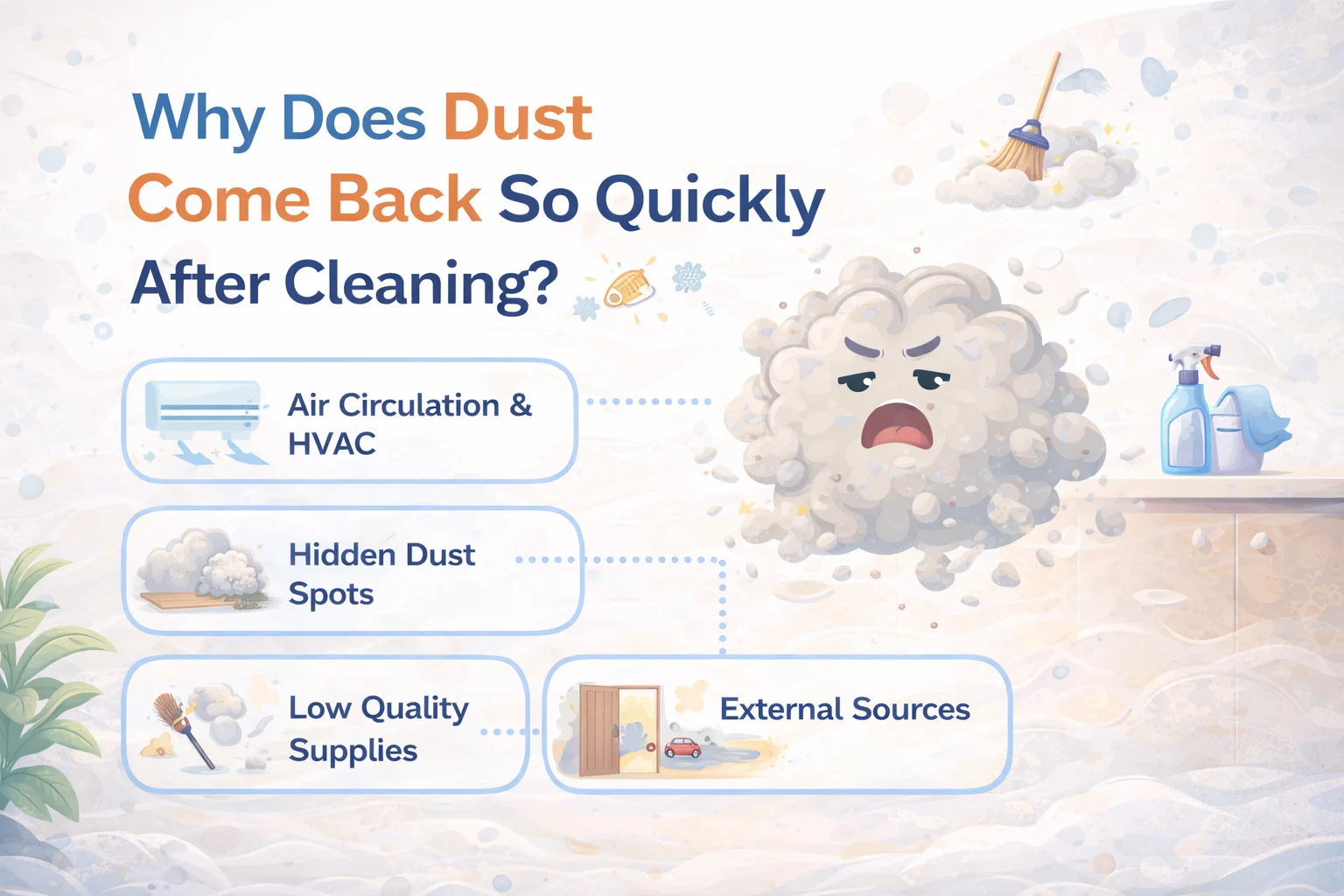
This frustrating cycle makes many people wonder: Why does dust come back so quickly after cleaning?
The answer lies in a mix of indoor habits, environmental conditions, and a scientific process called Dust accumulation.
In this detailed guide, we’ll break down the real reasons behind fast dust buildup and give you practical solutions—especially tailored for Indian homes.
What Is Dust Made Of?
Before understanding why dust returns so quickly, it helps to know what dust actually is.
Dust is a combination of:
- Dead skin cells
- Hair (human and pet)
- Fabric fibers
- Pollen
- Soil particles
- Pollution particles
- Tiny debris from everyday activities
In cities across India, dust often contains external pollutants due to traffic, construction, and dry weather.
Why Does Dust Come Back So Fast?
1. Continuous Dust Generation Inside Your Home
Even if your house is closed, dust is constantly being created.
- Humans shed thousands of skin cells daily
- Clothes release fibers
- Bedsheets and carpets trap and release particles
This means dust doesn’t just come from outside—it’s being created inside all the time.
2. Outdoor Pollution Enters Indoors
In many Indian cities, air pollution plays a huge role.
- Dust enters through windows and doors
- Shoes bring in soil particles
- Air currents carry pollutants indoors
Even a slightly open window can allow a steady flow of dust.
3. Poor Air Circulation and Ventilation
When air moves, dust moves.
- Fans circulate dust particles
- Air conditioners without clean filters spread dust
- Poor ventilation traps particles inside
Dust doesn’t disappear—it just shifts location.
4. Static Electricity on Surfaces
Surfaces like TV screens, laptops, and plastic furniture attract dust due to static electricity.
- Electronics act like dust magnets
- Dry air increases static buildup
This is why your TV gathers dust faster than other items.
5. Incorrect Cleaning Methods
Ironically, the way you clean may be causing more dust.
- Dry dusting spreads particles into the air
- Using old cloths redistributes dirt
- Not cleaning from top to bottom
Instead of removing dust, you may be moving it around.
6. Weather Conditions in India
Climate plays a major role.
- Dry summers increase airborne dust
- Wind carries soil particles
- Construction dust is common in urban areas
This makes dust accumulation faster compared to many other countries.
7. Fabrics and Soft Surfaces
Soft materials trap dust and release it later.
- Curtains
- Carpets
- Sofas
- Bedsheets
Every time you sit or move, these surfaces release trapped dust back into the air.
8. Open Windows and Doors
Fresh air is great—but it comes with dust.
- Outdoor air carries particles
- Traffic and construction increase dust levels
In polluted areas, open windows can worsen indoor dust problems.
10 Different Sorts of Paper Packs and Handles
The Science Behind Dust Settling
Dust doesn’t just appear—it follows a natural process.
Airborne particles eventually settle due to gravity. This process is influenced by:
- Air movement
- Particle size
- Humidity levels
This is part of the concept of Airborne particles, where tiny particles float and then settle on surfaces over time.
Why Cleaning Feels Temporary
Cleaning removes visible dust—but not the source.
Within hours:
- New dust is generated indoors
- Outdoor dust enters
- Air movement redistributes particles
That’s why surfaces look dusty again so quickly.
How to Keep Your Home Dust-Free for Longer
1. Use Damp Cloth Instead of Dry Dusting
- Traps dust instead of spreading it
- More effective for surfaces
2. Vacuum Regularly
- Use a vacuum cleaner with HEPA filter
- Ideal for carpets and sofas
3. Keep Windows Closed During Peak Dust Hours
- Especially in mornings and evenings
- Use curtains or blinds as barriers
4. Use Doormats and Remove Shoes
- Prevents outside dust from entering
- Simple but highly effective
5. Clean Air Filters
- AC and air purifier filters should be cleaned regularly
- Dirty filters spread dust instead of removing it
6. Reduce Clutter
More items = more surfaces for dust.
- Keep minimal decor
- Organize shelves
7. Wash Fabrics Frequently
- Curtains, bedsheets, cushion covers
- Prevent dust buildup
8. Invest in an Air Purifier
- Helps remove airborne particles
- Useful in polluted areas
9. Control Humidity
- Slight humidity reduces airborne dust
- Very dry air increases dust movement
10. Clean from Top to Bottom
- Start with shelves and fans
- End with floors
This prevents re-contamination.
Common Mistakes That Increase Dust
- Using feather dusters
- Ignoring hidden areas (fans, vents)
- Not cleaning under furniture
- Skipping regular cleaning schedule
Dust and Health: Why It Matters
Dust is not just a cleaning issue—it can affect health.
- Allergies
- Sneezing and coughing
- Breathing issues
- Skin irritation
In polluted regions, dust may contain harmful particles, making regular cleaning even more important.
Daily Routine to Reduce Dust at Home
Morning:
- Open windows briefly (if air quality is good)
- Wipe frequently used surfaces
Afternoon:
- Keep windows closed
- Avoid bringing dust inside
Evening:
- Light cleaning or vacuuming
Weekly:
- Deep clean fabrics and hidden areas
Indian Home-Specific Tips
- Use thick curtains to block dust
- Avoid wall-to-wall carpets
- Keep balconies clean
- Use indoor plants (they can trap some dust)
FAQs
1. Why does dust return so quickly after cleaning?
Because dust is constantly generated indoors and also enters from outside.
2. Is dust more common in India?
Yes, due to pollution, climate, and construction activities.
3. Does opening windows increase dust?
Yes, especially in polluted or high-traffic areas.
4. How often should I clean to control dust?
Light cleaning daily and deep cleaning weekly is ideal.
5. Can air purifiers remove dust completely?
They reduce airborne dust but cannot eliminate it entirely.
6. What is the best way to clean dust?
Use a damp cloth and vacuum instead of dry dusting.
Conclusion
Dust returning quickly after cleaning is completely normal—but it doesn’t mean your cleaning efforts are wasted. Dust is constantly being created and moved around due to air, human activity, and environmental factors.
By understanding the causes and using smarter cleaning techniques, you can significantly reduce dust buildup and keep your home cleaner for longer.
Consistency is key. Small daily habits combined with proper cleaning methods can make a big difference—even in dusty environments like India.