Introduction
Protein is one of the most essential nutrients your body needs to function properly. Whether your goal is to build muscle, lose weight, improve immunity, or simply stay healthy, protein plays a vital role in almost every process in your body.
Despite its importance, many people—especially in India—do not consume enough protein daily. This can lead to fatigue, weak muscles, poor immunity, and slow recovery.
In this guide, we’ll explore protein sources (vegetarian and non-vegetarian), their benefits, daily requirements, and how to include protein in your diet effectively.
What is Protein?
Protein is a macronutrient made up of amino acids, which are the building blocks of the body. These amino acids are used to:
- Build muscles
- Repair tissues
- Produce enzymes and hormones
- Support immune function
There are 20 amino acids, out of which 9 are essential and must be obtained from food.
Types of Protein Sources
Protein sources are broadly divided into:
- Vegetarian (Plant-based + Dairy)
- Non-Vegetarian (Animal-based)
Let’s explore both in detail.
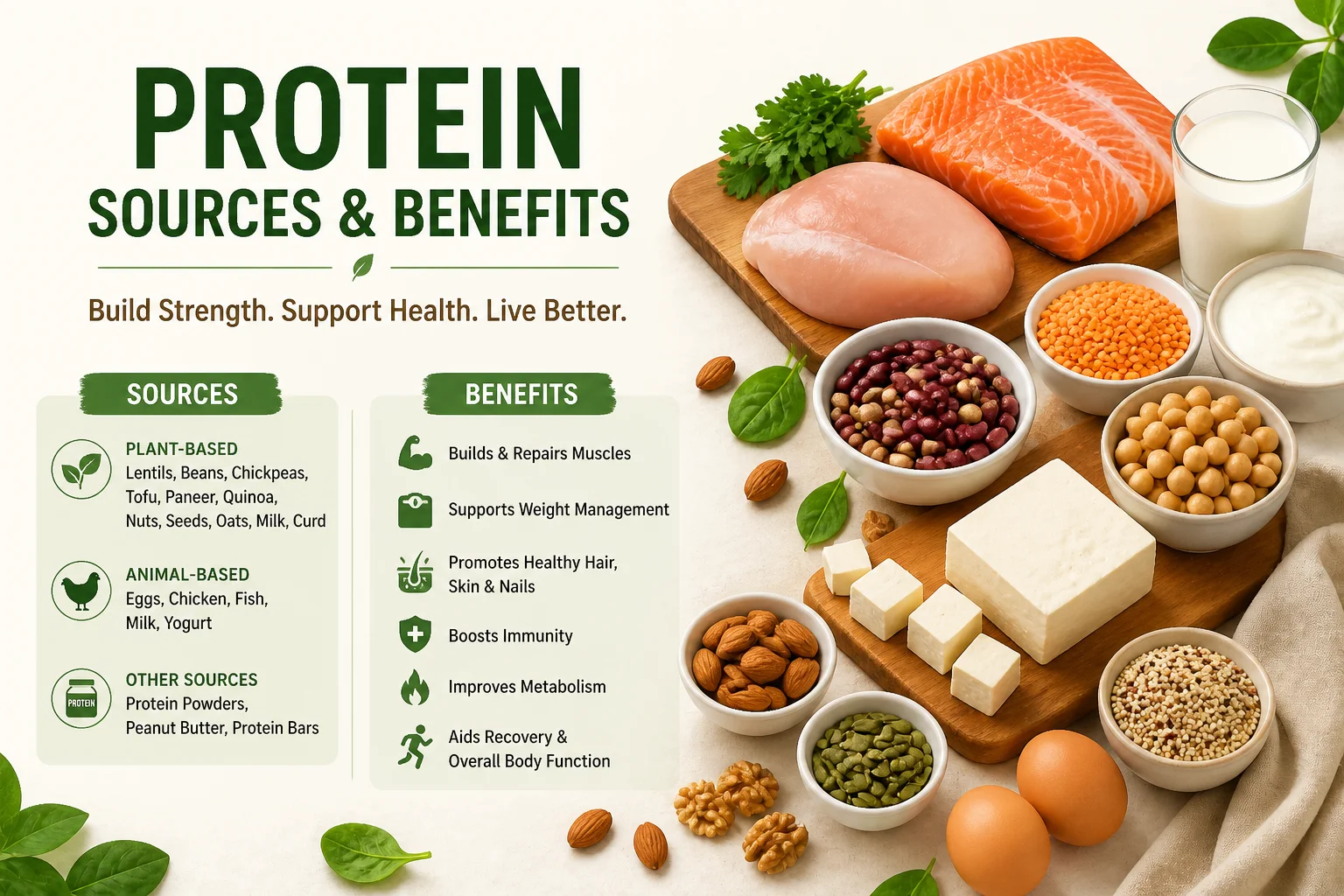
Vegetarian Protein Sources
Vegetarian diets can provide sufficient protein if planned properly.
1. Lentils (Dal)
- Includes moong dal, masoor dal, toor dal
- Rich in protein and fiber
- Easy to digest and affordable
👉 Approx protein: 7–9g per cup (cooked)
2. Chickpeas (Chana)
- High in protein and complex carbs
- Keeps you full for longer
👉 Protein: ~15g per cup
3. Kidney Beans (Rajma)
- Rich in protein and iron
- Popular in Indian meals
👉 Protein: ~13g per cup
4. Soy Products
Includes:
- Tofu
- Soy chunks
- Soy milk
👉 Protein: 15–25g per serving
Soy is considered a complete plant protein.
5. Paneer (Cottage Cheese)
- Rich in protein and calcium
- Great for muscle building
👉 Protein: ~18g per 100g
6. Milk & Curd (Dahi)
- Easy to include in daily diet
- Supports gut health
👉 Protein: 6–8g per cup
7. Nuts & Seeds
- Almonds, peanuts, chia seeds, flaxseeds
- Also rich in healthy fats
👉 Protein: 5–7g per handful
8. Quinoa
- A complete protein grain
- Contains all essential amino acids
👉 Protein: ~8g per cup
9. Oats
- Good for breakfast
- Contains moderate protein
👉 Protein: ~5g per cup
Why Does Tea Taste Different When Made by Different People?
Non-Vegetarian Protein Sources
Non-veg sources generally provide high-quality complete protein.
1. Eggs
- One of the best protein sources
- Affordable and versatile
👉 Protein: ~6g per egg
2. Chicken Breast
- Lean protein with low fat
- Ideal for fitness goals
👉 Protein: ~30g per 100g
3. Fish
- Includes salmon, tuna, rohu
- Rich in omega-3 fatty acids
👉 Protein: ~20–25g per 100g
4. Mutton
- High protein but also high fat
- Best consumed in moderation
5. Prawns
- Low in calories, high in protein
- Good for weight loss diets
Other Protein Sources
1. Protein Powders
- Whey protein
- Plant-based protein
👉 Useful for convenience and muscle building
2. Peanut Butter
- Easy snack option
- High in calories and protein
3. Protein Bars
- Good for on-the-go nutrition
Benefits of Protein
Protein offers multiple health benefits:
1. Muscle Growth & Strength
Protein helps build and repair muscle tissues, making it essential for:
- Gym-goers
- Athletes
- Active individuals
2. Supports Weight Loss
Protein:
- Keeps you full longer
- Reduces cravings
- Helps maintain muscle during fat loss
3. Improves Hair, Skin & Nails
Protein forms keratin, which:
- Strengthens hair
- Improves skin elasticity
- Prevents brittle nails
4. Boosts Immunity
Proteins help produce antibodies that:
- Fight infections
- Improve overall health
5. Faster Recovery
After workouts or injuries:
- Protein helps repair damaged tissues
- Reduces muscle soreness
6. Improves Metabolism
Protein increases thermogenesis:
- Burns more calories during digestion
- Supports fat loss
7. Maintains Overall Body Function
Protein is essential for:
- Hormone production
- Enzyme function
- Organ health
Daily Protein Requirement
Your protein needs depend on your lifestyle:
| Category | Protein Intake |
|---|---|
| Sedentary | 0.8–1g/kg |
| Active | 1.2–1.6g/kg |
| Muscle Gain | 1.6–2.2g/kg |
👉 Example:
If your weight is 60 kg → you need 48–120g protein daily.
How to Add More Protein to Your Diet
Simple Tips:
- Start your day with protein-rich breakfast (eggs, oats, paneer)
- Add dal or legumes to lunch and dinner
- Snack on nuts and seeds
- Include curd or buttermilk daily
- Add protein shakes if needed
Protein Deficiency in India
Many Indian diets are:
- High in carbohydrates
- Low in protein
Common Reasons:
- Lack of awareness
- Vegetarian diet imbalance
- Limited protein sources
Symptoms:
- Weakness
- Hair fall
- Low immunity
- Muscle loss
Can You Take Too Much Protein?
Yes, excessive protein intake may:
- Put stress on kidneys
- Cause digestive issues
- Lead to fat gain if calorie intake is high
👉 Balance is key.
Veg vs Non-Veg: Which is Better?
| Factor | Vegetarian | Non-Vegetarian |
|---|---|---|
| Protein Quality | Moderate | High |
| Digestibility | Medium | High |
| Cost | Affordable | Slightly expensive |
| Completeness | Needs combinations | Naturally complete |
👉 Both can be healthy if planned properly.
Key Takeaways
- Protein is essential for overall health
- Both veg and non-veg sources can meet daily needs
- Indian diets often lack adequate protein
- Balanced intake is crucial for best results
Conclusion
Protein is not just for bodybuilders—it is a fundamental nutrient required for everyone. From muscle growth and weight management to immunity and recovery, protein plays a vital role in maintaining a healthy lifestyle.
By including a mix of vegetarian and non-vegetarian protein sources, planning your meals, and understanding your daily requirements, you can easily meet your protein needs and improve your overall health.
FAQs
1. What are the best protein sources for vegetarians?
Lentils, chickpeas, paneer, tofu, nuts, seeds, and dairy products are excellent vegetarian protein sources.
2. Is protein powder necessary?
No, it is optional. You can meet your protein needs through natural foods.
3. How much protein do I need daily?
It depends on your weight and activity level, usually between 0.8g to 2.2g per kg.
4. Can protein help in weight loss?
Yes, protein reduces hunger and helps in fat loss while preserving muscle.
5. Which is better: eggs or paneer?
Both are good. Eggs have complete protein, while paneer is a great vegetarian option.
6. Is too much protein harmful?
Excess intake may cause health issues, so balance is important.
7. Can I build muscle on a vegetarian diet?
Yes, with proper planning and enough protein intake, muscle gain is possible.
Also Read: Plant-Based Diet Meal Plans for Beginners