Have you ever hesitated to check your CIBIL score because someone told you it might lower your credit score?
You’re not alone.
Many people believe that simply checking their credit score can hurt their chances of getting a loan or a credit card. It’s one of the most common myths surrounding credit scores in India. The truth, however, is much simpler—and much more reassuring.
Checking your own CIBIL score does not reduce your credit score.
Understanding how credit checks work can help you monitor your financial health with confidence. Whether you’re planning to apply for a home loan, a personal loan, or just want to stay informed about your credit profile, knowing when and how to check your score is an important financial habit.
In this article, we’ll explain how CIBIL scores work, the difference between soft and hard inquiries, and the safest ways to check your score without affecting your creditworthiness.
What Is a CIBIL Score?
A CIBIL Score is a three-digit number that represents your creditworthiness. It is calculated based on your borrowing and repayment history and generally ranges between 300 and 900.
The higher your score, the more likely lenders are to consider you a reliable borrower.
Here’s a quick overview:
| CIBIL Score | What It Means |
|---|---|
| 750–900 | Excellent – Higher chances of loan approval |
| 700–749 | Good – Most lenders consider this a healthy score |
| 650–699 | Fair – Loan approval is possible but may come with stricter terms |
| Below 650 | Needs Improvement – You may face difficulty getting credit |
Banks and financial institutions look at your CIBIL score before approving loans or credit cards because it gives them an idea of how responsibly you’ve managed credit in the past.
Why Is Your CIBIL Score Important?
Your CIBIL score plays a bigger role than many people realize. It doesn’t just affect whether your loan gets approved—it can also influence the interest rate you receive and the amount you’re eligible to borrow.
A healthy credit score can help you:
- Get faster loan approvals.
- Improve your chances of getting premium credit cards.
- Qualify for lower interest rates.
- Increase your loan eligibility.
- Build trust with lenders.
On the other hand, a low score may result in loan rejections, higher interest rates, or additional documentation during the approval process.
That’s why it’s a good idea to keep an eye on your credit score regularly rather than waiting until you need a loan.
Does Checking Your Own CIBIL Score Lower It?
The short answer is No.
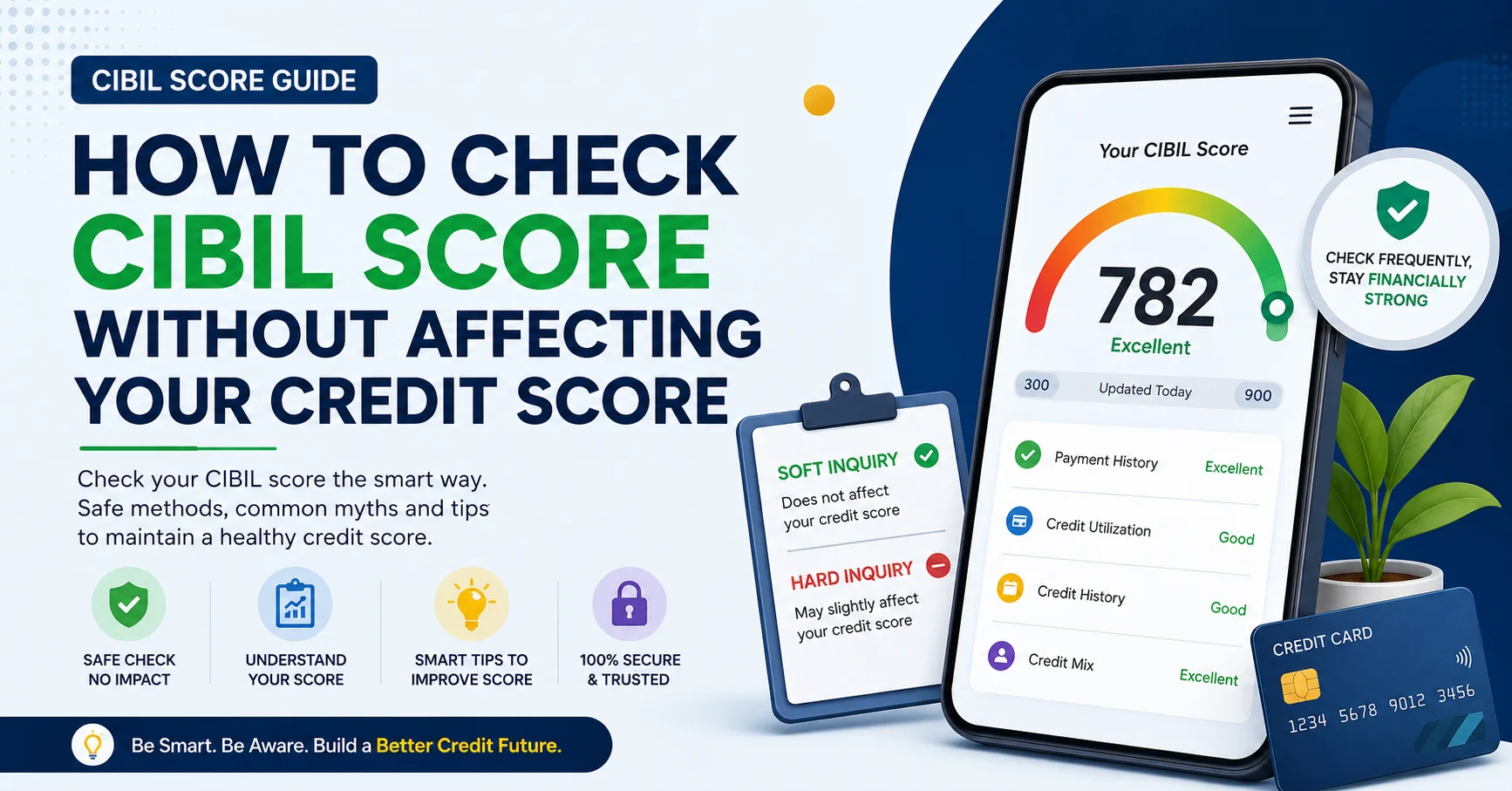
When you check your own CIBIL score through an authorized credit bureau or financial platform, it is considered a soft inquiry.
A soft inquiry is only for your personal information and does not affect your credit score in any way.
You can check your score as often as you like to stay updated on your financial health.
For example, imagine you’re planning to buy a car six months from now. Checking your credit score every month to monitor your progress won’t reduce your score. Instead, it helps you identify issues early, such as incorrect information on your credit report or a missed payment that you may not have noticed.
Regular monitoring is actually a smart financial habit.
Then Why Do People Think Their Score Drops?
This confusion usually happens because people mix up soft inquiries with hard inquiries.
Suppose you apply for a personal loan at three different banks within a few days.
Each bank checks your credit report before deciding whether to approve your application. These lender-initiated checks are called hard inquiries.
Multiple hard inquiries within a short period may have a small temporary impact on your credit score because they indicate that you’re actively seeking new credit.
However, checking your own score is completely different.
Many people notice a slight drop after applying for a loan and assume that checking their score caused it. In reality, it was the lender’s credit inquiry—not their own credit check.
Soft Inquiry vs Hard Inquiry
Understanding this difference is the key to removing the fear of checking your credit score.
Soft Inquiry
A soft inquiry happens when:
- You check your own CIBIL score.
- A financial app lets you view your credit score.
- A lender performs a pre-approved offer check without a loan application.
Impact on your score: None.
Hard Inquiry
A hard inquiry happens when:
- You apply for a home loan.
- You apply for a personal loan.
- You apply for a credit card.
- A lender reviews your credit report as part of the approval process.
Impact on your score: Usually small and temporary, especially if multiple applications are made within a short period.
Remember, lenders understand that everyone checks their own credit score. It shows financial awareness—not financial risk.
Why You Should Check Your Credit Score Regularly
Many people only look at their credit score when they’re about to apply for a loan.
By then, it may be too late to fix any issues.
Checking your credit score every few months helps you:
- Spot errors in your credit report.
- Detect fraudulent loans or credit cards opened in your name.
- Track improvements after paying off debt.
- Prepare for future loan applications.
- Build healthy financial habits.
Think of it like a regular health check-up. You don’t wait until you’re sick to see a doctor, and similarly, you shouldn’t wait until you need a loan to review your credit profile.
Now that you know checking your own credit score doesn’t reduce it, the next question is: What’s the safest way to check it?
The answer is simple—always use an authorized credit bureau or a trusted financial platform.
Most platforms only perform a soft inquiry when you request your own score. Since it’s a soft inquiry, your credit score remains unchanged.
Here’s how the process usually works:
- Visit a trusted platform that provides CIBIL score access.
- Enter your basic details, such as your PAN number, mobile number, and date of birth.
- Verify your identity using an OTP.
- View your credit score and credit report.
The entire process generally takes only a few minutes.
How Often Should You Check Your Credit Score?
There isn’t a strict rule, but checking your credit score every three to six months is a good practice.
You should also check it when:
- You’re planning to apply for a home loan.
- You’re thinking about getting a personal loan.
- You’re applying for a credit card.
- You’ve recently paid off a loan.
- You notice any suspicious financial activity.
Regular monitoring helps you catch mistakes early and gives you enough time to improve your score before applying for credit.
What Can Affect Your CIBIL Score?
Many people worry about checking their score, but these factors have a much bigger impact:
1. Missing EMI or Credit Card Payments
Your payment history is one of the biggest contributors to your credit score.
Even one missed payment can negatively affect your score.
Tip: Set up automatic payments or reminders to avoid missing due dates.
2. Using Too Much of Your Credit Limit
Suppose your credit card has a limit of ₹1,00,000.
If you’re consistently spending ₹90,000 every month, lenders may think you’re heavily dependent on credit.
Experts generally recommend keeping your credit utilization below 30% whenever possible.
3. Applying for Multiple Loans Together
Imagine applying for five credit cards in the same week.
Each lender performs a hard inquiry, which may slightly reduce your credit score.
Instead, apply only when necessary.
4. Closing Old Credit Cards
Many people believe closing an old credit card improves their financial profile.
In reality, older accounts contribute to your credit history. Closing them may reduce the average age of your credit accounts.
5. Loan Defaults
Defaulting on EMIs or settling loans instead of repaying them fully can significantly impact your credit score.
Common Myths About CIBIL Scores
Let’s clear up some common misconceptions.
Myth 1: Checking My CIBIL Score Reduces It
Reality: False.
Checking your own score is a soft inquiry and has no impact on your credit score.
Myth 2: A Higher Salary Means a Higher Credit Score
Reality: False.
Your income doesn’t directly determine your CIBIL score.
A person earning ₹40,000 per month with excellent repayment habits may have a better score than someone earning ₹2 lakh per month but frequently missing payments.
Myth 3: Never Taking a Loan Gives You a Perfect Score
Reality: Not necessarily.
If you’ve never borrowed money, there may not be enough credit history to calculate a strong credit score.
Responsible use of credit helps build a healthy credit profile.
Myth 4: Paying Only the Minimum Credit Card Amount Is Enough
Reality: While paying the minimum amount helps you avoid late payment penalties, the remaining balance continues to accrue interest. Consistently carrying high balances can also affect your credit health over time.
Myth 5: A Rejected Loan Always Lowers Your Credit Score
Reality: A loan rejection itself doesn’t lower your score. However, the hard inquiry made during the application process may have a small temporary impact.
Simple Ways to Improve Your CIBIL Score
Improving your credit score doesn’t happen overnight, but small, consistent habits can make a big difference.
Pay Every Bill on Time
Your payment history is one of the most important factors in your credit score.
Even one missed payment can stay on your credit report for years.
Keep Credit Card Usage Low
Try not to use your entire credit limit.
If your limit is ₹50,000, spending around ₹10,000–₹15,000 regularly is generally healthier than maxing out the card every month.
Avoid Too Many Loan Applications
Only apply for loans or credit cards when you genuinely need them.
Multiple applications in a short period can make lenders think you’re under financial stress.
Review Your Credit Report
Sometimes, errors happen.
You might find:
- A loan that doesn’t belong to you.
- Incorrect payment history.
- Personal information that’s outdated.
- Duplicate loan entries.
If you notice an error, report it to the credit bureau so it can be reviewed and corrected.
Maintain Older Credit Accounts
If you have an old credit card with a good repayment history, keeping it active can help strengthen your credit profile.
Signs of a Healthy Credit Profile
A good credit score is usually supported by healthy financial habits, such as:
- Paying EMIs on time.
- Paying credit card bills in full whenever possible.
- Maintaining a low credit utilization ratio.
- Having a balanced mix of secured and unsecured loans.
- Avoiding unnecessary loan applications.
- Reviewing your credit report regularly.
These habits not only improve your score but also increase your chances of getting better loan offers in the future.
Frequently Asked Questions (FAQs)
1. Does checking my CIBIL score reduce it?
No. When you check your own CIBIL score through an authorized credit bureau or a trusted financial platform, it is treated as a soft inquiry. Soft inquiries do not affect your credit score.
2. What is the difference between a soft inquiry and a hard inquiry?
A soft inquiry occurs when you check your own credit score or when a lender checks your profile for a pre-approved offer. It has no impact on your credit score.
A hard inquiry happens when you apply for a loan or a credit card. The lender reviews your credit report as part of the approval process. A few hard inquiries are normal, but multiple applications within a short period may have a small, temporary effect on your score.
3. How often should I check my CIBIL score?
It’s a good idea to check your credit score every 3–6 months. You should also review it before applying for a home loan, personal loan, or credit card to ensure there are no errors or unexpected changes.
4. What is considered a good CIBIL score?
Generally, a score of 750 or above is considered good. It can improve your chances of loan approval and may help you qualify for better interest rates.
5. Can I check my CIBIL score for free?
Yes. You can access your credit score through authorized credit bureaus and several trusted financial institutions or apps that provide free credit score checks.
6. How long does it take for my credit score to improve?
The time varies depending on your financial behavior. If you consistently pay EMIs and credit card bills on time, reduce outstanding debt, and avoid unnecessary loan applications, you may start seeing improvements over the following months.
7. What should I do if I find an error in my credit report?
If you notice incorrect information—such as a loan you never took or an inaccurate payment record—you should raise a dispute with the relevant credit bureau. Correcting errors can help ensure your credit score accurately reflects your financial history.
Key Takeaways
Here’s a quick summary of what we’ve covered:
- Checking your own CIBIL score does not lower your credit score.
- Your personal credit check is a soft inquiry, which has no impact on your score.
- Loan and credit card applications result in hard inquiries, which may have a small temporary effect if done frequently.
- Monitoring your credit score regularly helps you detect errors, prevent fraud, and stay financially prepared.
- Good repayment habits, low credit utilization, and responsible borrowing are the foundation of a healthy credit score.
Final Thoughts
Your CIBIL score is more than just a number—it’s a reflection of your financial habits. While it’s natural to be concerned about maintaining a good score, avoiding credit checks isn’t the solution.
In fact, regularly reviewing your own credit score is a smart financial habit. It helps you understand your credit health, identify potential issues early, and make informed decisions before applying for loans or credit cards.
The next time you want to check your CIBIL score, you can do so with confidence. Your personal credit check won’t lower your score, and staying informed is one of the best ways to build a stronger financial future.
Remember, improving your credit score isn’t about quick fixes. It’s about consistently making responsible financial choices—paying bills on time, managing credit wisely, and keeping track of your credit report. Over time, these habits can strengthen your credit profile and open the door to better financial opportunities.