Have you ever wondered where your salary disappears every month?
You receive your paycheck, pay a few bills, shop for essentials, maybe order food a few times, and before you know it, your bank balance is much lower than expected. If this sounds familiar, you’re not alone.
Managing money doesn’t have to be complicated. One of the easiest and most effective budgeting methods is the 50/30/20 Budget Rule. It provides a simple framework for dividing your monthly income into three categories—needs, wants, and savings.
Whether you’re just starting your career, supporting a family, or working toward financial independence, this budgeting method can help you spend more intentionally while building healthy saving habits.
In this guide, we’ll explain how the 50/30/20 budget rule works, who it is best suited for, and how you can start using it today.
What Is the 50/30/20 Budget Rule?
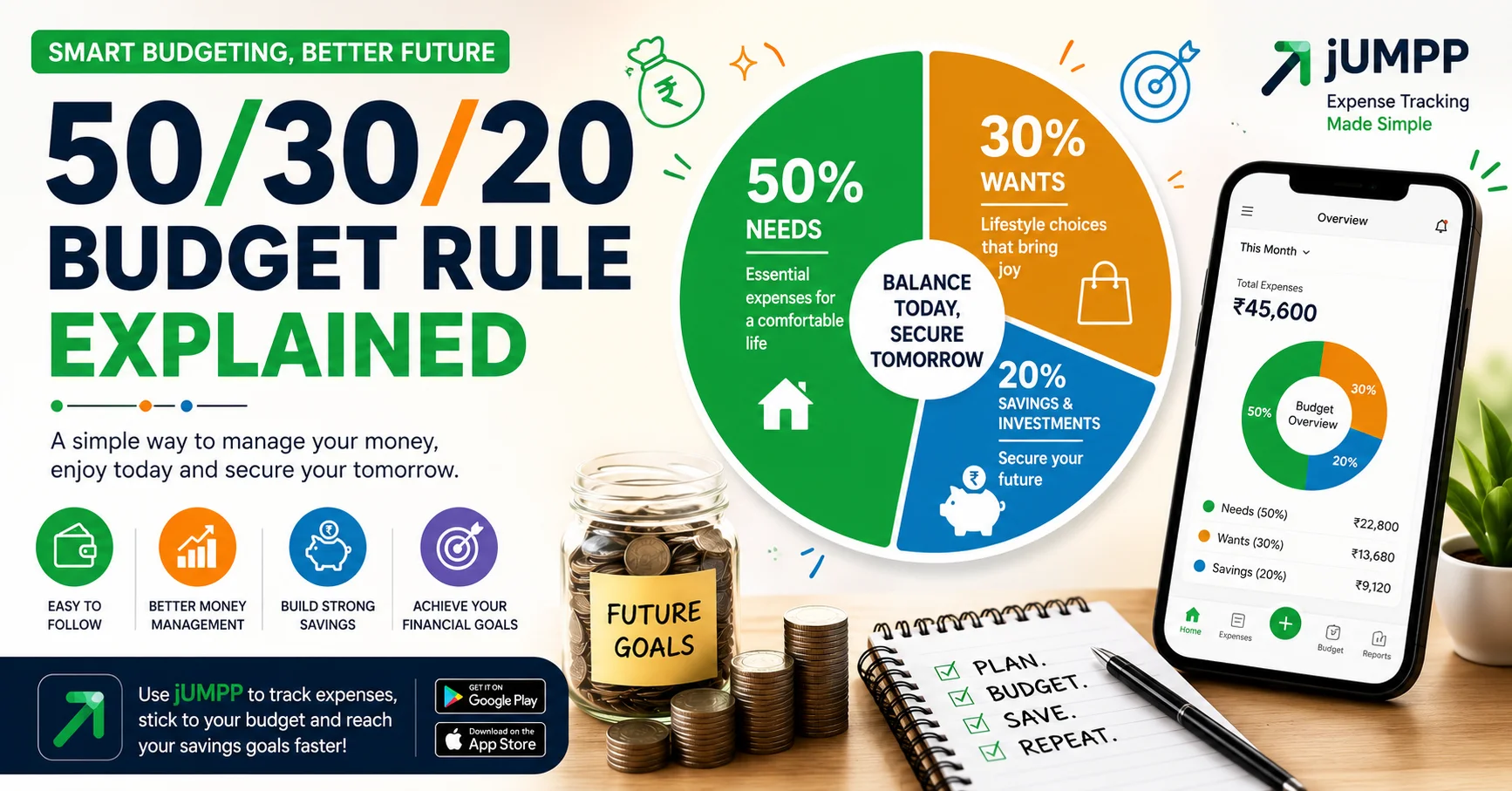
The 50/30/20 budget rule is a simple budgeting strategy that helps you allocate your monthly income into three categories:
- 50% for Needs
- 30% for Wants
- 20% for Savings and Investments
Instead of tracking hundreds of individual expenses, this rule focuses on maintaining a healthy balance between essential expenses, personal lifestyle, and future financial goals.
It’s popular because it’s easy to understand and flexible enough to work for people with different income levels.
Tracking your expenses gives you a clear picture of your spending habits. Instead of manually maintaining spreadsheets, you can use jUMPP to automatically organize your daily expenses into categories, making it easier to identify where your money is going and where you can save more.
How Does the 50/30/20 Budget Rule Work?
Let’s say your monthly take-home salary is ₹60,000.
Using the 50/30/20 rule, your budget would look like this:
| Category | Percentage | Amount |
|---|---|---|
| Needs | 50% | ₹30,000 |
| Wants | 30% | ₹18,000 |
| Savings & Investments | 20% | ₹12,000 |
This structure gives every rupee a purpose and reduces the chances of overspending.
Understanding the Three Categories
1. Needs (50%)
Needs are the essential expenses you cannot avoid.
These include:
- House rent or home loan EMI
- Groceries
- Electricity and water bills
- Mobile and internet bills
- Transportation
- Insurance premiums
- School fees
- Essential medicines
- Loan EMIs
If you stopped paying these expenses, it would significantly affect your daily life.
Example
Suppose your monthly income is ₹50,000.
Your “Needs” budget should ideally stay within ₹25,000.
If your rent alone is ₹22,000, it may be time to look for ways to reduce other fixed expenses.
2. Wants (30%)
Wants are things that improve your lifestyle but aren’t essential for survival.
Examples include:
- Dining out
- Shopping
- OTT subscriptions
- Vacations
- New gadgets
- Entertainment
- Coffee from cafés
- Movie tickets
- Gym memberships (optional)
There’s nothing wrong with spending on things you enjoy. The idea is to keep these expenses within your budget so they don’t affect your financial goals.
Example
For a salary of ₹60,000:
Maximum “Wants” budget = ₹18,000
You can spend it on hobbies, travel, eating out, or shopping without feeling guilty—as long as you stay within your limit.
3. Savings and Investments (20%)
This is the most important category because it helps secure your future.
The 20% should ideally go toward:
- Emergency fund
- Fixed Deposits (FDs)
- Recurring Deposits (RDs)
- Mutual Funds
- SIPs
- Retirement savings
- Gold investments
- Other long-term financial goals
Many people save only what’s left at the end of the month. Unfortunately, that often means saving very little.
Instead, transfer your savings as soon as your salary is credited. This approach, often called “Pay Yourself First,” makes saving a priority rather than an afterthought.
Why Is the 50/30/20 Budget Rule So Popular?
There are many budgeting methods available, but the 50/30/20 rule stands out because it’s easy to follow.
Some key benefits include:
Simple to Understand
You don’t need advanced financial knowledge or complicated spreadsheets. Just divide your income into three categories.
Reduces Overspending
When you know how much you can comfortably spend on non-essential items, you’re less likely to make impulse purchases.
Encourages Saving
Many people struggle to save consistently. By setting aside 20% of your income first, you build savings as a habit.
Supports Financial Goals
Whether you’re planning a vacation, buying a home, or preparing for retirement, regular savings help you reach your goals faster.
How to Start Using the 50/30/20 Budget Rule
Step 1: Calculate Your Monthly Income
Use your take-home salary after taxes and deductions.
For freelancers or business owners, calculate your average monthly income over the last six to twelve months.
Step 2: List All Your Expenses
Write down every monthly expense, including:
- Rent
- Groceries
- Utilities
- Fuel
- EMI
- Entertainment
- Shopping
- Online subscriptions
Tracking expenses gives you a clear picture of your spending habits.
Step 3: Categorize Your Spending
Separate each expense into:
- Needs
- Wants
- Savings
This helps you identify where your money is going and where you can make adjustments.
Step 4: Adjust Your Budget
If your “Needs” exceed 50%, look for ways to reduce fixed expenses.
If your “Wants” exceed 30%, consider cutting back on discretionary spending.
The goal isn’t perfection—it’s progress.
Common Budgeting Mistakes to Avoid
Many people struggle with budgeting because of a few common habits.
Ignoring Small Expenses
Daily coffee, snacks, and food delivery may seem inexpensive, but they can add up significantly over a month.
Not Tracking Expenses
You can’t improve what you don’t measure.
Regularly reviewing your spending helps you stay on track.
Spending Before Saving
Always save first.
If you wait until the end of the month, unexpected expenses may leave little or nothing to save.
Lifestyle Inflation
As your income increases, it’s tempting to upgrade your lifestyle.
Instead, try increasing your savings along with your income.
Can the 50/30/20 Rule Work for Everyone?
The rule is flexible, but not everyone’s financial situation is the same.
For example:
If You Live in an Expensive City
Your rent may consume more than 50% of your income.
In this case, you might temporarily follow a different ratio, such as:
- 60% Needs
- 20% Wants
- 20% Savings
If You’re Paying Off Debt
You may decide to allocate more toward debt repayment and reduce discretionary spending.
Example:
- 50% Needs
- 15% Wants
- 35% Debt Repayment & Savings
Remember, the percentages are guidelines—not strict rules.
Practical Example
Let’s assume your monthly salary is ₹80,000.
Here’s how your budget could look:
| Category | Budget |
|---|---|
| Rent & Utilities | ₹22,000 |
| Groceries | ₹8,000 |
| Transportation | ₹6,000 |
| Insurance & Bills | ₹4,000 |
| Shopping & Dining | ₹15,000 |
| Savings & Investments | ₹16,000 |
| Miscellaneous | ₹9,000 |
By planning your expenses in advance, you’re less likely to overspend and more likely to achieve your financial goals.
Tips to Make the 50/30/20 Rule Work Better
- Review your budget every month.
- Automate your savings.
- Avoid impulse purchases.
- Build an emergency fund.
- Track every expense.
- Increase your savings after every salary hike.
- Use budgeting or expense-tracking apps to stay organized.
- Set realistic financial goals.
Frequently Asked Questions
Is the 50/30/20 budget rule suitable for beginners?
Yes. It’s one of the easiest budgeting methods for anyone starting to manage their finances.
Can I modify the percentages?
Absolutely. The rule is a guideline, not a strict formula. Adjust it according to your income, expenses, and financial goals.
What if I can’t save 20%?
Start with whatever you can afford. Even saving 5–10% consistently is better than not saving at all. As your income grows or your expenses decrease, gradually increase your savings.
Should investments be included in the 20%?
Yes. The 20% category includes both savings and investments, such as emergency funds, fixed deposits, mutual funds, SIPs, or retirement contributions.
Final Thoughts
The 50/30/20 budget rule isn’t about restricting your lifestyle—it’s about creating balance. By dividing your income into needs, wants, and savings, you can enjoy your present while preparing for your future.
Remember, budgeting isn’t about saying “no” to everything. It’s about saying “yes” to the things that matter most.
Whether your goal is building an emergency fund, becoming debt-free, buying a home, or achieving financial independence, the 50/30/20 budget rule provides a simple roadmap to help you get there.
Start with your next paycheck. Review your expenses, create your budget, and take the first step toward better financial management. Small, consistent actions today can lead to greater financial security tomorrow.
Related: Investing for Beginners: Building an Emergency Fund and Understanding Compound Interest