One of the biggest decisions cat owners face is whether their feline companion should live exclusively indoors or have access to the outdoors. While some cats thrive as indoor pets, others enjoy exploring gardens, neighborhoods, and natural environments. Both lifestyles have unique benefits and challenges, and choosing the right one depends on your cat’s personality, environment, and safety considerations.
Understanding the advantages and disadvantages of indoor and outdoor living can help you provide the healthiest, happiest, and safest life possible for your cat.
This comprehensive guide explores the pros, cons, and important safety factors associated with indoor and outdoor cats.
Understanding Indoor and Outdoor Cats
Indoor Cats
Indoor cats spend their entire lives inside a home or apartment. Their environment is controlled and protected from many outside dangers.
Outdoor Cats
Outdoor cats have regular access to outdoor spaces and may roam freely in neighborhoods, gardens, parks, or rural areas.
Indoor-Outdoor Cats
Some cats enjoy a combination of both lifestyles, spending time indoors while having supervised or unsupervised access outdoors.
Each lifestyle offers different experiences and risks.
Benefits of Keeping Cats Indoors
Many veterinarians and animal welfare organizations recommend indoor living due to the significant safety advantages.
Longer Lifespan
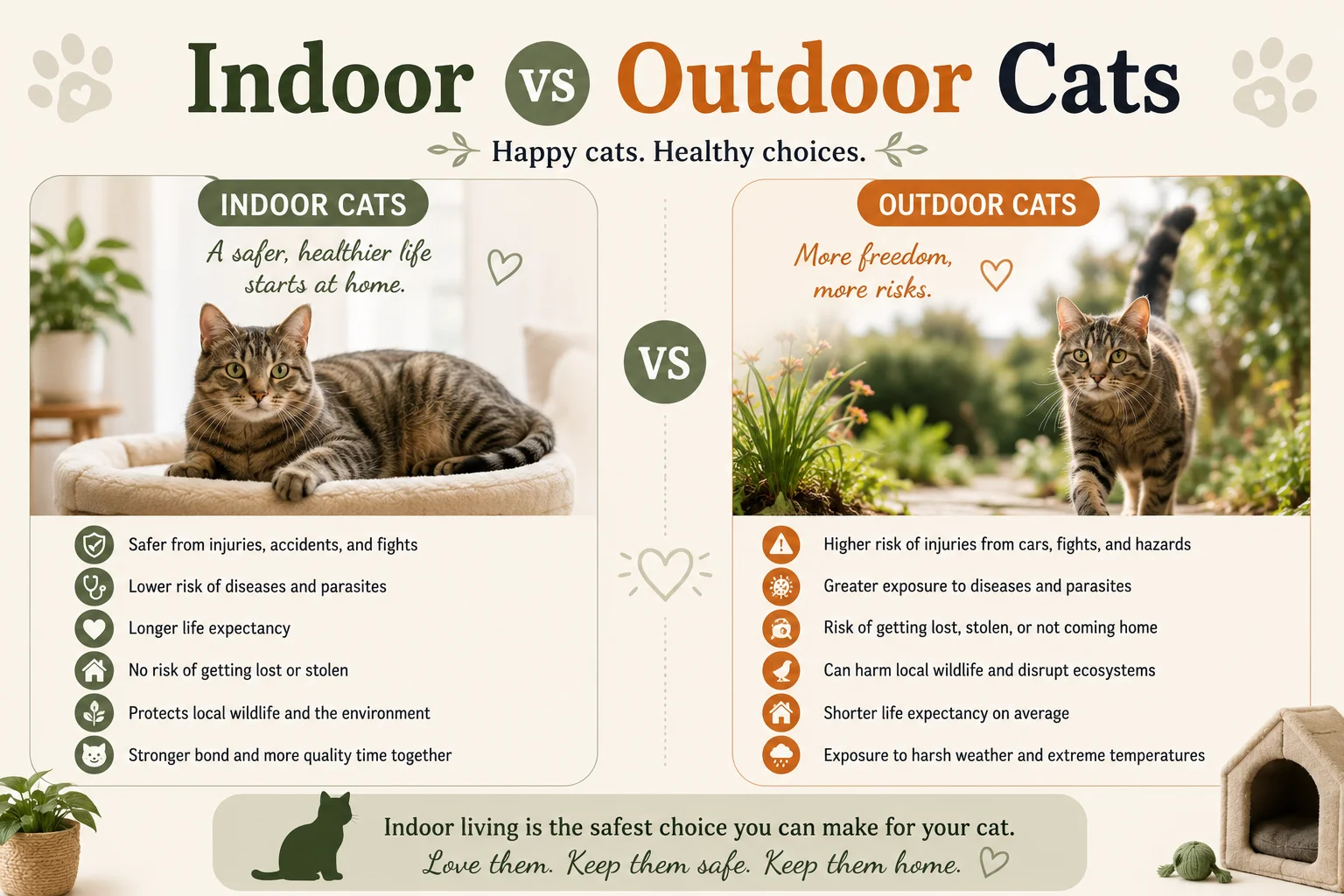
Indoor cats generally live much longer than outdoor cats.
Average lifespan estimates:
- Indoor cats: 12–20 years or more
- Outdoor cats: 2–10 years
Indoor cats face fewer life-threatening dangers.
Protection From Traffic
Road accidents are one of the most common causes of injury and death among outdoor cats.
Indoor cats avoid:
- Busy roads
- Parking lots
- Vehicle collisions
Reduced Risk of Disease
Outdoor cats can be exposed to:
- Feline leukemia virus (FeLV)
- Feline immunodeficiency virus (FIV)
- Parasites
- Respiratory infections
Indoor living significantly reduces disease exposure.
Protection From Predators
Depending on your location, outdoor cats may encounter:
- Dogs
- Foxes
- Coyotes
- Birds of prey
- Other aggressive animals
Indoor cats remain protected from these threats.
Lower Risk of Theft
Purebred and friendly cats can be targets for theft.
Indoor living eliminates this concern.
Environmental Protection
Cats are natural hunters.
Keeping cats indoors helps protect:
- Birds
- Small mammals
- Reptiles
- Local wildlife populations
Challenges of Indoor Living
While indoor cats are generally safer, indoor life also presents challenges.
Lack of Exercise
Indoor cats may become less active.
This can contribute to:
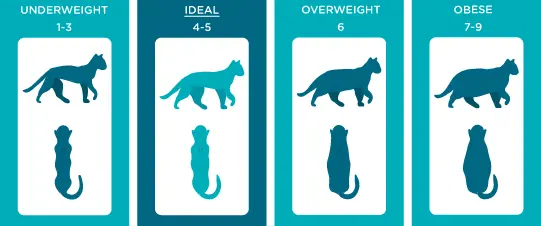
- Weight gain
- Obesity
- Reduced fitness
Boredom
Without proper enrichment, indoor cats may experience:
- Frustration
- Anxiety
- Destructive behaviors
Behavioral Issues
A bored cat may develop:
- Excessive meowing
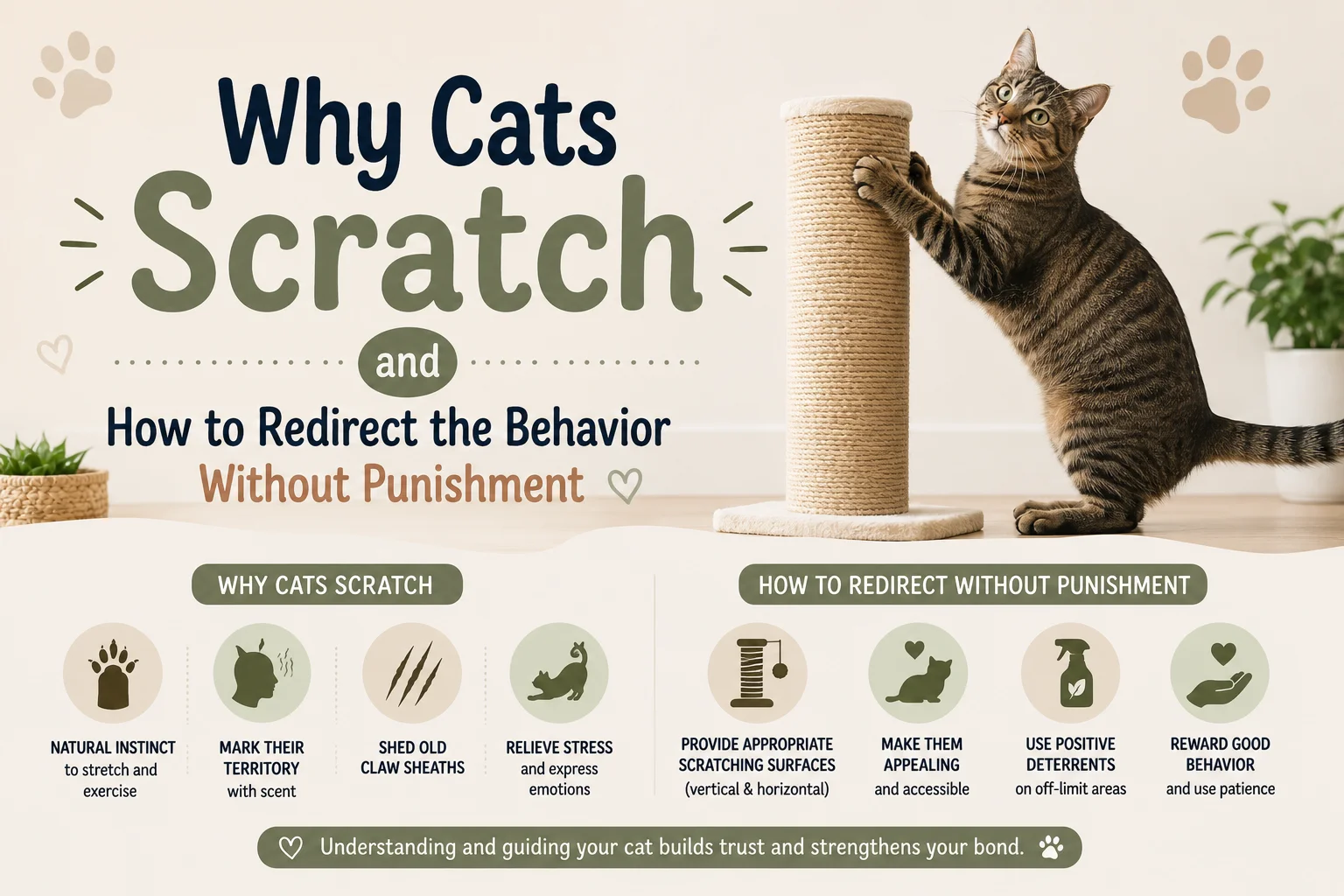
- Furniture scratching
- Overeating
- Attention-seeking behaviors
Reduced Mental Stimulation
Outdoor environments provide constant sensory experiences that indoor cats may miss.
How to Keep Indoor Cats Happy
Indoor cats thrive when their environment meets their physical and mental needs.
Provide Climbing Opportunities
Cats love vertical spaces.
Examples:
- Cat trees
- Wall shelves
- Window perches
Interactive Toys
Rotate toys regularly:
- Feather wands
- Puzzle feeders
- Laser toys
- Balls
Window Access
Many cats enjoy watching:
- Birds
- Squirrels
- People
- Weather changes
Daily Play Sessions
Schedule at least:
- Two to three play sessions
- 10–15 minutes each
This helps mimic natural hunting behavior.
Benefits of Outdoor Cats
Outdoor living offers experiences that many cats naturally enjoy.
Natural Exploration
Cats are curious animals.
Outdoor environments allow:
- Exploring new scents
- Climbing trees
- Investigating surroundings
Greater Physical Activity
Outdoor cats often:
- Run
- Jump
- Climb
- Hunt
This promotes physical fitness.
Mental Stimulation
The outdoors provides constant enrichment through:
- Sounds
- Smells
- Visual stimulation
Natural Behaviors
Outdoor access allows cats to express instincts such as:
- Hunting
- Territory patrol
- Exploration
Risks of Outdoor Living
Outdoor freedom comes with significant dangers.
Traffic Accidents
Roads pose one of the greatest risks to outdoor cats.
Animal Attacks
Potential threats include:
- Dogs
- Wild animals
- Aggressive cats
Poisoning
Cats may encounter:
- Toxic plants
- Pesticides
- Rodenticides
- Household chemicals
Human Threats
Unfortunately, some outdoor cats face:
- Abuse
- Theft
- Accidental injury
Infectious Diseases
Outdoor cats are more likely to contract:
- FeLV
- FIV
- Ringworm
- Parasitic infections
Getting Lost
Even experienced outdoor cats can become disoriented.
Common Injuries in Outdoor Cats
Outdoor cats are more likely to experience:
- Bite wounds
- Scratches
- Broken bones
- Eye injuries
- Abscesses
These injuries often require veterinary treatment.
Indoor vs. Outdoor Cat Lifespan
One of the strongest arguments for indoor living is longevity.
Factors contributing to longer indoor lifespans include:
- Fewer accidents
- Lower disease exposure
- Better nutrition
- Regular veterinary care
While individual outcomes vary, indoor cats generally enjoy significantly longer lives.
The Impact on Wildlife
Cats are highly effective predators.
Outdoor cats may hunt:
- Birds
- Rodents
- Lizards
- Frogs
Studies have shown that free-roaming cats can affect local wildlife populations.
Responsible pet ownership includes considering environmental impact.
The Indoor-Outdoor Compromise
Many owners seek a middle ground.
Supervised Outdoor Time
Allow cats outside while monitoring them.
Benefits include:
- Exploration
- Safety
- Bonding
Cat Harness Training
Many cats can learn to walk using a harness and leash.
Advantages:
- Controlled outdoor access
- Reduced risk
- Mental stimulation
Catios
A “catio” is an enclosed outdoor space designed specifically for cats.
Benefits:
- Fresh air
- Sunlight
- Wildlife observation
- Protection from dangers
Catios are becoming increasingly popular among cat owners.
Safety Tips for Outdoor Cats
If your cat goes outdoors, follow these precautions.
Microchip Your Cat
Microchips improve the chances of reunion if your cat becomes lost.
Use Identification Tags
Collars with ID tags help others identify your pet.
Choose breakaway collars designed for cats.
Keep Vaccinations Current
Important vaccines include protection against:
- Rabies
- Feline leukemia
- Common viral diseases
Parasite Prevention
Use veterinarian-approved treatments for:
- Fleas
- Ticks
- Worms
Spay or Neuter Your Cat
Benefits include:
- Reduced roaming
- Fewer territorial conflicts
- Population control
Provide Safe Shelter
Outdoor cats should always have access to:
- Shade
- Fresh water
- Weather protection
Signs Your Cat May Prefer Indoor Living
Some cats naturally enjoy indoor lifestyles.
Indicators include:
- Nervousness outdoors
- Preference for indoor play
- Limited interest in exploring
- Strong attachment to owners
Signs Your Cat Enjoys Outdoor Access
Cats that enjoy outdoor experiences may:
- Sit by doors frequently
- Watch windows constantly
- Show curiosity about outdoor sounds
- Seek opportunities to explore
Even so, safety should remain the top priority.
Special Considerations for Kittens
Young kittens should generally remain indoors.
Reasons include:
- Immature immune systems
- Increased vulnerability
- Higher risk of accidents
Outdoor access should only be considered once vaccinations are complete and your veterinarian approves.
Special Considerations for Senior Cats
Older cats often benefit from indoor living.
Advantages include:
- Better temperature control
- Easier monitoring
- Reduced injury risk
- Improved comfort
Which Lifestyle Is Best?
There is no universal answer.
Factors to consider include:
Your Location
Urban environments may present more traffic dangers.
Your Cat’s Personality
Some cats are adventurous, while others prefer security.
Your Home Setup
Indoor enrichment can significantly improve quality of life.
Safety Concerns
Every owner should carefully evaluate local risks.
Expert Recommendations
Most veterinarians and animal welfare organizations favor indoor living due to the substantial safety and health benefits.
However, they also emphasize the importance of:
- Environmental enrichment
- Mental stimulation
- Physical activity
A stimulated indoor cat can enjoy an extremely fulfilling life.
Final Thoughts
The decision between indoor and outdoor living is one of the most important choices a cat owner can make. Indoor cats generally live longer, healthier lives due to protection from traffic, disease, predators, and environmental hazards. However, they require enrichment, exercise, and mental stimulation to remain happy and healthy.
Outdoor cats enjoy greater freedom and natural experiences but face significantly higher risks. For many owners, supervised outdoor time, leash training, or enclosed catios offer an ideal compromise that combines enrichment with safety.
Ultimately, the best choice depends on your cat’s personality, your living environment, and your ability to provide a safe and stimulating lifestyle. By understanding the pros, cons, and safety considerations of each option, you can make an informed decision that supports your cat’s long-term well-being.
Frequently Asked Questions (FAQs)
1. Do indoor cats live longer than outdoor cats?
Yes. Indoor cats generally have longer lifespans because they face fewer accidents, diseases, and environmental dangers.
2. Are outdoor cats happier?
Not necessarily. Happiness depends on enrichment, stimulation, and individual personality rather than outdoor access alone.
3. What is a catio?
A catio is an enclosed outdoor space that allows cats to enjoy fresh air and sunshine safely.
4. Can indoor cats become bored?
Yes. Without toys, climbing structures, and interactive play, indoor cats can become bored and develop behavioral issues.
5. Should kittens be allowed outdoors?
Most veterinarians recommend keeping kittens indoors until vaccinations are complete and they are mature enough for safe outdoor exposure.
6. How can I safely let my cat experience the outdoors?
Consider supervised outdoor time, harness training, or building a catio.
7. Do outdoor cats need more veterinary care?
They often require more frequent monitoring for injuries, parasites, and infectious diseases.
8. Is it cruel to keep a cat indoors?
No. Indoor living can provide a safe, healthy, and fulfilling life when combined with proper enrichment and regular interaction.
How Often Do You Take a Cat to The Vet: A Complete Guide to Your Pet’s Health