Buying your first car is one of life’s most exciting milestones. Whether you’re purchasing a vehicle for commuting, family use, business purposes, or weekend adventures, choosing the right car requires careful planning and research. With hundreds of models available in the market, first-time buyers can easily feel overwhelmed by specifications, financing options, insurance policies, and dealership offers.
Making an informed decision can save you money, prevent buyer’s remorse, and ensure that your vehicle meets your needs for years to come. This comprehensive first-time car buyer’s checklist covers everything you need to consider before signing the paperwork.
Why Having a Car Buying Checklist Matters
Many first-time buyers focus only on the vehicle’s price. However, ownership costs include fuel, insurance, maintenance, registration, servicing, and depreciation.
A checklist helps you:
- Avoid costly mistakes
- Compare vehicles effectively
- Stay within budget
- Understand ownership costs
- Choose the right vehicle for your lifestyle
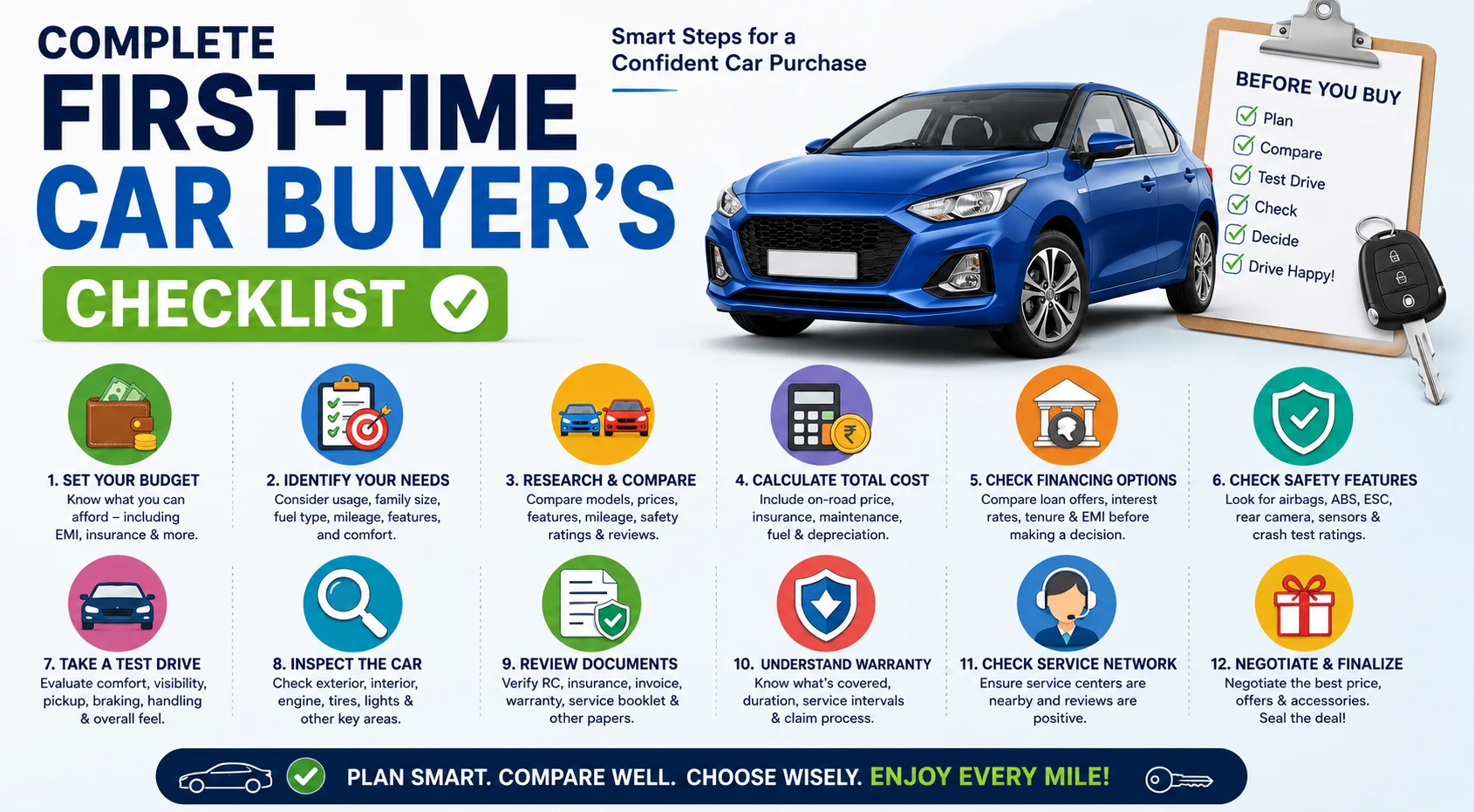
Step 1: Determine Your Budget
The first and most important step is setting a realistic budget.
Ask yourself:
- How much can I afford upfront?
- How much can I comfortably pay each month?
- What are the expected maintenance costs?
- How much will insurance cost?
Follow the 20/4/10 Rule
A popular guideline suggests:
- 20% down payment
- Loan term of 4 years or less
- Transportation expenses below 10% of monthly income
This helps prevent overspending.
Step 2: Decide Between New and Used Cars
New Cars
Advantages:
- Manufacturer warranty
- Latest technology
- Better fuel efficiency
- Lower maintenance initially
Disadvantages:
- Higher purchase price
- Rapid depreciation
Used Cars
Advantages:
- Lower cost
- Reduced depreciation
- More options within budget
Disadvantages:
- Potential maintenance issues
- Limited warranty coverage
Choose based on your financial situation and comfort level.
Step 3: Identify Your Needs
Before visiting dealerships, define your requirements.
Consider:
Daily Commute
If you drive mainly in cities:
- Compact hatchbacks
- Fuel-efficient sedans
- Hybrid vehicles
Family Usage
Look for:
- Spacious interiors
- Multiple airbags
- Large boot space
Highway Travel
Prioritize:
- Comfort
- Engine performance
- Cruise control
- Stability
Business Use
Focus on:
- Reliability
- Fuel efficiency
- Low maintenance costs
Step 4: Research Vehicle Types
Understanding vehicle categories makes comparisons easier.
Hatchbacks
Best for:
- City driving
- Small families
- Budget-conscious buyers
Sedans
Ideal for:
- Comfort
- Highway travel
- Professional use
SUVs
Suitable for:
- Large families
- Rough roads
- Higher driving position
MPVs
Perfect for:
- Bigger families
- Long-distance travel
Step 5: Compare Fuel Types
Petrol Cars
Pros:
- Lower purchase cost
- Smooth driving experience
Cons:
- Higher fuel costs
Diesel Cars
Pros:
- Better mileage
- Suitable for long distances
Cons:
- Higher maintenance
Hybrid Cars
Pros:
- Excellent fuel economy
- Lower emissions
Cons:
- Higher initial cost
Electric Vehicles
Pros:
- Low running costs
- Environmentally friendly
Cons:
- Charging infrastructure concerns
Step 6: Check Safety Ratings
Safety should never be compromised.
Look for:
- Airbags
- ABS (Anti-lock Braking System)
- Electronic Stability Control
- Hill Hold Assist
- Rear Parking Sensors
- Reverse Camera
Research crash test ratings before making a decision.
Step 7: Review Essential Features
Must-Have Features
- Power steering
- Air conditioning
- Power windows
- Central locking
- Adjustable seats
Nice-to-Have Features
- Touchscreen infotainment
- Wireless charging
- Sunroof
- Connected car technology
- Ventilated seats
Avoid paying extra for features you’ll rarely use.
Step 8: Calculate Total Ownership Cost
Many buyers focus only on showroom price.
Also calculate:
Fuel Expenses
Estimate monthly fuel consumption.
Insurance Premium
Premiums vary based on:
- Vehicle type
- City
- Coverage selected
Maintenance Costs
Check:
- Service intervals
- Spare part availability
- Service center network
Depreciation
Some vehicles retain value better than others.
Step 9: Research Reliability
A reliable car reduces future headaches.
Read:
- Customer reviews
- Expert reviews
- Reliability reports
- Owner feedback
Look for recurring complaints regarding:
- Engine issues
- Electrical problems
- Transmission failures
Step 10: Check Resale Value
Resale value becomes important when upgrading later.
Generally, vehicles from reputable brands retain value better.
Factors affecting resale:
- Brand reputation
- Service history
- Mileage
- Market demand
Step 11: Compare Financing Options
If taking a loan:
Compare:
- Interest rates
- Processing fees
- Loan tenure
- EMI amounts
Avoid selecting a loan solely because of a low monthly payment.
Longer tenures often increase total interest costs.
Step 12: Obtain Insurance Quotes
Insurance is mandatory and should be factored into your budget.
Compare:
- Third-party insurance
- Comprehensive insurance
- Zero depreciation coverage
Always review policy benefits before purchasing.
Step 13: Visit Multiple Dealerships
Never purchase from the first dealership you visit.
Compare:
- Prices
- Discounts
- Exchange offers
- Financing deals
- Accessories packages
Competition often results in better deals.
Step 14: Take a Test Drive
A test drive is essential.
Evaluate:
Driving Comfort
Check:
- Seat comfort
- Visibility
- Cabin ergonomics
Performance
Assess:
- Acceleration
- Braking
- Steering response
Ride Quality
Drive on:
- Smooth roads
- Speed breakers
- Rough surfaces
Listen for unusual noises.
Step 15: Inspect the Vehicle Thoroughly
Before delivery, inspect the car carefully.
Exterior Inspection
Check:
- Paint quality
- Scratches
- Dents
- Panel alignment
Interior Inspection
Verify:
- Upholstery condition
- Electronics functionality
- Dashboard controls
Mechanical Inspection
Ensure:
- Lights work properly
- Wipers function correctly
- Air conditioning performs well
Step 16: Verify Documentation
Documentation is critical.
Ensure you receive:
- Invoice
- Registration certificate
- Insurance policy
- Warranty booklet
- Owner’s manual
- Pollution certificate (where applicable)
Review all paperwork carefully.
Step 17: Understand the Warranty
Study warranty coverage details.
Check:
- Duration
- Kilometers covered
- Exclusions
- Extended warranty options
A good warranty provides peace of mind.
Step 18: Evaluate Service Network
Choose a brand with strong service support.
Research:
- Number of service centers
- Customer satisfaction ratings
- Availability of spare parts
Easy access to servicing reduces inconvenience.
Step 19: Avoid Common Buying Mistakes
Buying Beyond Your Budget
Stick to your financial limits.
Ignoring Running Costs
Fuel and maintenance expenses matter.
Skipping Research
Compare multiple models before deciding.
Overpaying for Accessories
Dealership accessories often carry high markups.
Rushing the Decision
Take your time and compare options carefully.
Step 20: Delivery Day Checklist
Before accepting delivery:
Exterior
✓ Check paint condition
✓ Verify no scratches
✓ Inspect tires
✓ Check lights
Interior
✓ Test infotainment system
✓ Verify seat adjustments
✓ Inspect upholstery
✓ Check AC performance
Documentation
✓ Insurance papers
✓ Registration documents
✓ Warranty details
✓ Invoice copy
Accessories
✓ Spare wheel
✓ Tool kit
✓ Floor mats
✓ User manual
Questions Every First-Time Buyer Should Ask
- What is the waiting period?
- What is included in the warranty?
- What are the service intervals?
- Are there any hidden charges?
- What accessories are complimentary?
- What is the expected maintenance cost?
Tips for Saving Money
Buy During Festival Seasons
Dealerships often provide discounts.
Compare Online and Offline Prices
Use online platforms for research.
Negotiate Confidently
Many prices are negotiable.
Avoid Unnecessary Add-Ons
Only purchase features and accessories you genuinely need.
Final Thoughts
Buying your first car is both exciting and financially significant. The right vehicle should fit your lifestyle, budget, and long-term needs. By following this complete first-time car buyer’s checklist, you’ll be better prepared to evaluate options, negotiate effectively, and make a confident purchase.
Remember that the best car isn’t necessarily the most expensive one. It’s the vehicle that meets your requirements, offers reliability, stays within budget, and provides peace of mind for years to come. Take your time, do your research, and enjoy the journey toward owning your first car.
Frequently Asked Questions (FAQs)
1. What should a first-time car buyer consider first?
Start by determining your budget and identifying your primary usage needs.
2. Is it better to buy a new or used car?
New cars offer warranties and reliability, while used cars provide better value and lower depreciation.
3. How much should I spend on my first car?
Choose a vehicle that comfortably fits your financial situation without straining your monthly budget.
4. How important is a test drive?
A test drive is essential because it helps evaluate comfort, performance, and overall driving experience.
5. What documents should I receive when buying a car?
You should receive the invoice, registration documents, insurance policy, warranty booklet, and owner’s manual.
6. Should I buy accessories from the dealership?
Compare prices first, as dealership accessories are often more expensive.
7. How do I choose between petrol, diesel, hybrid, and electric cars?
Your driving distance, fuel costs, charging availability, and ownership goals should guide your decision.
8. What is the biggest mistake first-time buyers make?
The most common mistake is focusing only on purchase price while ignoring long-term ownership costs.