The Indian automobile industry is undergoing a major transformation as consumers increasingly seek fuel-efficient, environmentally friendly, and technologically advanced vehicles. While electric vehicles (EVs) have received significant attention in recent years, hybrid cars have emerged as a practical alternative for buyers who want better fuel economy without worrying about charging infrastructure.
Hybrid vehicles combine a conventional petrol engine with an electric motor, delivering improved efficiency, lower emissions, and reduced fuel costs. As fuel prices continue to fluctuate and environmental concerns grow, hybrid cars are becoming increasingly popular among Indian car buyers.
In this comprehensive guide, we’ll explore what hybrid cars are, how they work, their advantages and disadvantages, the different types available in India, and whether investing in a hybrid vehicle makes financial sense.
What Is a Hybrid Car?
A hybrid car is a vehicle that uses two power sources:
- Internal Combustion Engine (ICE)
- Electric Motor
These two systems work together to propel the vehicle efficiently. Depending on driving conditions, the car may use the petrol engine, electric motor, or both simultaneously.
The primary goal of hybrid technology is to improve fuel efficiency and reduce emissions while maintaining the convenience of conventional fuel-powered vehicles.
Unlike fully electric vehicles, most hybrid cars do not require charging from an external power source. The battery is automatically recharged through regenerative braking and engine operation.
How Does a Hybrid Car Work?
Hybrid cars use sophisticated software and control systems to determine the most efficient power source.
During Low-Speed Driving
At lower speeds, the electric motor may power the vehicle independently.
This helps reduce fuel consumption in city traffic.
During Acceleration
The electric motor assists the petrol engine, providing additional power and improving efficiency.
During Highway Driving
The petrol engine typically handles most of the workload because it performs efficiently at constant speeds.
During Braking
The hybrid system uses regenerative braking technology.
Instead of wasting braking energy as heat, the system converts it into electricity and stores it in the battery.
This energy is later used to power the electric motor.
Types of Hybrid Cars in India
Hybrid technology is available in different forms.
Mild Hybrid Cars
Mild hybrids use a small electric motor to assist the petrol engine.
The electric motor cannot drive the vehicle independently.
Benefits include:
- Better fuel economy
- Smoother start-stop operation
- Improved acceleration
Popular Mild Hybrid Cars:
- Maruti Suzuki Brezza
- Maruti Suzuki Ertiga
- Maruti Suzuki XL6
Strong Hybrid Cars
Strong hybrids can operate using only electric power for short distances.
The electric motor plays a much larger role compared to mild hybrids.
Benefits include:
- Superior fuel efficiency
- Lower emissions
- Better city driving performance
Popular Strong Hybrid Cars:
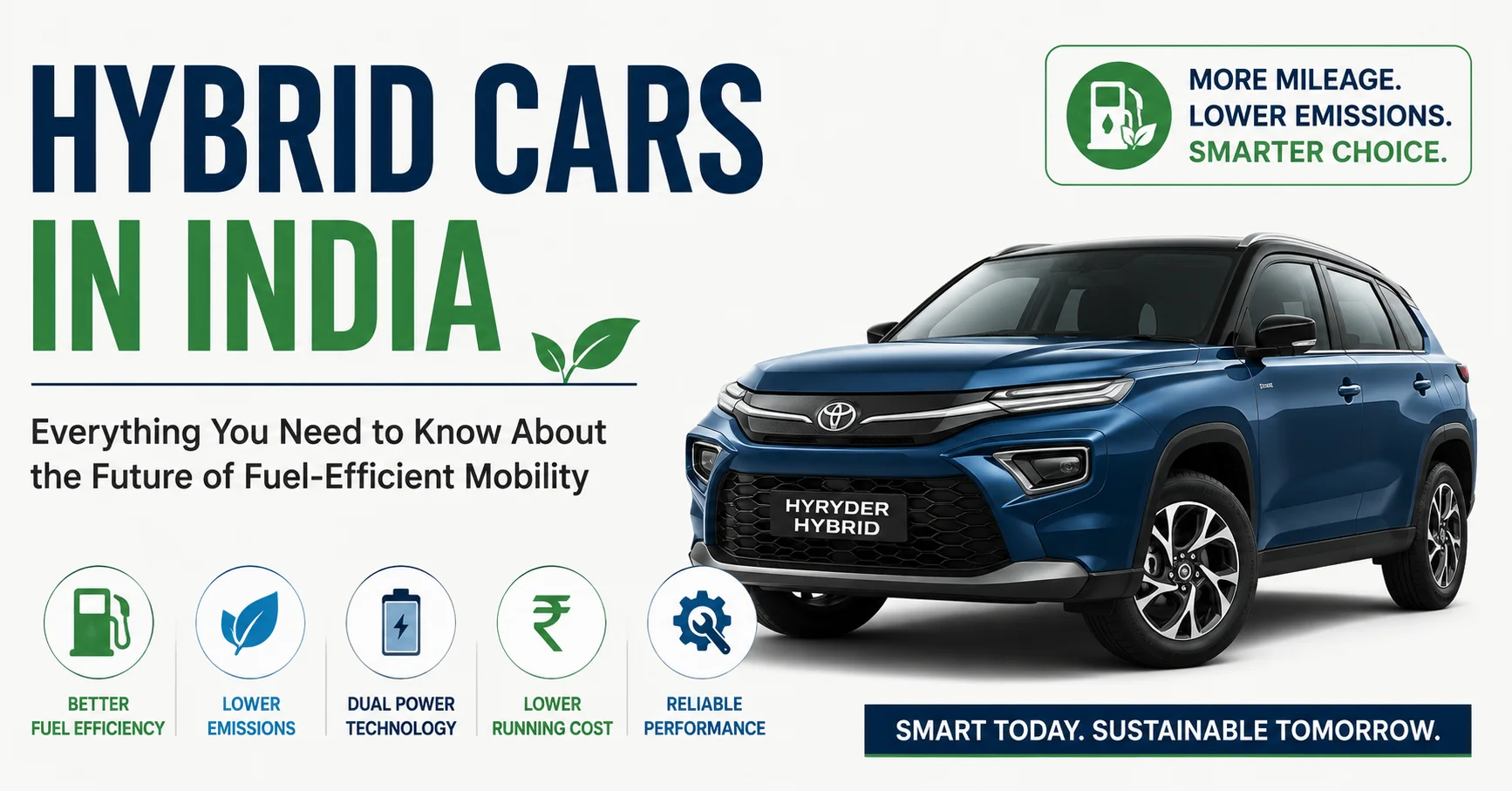
- Toyota Urban Cruiser Hyryder
- Maruti Suzuki Grand Vitara
- Toyota Innova HyCross
- Honda City e:HEV
Plug-in Hybrid Cars (PHEVs)
Plug-in hybrids feature larger battery packs that can be charged externally.
They offer:
- Longer electric-only driving range
- Lower fuel consumption
- Greater flexibility
However, PHEVs are still relatively uncommon in India.
Why Hybrid Cars Are Gaining Popularity in India
Several factors are contributing to the growth of hybrid vehicles.
Rising Fuel Prices
Fuel costs remain one of the biggest concerns for Indian motorists.
Hybrid cars consume significantly less petrol compared to conventional vehicles.
Improved Fuel Efficiency
Many strong hybrid vehicles deliver fuel economy exceeding 25 km/l.
This can result in substantial long-term savings.
Environmental Awareness
Consumers are becoming increasingly conscious of their carbon footprint.
Hybrid vehicles produce lower emissions than conventional petrol vehicles.
No Charging Anxiety
Unlike EVs, hybrid cars don’t depend on charging stations.
Drivers enjoy the benefits of electrification without range anxiety.
Advantages of Hybrid Cars
Excellent Fuel Efficiency
Fuel economy is the biggest advantage of hybrid vehicles.
Strong hybrids often achieve:
- 25–28 km/l in city conditions
- Better overall efficiency than traditional petrol vehicles
Lower Running Costs
Reduced fuel consumption translates directly into lower operating expenses.
For high-mileage drivers, these savings can be substantial.
Reduced Emissions
Hybrid systems help reduce:
- Carbon dioxide emissions
- Fuel consumption
- Environmental impact
Smooth Driving Experience
Electric motors provide instant torque, resulting in:
- Smoother acceleration
- Quieter operation
- Better urban driving comfort
No Need for External Charging
Most hybrid vehicles recharge automatically through regenerative braking and engine operation.
Better Resale Value
As demand for fuel-efficient vehicles grows, hybrid cars may retain strong resale value.
Disadvantages of Hybrid Cars
Higher Purchase Price
Hybrid vehicles cost more than their conventional petrol counterparts.
The advanced technology contributes to a higher upfront investment.
Battery Replacement Cost
Although hybrid batteries are designed to last many years, replacement can be expensive if required.
Limited Model Availability
Compared to petrol cars, hybrid options remain relatively limited in India.
More Complex Technology
Hybrid systems are more sophisticated than traditional vehicles.
Repairs and maintenance may require specialized expertise.
Best Hybrid Cars Available in India
Toyota Innova HyCross
The Toyota Innova HyCross is one of India’s most popular strong hybrid MPVs.
Key highlights:
- Excellent fuel efficiency
- Spacious cabin
- Premium features
- Strong reliability
Toyota Urban Cruiser Hyryder
This compact SUV combines practicality with impressive hybrid technology.
Benefits include:
- High mileage
- Modern features
- Comfortable driving experience
Maruti Suzuki Grand Vitara
The Grand Vitara strong hybrid variant has become a popular choice among SUV buyers.
Features include:
- Hybrid powertrain
- Advanced safety features
- Strong fuel economy
Honda City e:HEV
One of India’s most advanced hybrid sedans.
Advantages include:
- Refined driving experience
- Excellent efficiency
- Advanced driver assistance systems
Hybrid Cars vs Petrol Cars
Fuel Economy
Hybrid cars generally offer much better mileage.
Petrol Cars:
- 12–18 km/l
Strong Hybrid Cars:
- 20–28 km/l
Running Costs
Hybrid vehicles consume less fuel, reducing monthly expenses.
Purchase Cost
Petrol vehicles are usually cheaper initially.
However, hybrid cars may recover their premium through fuel savings over time.
Hybrid Cars vs Electric Vehicles
Charging Infrastructure
Hybrid Cars:
- No charging required
Electric Vehicles:
- Depend on charging stations
Range
Hybrid Cars:
- Similar range to petrol vehicles
Electric Vehicles:
- Limited by battery capacity
Convenience
Hybrid vehicles offer greater convenience for long-distance travel.
Environmental Impact
Electric vehicles generally produce lower emissions.
However, hybrids represent a practical transition toward electrification.
Are Hybrid Cars Worth Buying in India?
The answer depends on your driving habits.
A hybrid car makes sense if:
You Drive Frequently
People covering:
- 1,000–2,000 km per month
- Daily city commutes
- Frequent highway trips
can benefit significantly from fuel savings.
You Want Better Mileage
Hybrid vehicles offer some of the highest fuel efficiency figures available in India.
You Are Not Ready for an EV
Many buyers appreciate the benefits of electrification without relying on charging infrastructure.
You Plan Long-Term Ownership
Fuel savings become more meaningful over several years.
Running Cost Comparison
Let’s compare approximate fuel expenses.
Petrol Car
Mileage: 15 km/l
Distance: 1,500 km/month
Fuel Required:
100 liters
Strong Hybrid
Mileage: 27 km/l
Distance: 1,500 km/month
Fuel Required:
55–60 liters
The savings over several years can be substantial.
Government Policies and Hybrid Cars
The Indian government has largely focused on promoting electric mobility through incentives and subsidies.
However, many industry experts believe hybrid vehicles can play an important role in reducing fuel consumption and emissions during the transition to fully electric transportation.
Future policy changes may further influence hybrid adoption in India.
Common Myths About Hybrid Cars
Hybrid Cars Need Charging
False.
Most strong hybrids recharge automatically while driving.
Hybrid Batteries Fail Quickly
False.
Modern hybrid batteries are designed to last many years and often come with extended warranties.
Hybrid Cars Are Slow
False.
Electric motors provide instant torque, improving acceleration and responsiveness.
Maintenance Is Extremely Expensive
While some components are more advanced, overall maintenance is generally comparable to modern petrol vehicles.
The Future of Hybrid Cars in India
India’s automotive future will likely include a combination of:
- Petrol vehicles
- Hybrid vehicles
- Electric vehicles
- Alternative fuel technologies
As fuel prices rise and consumers seek greater efficiency, hybrid vehicles are expected to remain an important segment of the market.
Manufacturers are investing heavily in hybrid technology because it offers a practical solution for Indian road conditions and infrastructure limitations.
Final Thoughts
Hybrid cars represent an excellent middle ground between traditional petrol vehicles and fully electric cars. They deliver impressive fuel efficiency, lower running costs, reduced emissions, and a smooth driving experience without requiring external charging infrastructure.
For Indian buyers who want to save money on fuel while reducing their environmental impact, hybrid vehicles offer a compelling solution. Models such as the Toyota Innova HyCross, Toyota Urban Cruiser Hyryder, Maruti Suzuki Grand Vitara, and Honda City e:HEV have demonstrated that hybrid technology is both practical and effective in Indian driving conditions.
As the automotive industry continues to evolve, hybrid cars are likely to play a significant role in India’s journey toward cleaner and more sustainable transportation.
Frequently Asked Questions (FAQs)
1. What is a hybrid car?
A hybrid car uses both a petrol engine and an electric motor to improve fuel efficiency and reduce emissions.
2. Do hybrid cars need charging?
Most hybrid cars in India do not require external charging. They recharge automatically through regenerative braking and engine operation.
3. Which is the best hybrid car in India?
Popular options include the Toyota Innova HyCross, Toyota Urban Cruiser Hyryder, Maruti Suzuki Grand Vitara, and Honda City e:HEV.
4. Are hybrid cars good for city driving?
Yes. Hybrid systems perform exceptionally well in stop-and-go traffic conditions.
5. Are hybrid cars expensive to maintain?
Maintenance costs are generally comparable to modern petrol vehicles, though some specialized repairs may cost more.
6. What mileage do hybrid cars offer?
Strong hybrid cars in India can deliver between 20 and 28 km/l depending on driving conditions.
7. Are hybrid cars better than electric vehicles?
Both have advantages. Hybrid cars offer convenience and long range, while EVs provide lower emissions and operating costs.
8. Is buying a hybrid car worth it in India?
Yes, especially for drivers covering significant monthly distances who want excellent fuel efficiency without relying on charging infrastructure.