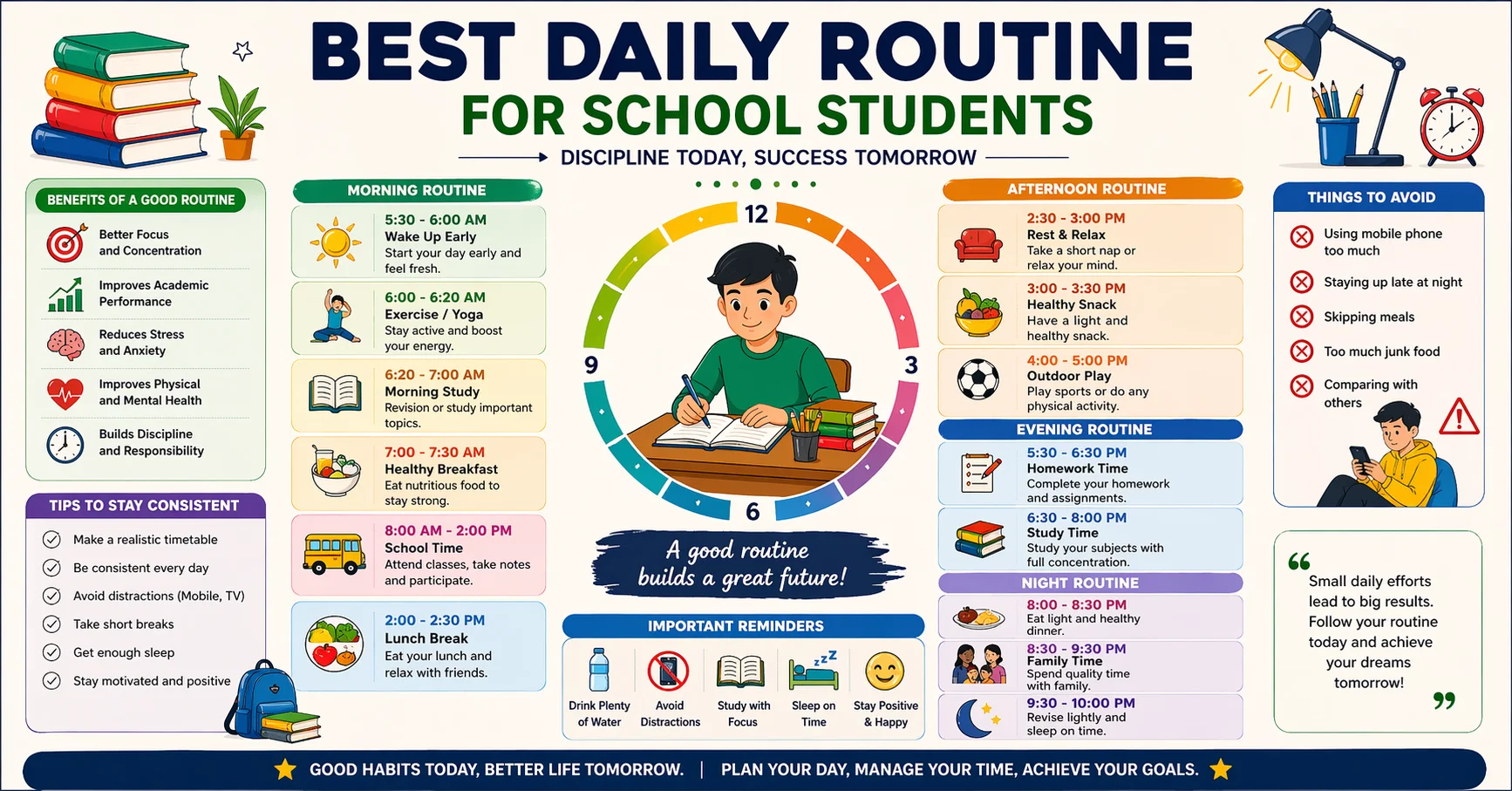
Creating a structured daily routine is one of the most powerful habits a school student can develop. In today’s fast-paced world, where distractions like mobile phones, social media, and irregular schedules are common, having a disciplined routine helps students stay focused, productive, and mentally healthy.
A well-planned daily routine not only improves academic performance but also builds life skills such as time management, responsibility, and self-discipline. In this guide, we will explore the best daily routine for school students, designed to balance studies, health, and personal development.
Why a Daily Routine is Important for Students
A daily routine provides structure and direction. Without it, students often:
- Waste time
- Feel stressed
- Struggle with studies
Following a routine helps in:
🎯 1. Better Time Management
Students learn how to divide time effectively between studies, play, and rest
📈 2. Improved Academic Performance
Regular study habits lead to better understanding and retention.
🧠 3. Reduced Stress
Planning the day in advance reduces last-minute pressure.
💪 4. Healthy Lifestyle
A routine ensures proper sleep, meals, and physical activity.
🌅 Ideal Morning Routine for School Students
Starting the day right sets the tone for productivity.
⏰ Wake Up Early (5:30 AM – 6:00 AM)
Waking up early helps students:
- Feel fresh
- Stay calm
- Prepare for the day
Morning hours are the most peaceful and productive.
🧘♂️ Exercise or Stretching (10–15 Minutes)
Light physical activity such as:
- Yoga
- Stretching
- Walking
Helps in:
- Improving focus
- Increasing energy levels
📖 Morning Study Session (20–30 Minutes)
Morning is the best time for:
- Revision
- Memorization
Students can revise:
- Important formulas
- Notes from the previous day
🍳 Healthy Breakfast
Breakfast is essential for:
- Energy
- Concentration
A balanced breakfast may include:
- Milk
- Fruits
- Eggs or healthy snacks
Skipping breakfast can lead to:
👉 Low energy and poor focus
🏫 School Hours Routine (8:00 AM – 2:00 PM)
School time is where most learning happens.
🎒 Stay Attentive in Class
Students should:
- Listen carefully
- Take notes
- Ask questions
Active participation improves understanding.
🍱 Lunch Break
Students should:
- Eat healthy food
- Stay hydrated
Avoid junk food as it can cause:
- Laziness
- Low concentration
🤝 Social Interaction
Talking with friends helps:
- Relax the mind
- Improve communication skills
🌤️ Afternoon Routine (After School)
😴 Rest and Relaxation (30–45 Minutes)
After school, students should:
- Take short rest
- Avoid long naps
This helps refresh the mind.
🥗 Healthy Snack
Light snacks like:
- Fruits
- Nuts
Help maintain energy levels.
⚽ Physical Activity (1 Hour)
Outdoor games or sports are important for:
- Physical health
- Stress relief
Activities like:
- Cricket
- Football
- Cycling
Improve overall well-being.
Screen Time Rules for Kids in India (Simple Guide for Parents)
📖 Evening Study Routine (5:30 PM – 8:00 PM)
📝 Homework Time
Students should:
- Complete assignments first
- Focus on difficult subjects
📚 Focused Study Sessions
Use the Pomodoro Technique:
- 45 minutes study
- 10 minutes break
This improves:
- Concentration
- Productivity
📵 Avoid Distractions
Keep away from:
- Mobile phones
- TV
- Social media
🌙 Night Routine (8:00 PM – 10:00 PM)
🍽️ Dinner
Eat a light and healthy meal:
- Avoid heavy or oily food
👨👩👧 Family Time
Spending time with family helps:
- Reduce stress
- Build emotional support
📖 Light Revision
Before sleeping:
- Revise what you studied
- Plan for the next day
🛌 Sleep on Time
Students should get:
👉 7–8 hours of sleep
Ideal bedtime:
👉 9:30 PM – 10:00 PM
Proper sleep improves:
- Memory
- Focus
- Health
🧠 Tips to Follow a Daily Routine Successfully
✔ Start Small
Don’t try to change everything at once.
✔ Stay Consistent
Follow the routine daily for best results.
✔ Keep It Flexible
Adjust timing when needed.
✔ Stay Organized
Use a timetable or planner.
✔ Take Breaks
Short breaks prevent burnout.
Common Mistakes Students Should Avoid
- Studying late at night
- Skipping meals
- Using mobile during study time
- Not getting enough sleep
- Ignoring physical activity
📊 Sample Daily Routine Table
| Time | Activity |
|---|---|
| 5:30 AM | Wake up |
| 6:00 AM | Exercise |
| 6:30 AM | Study |
| 7:30 AM | Breakfast |
| 8:00 AM – 2:00 PM | School |
| 2:30 PM | Rest |
| 3:00 PM | Snack |
| 4:00 PM | Play |
| 5:30 PM | Study/Homework |
| 8:00 PM | Dinner |
| 9:00 PM | Revision |
| 10:00 PM | Sleep |
🎯 Final Thoughts
A well-balanced daily routine is the foundation of success for school students. It helps in:
- Building discipline
- Improving academic performance
- Maintaining physical and mental health
The key is not perfection but consistency.
👉 By following a structured routine, students can achieve better results and develop habits that will benefit them for life.
FAQs
1. What is the best daily routine for school students?
A routine that balances study, play, rest, and sleep is ideal.
2. How many hours should a student study daily?
2–4 hours after school is generally sufficient.
3. Is it important to wake up early?
Yes, early mornings improve focus and productivity.
4. How much sleep do students need?
Students should get at least 7–8 hours of sleep.
5. Can students use mobile phones during study?
It is better to avoid mobile phones to prevent distractions.