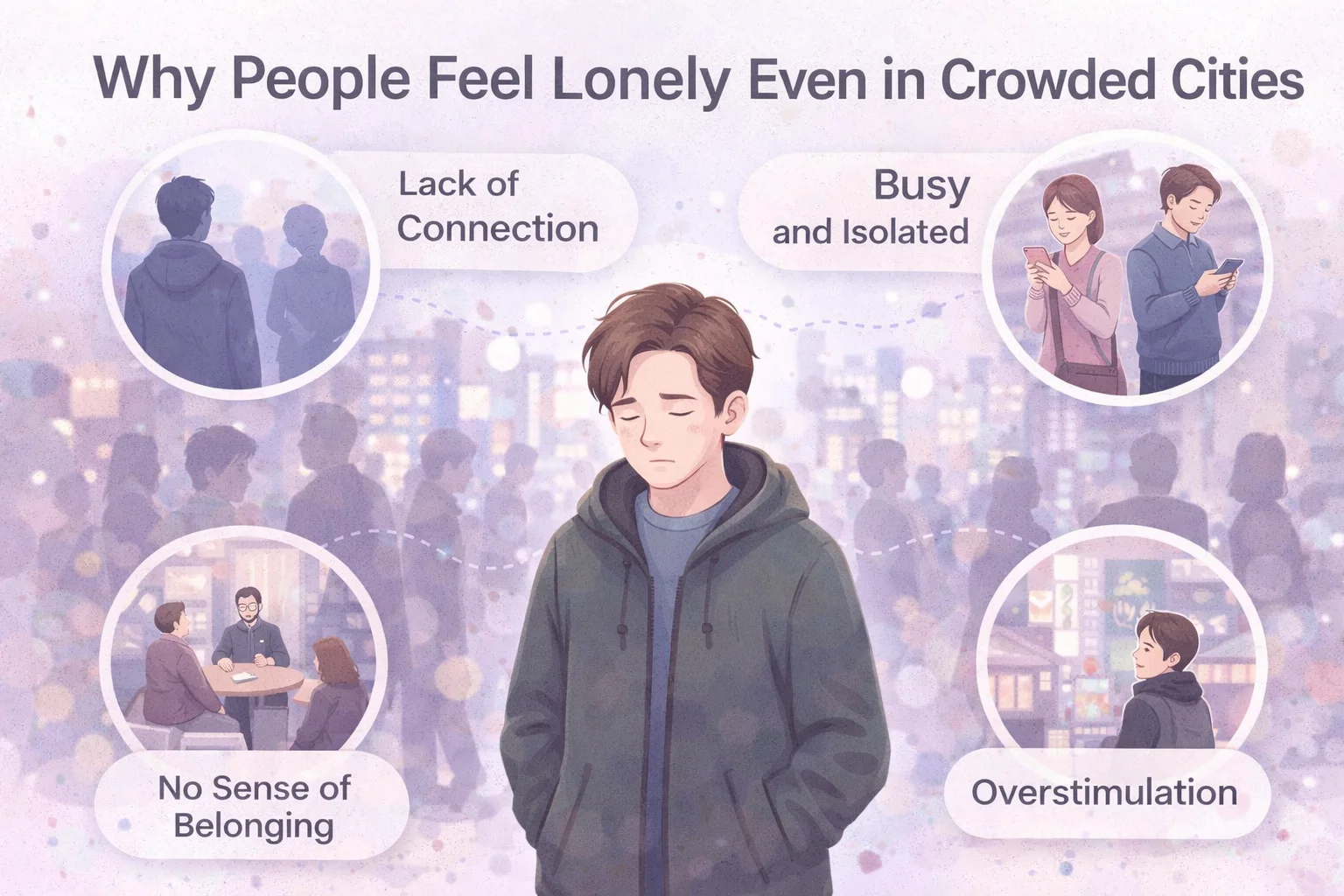
At first glance, cities seem like the least likely places to feel lonely. They are full of people, activity, and opportunities to connect. Yet, many individuals living in busy urban areas experience deep loneliness. This paradox of feeling alone in a crowd has become increasingly common in modern life.
So why does loneliness exist even when surrounded by thousands—or even millions—of people? Let’s explore the real reasons behind urban loneliness.
1. Lack of Deep Connections
In cities, people interact with many others daily—colleagues, neighbors, shopkeepers—but most of these interactions are brief and surface-level.
True happiness and connection come from meaningful relationships, not just social contact. Without deep emotional bonds, even constant interaction can feel empty.
2. Fast-Paced Lifestyle
Urban life moves quickly. People are often busy with work, commuting, and personal responsibilities. This leaves little time to build or maintain relationships.
When everyone is rushing, meaningful conversations and connections often take a backseat.
3. Digital Over Real Communication
Modern communication heavily relies on texting, social media, and apps. While these tools keep us connected virtually, they often replace face-to-face interaction.
This shift can create a false sense of connection while increasing feelings of isolation in real life
4. Privacy and Personal Boundaries
City life encourages independence and privacy. Unlike small towns where everyone knows each other, urban environments often promote keeping to oneself.
While this independence can be empowering, it can also lead to emotional distance and loneliness.
5. Migration and Disconnection
Many people move to cities for jobs, education, or better opportunities. In doing so, they leave behind family, friends, and familiar environments.
Starting fresh in a new place without a support system can make loneliness more intense.
6. Comparison and Social Pressure
Cities often expose people to different lifestyles, success levels, and social circles. This can lead to constant comparison.
Seeing others appear happy, successful, or socially active can make individuals feel left out or inadequate, increasing loneliness.
7. Work-Centered Life
In urban settings, work often becomes the central focus. Long working hours and job pressure can limit social interaction.
When life revolves around work, there’s little space left for building relationships or enjoying social activities.
8. Emotional Disconnect Despite Physical Presence
Being physically close to others does not guarantee emotional connection. You can be in a crowded metro, office, or market and still feel invisible.
Loneliness is more about emotional isolation than physical isolation.
9. Fear of Rejection or Trust Issues
Many people hesitate to form new relationships due to fear of rejection or past experiences. In large cities, where people come and go, building trust can feel difficult.
This hesitation creates a barrier to forming meaningful connections.
10. Changing Social Structures
Traditional community systems are less common in modern urban life. Joint families, neighborhood bonding, and strong community ties have reduced significantly.
As a result, people may lack the support systems that once helped reduce loneliness.
Is Urban Loneliness a Serious Issue?
Yes, loneliness is not just an emotional feeling—it can also affect mental and physical health. Studies have shown that chronic loneliness can lead to stress, anxiety, and even health problems.
Recognizing and addressing loneliness is important for overall well-being.
How to Overcome Loneliness in Cities
Here are some simple ways to deal with urban loneliness:
1. Build Meaningful Relationships
Focus on quality over quantity. Even a few close connections can make a big difference.
2. Engage in Social Activities
Join clubs, classes, or community events to meet like-minded people.
3. Limit Digital Dependence
Try to balance online communication with real-life interactions.
4. Practice Self-Care
Take care of your mental health through hobbies, exercise, and relaxation.
5. Stay Connected with Loved Ones
Even if far away, regular calls or visits can help maintain emotional bonds.
Conclusion
Living in a crowded city does not guarantee connection or happiness. Loneliness in urban areas is a result of fast-paced lifestyles, shallow interactions, and changing social patterns.
Understanding these reasons can help you take steps toward building meaningful relationships and improving your emotional well-being. After all, true connection is not about how many people are around you—but how deeply you connect with them.
FAQs
1. Why do I feel lonely even when surrounded by people?
Because loneliness is about emotional connection, not physical presence.
2. Is loneliness more common in cities?
Yes, urban lifestyles often limit deep social connections, making loneliness more common.
3. Can social media increase loneliness?
Yes, excessive use can reduce real-life interaction and create feelings of isolation.
4. How can I make friends in a new city?
Join local groups, attend events, and participate in activities that match your interests.
5. Is loneliness harmful to health?
Yes, long-term loneliness can affect both mental and physical health.