Introduction
Many people believe that earning a high salary automatically leads to financial stability. But in reality, a surprising number of individuals earn well and still struggle to save money. If you often wonder where your salary disappears every month, you’re not alone.
The truth is, income alone doesn’t determine wealth—financial habits do. From lifestyle inflation to poor money management, there are several hidden reasons why people remain broke despite earning well. Understanding these reasons is the first step toward financial freedom.
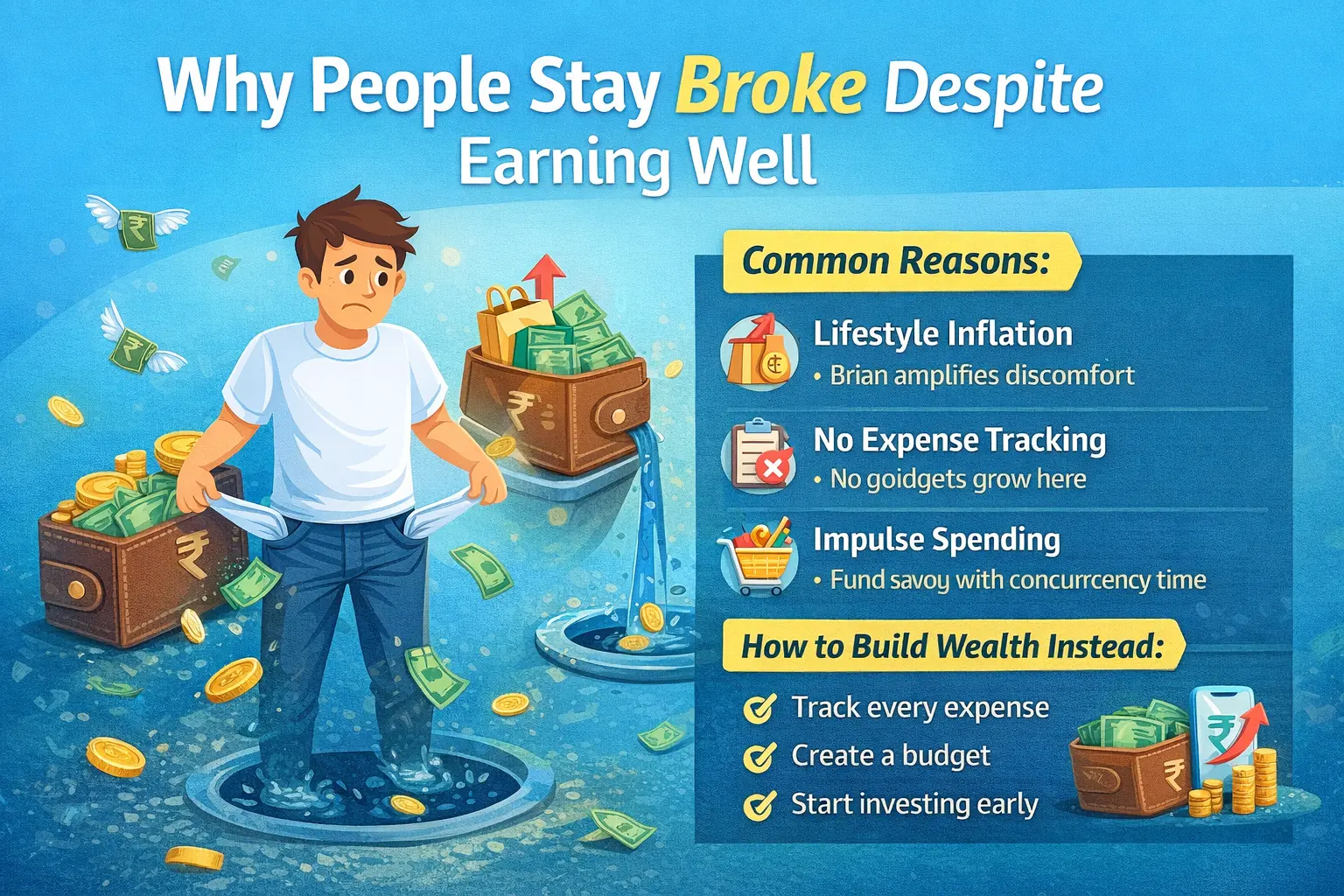
1. Lifestyle Inflation (The Biggest Trap)
One of the most common reasons people stay broke is lifestyle inflation. As income increases, spending also increases.
For example:
- Upgrading to a bigger house
- Buying expensive gadgets
- Dining out more frequently
Instead of saving the extra income, people adjust their lifestyle to match their earnings. This leaves little to no room for savings.
👉 Solution:
Maintain a stable lifestyle even when your income grows. Save or invest the extra money instead of spending it.
2. Lack of Expense Tracking
If you don’t track your expenses, you’ll never know where your money is going.
Small daily expenses like:
- Coffee
- Food delivery
- Subscriptions
can add up to a significant amount over time.
👉 Solution:
Use an expense tracker app to monitor your spending habits. Awareness is the first step toward control.
3. No Budgeting Strategy
Without a budget, money gets spent randomly. Many high earners don’t follow a financial plan, which leads to overspending.
👉 Solution:
Follow simple budgeting rules like:
- 50% needs
- 30% wants
- 20% savings
This ensures your money is allocated properly.
4. Impulse Spending Habits
Online shopping, flash sales, and easy digital payments make it easier than ever to spend impulsively.
👉 Signs of impulse spending:
- Buying things you don’t need
- Shopping to feel better emotionally
- Regretting purchases later
👉 Solution:
Follow the 24-hour rule—wait before making non-essential purchases.
5. No Clear Financial Goals
If you don’t have a goal, you won’t feel motivated to save.
Examples of financial goals:
- Buying a house
- Building an emergency fund
- Early retirement
👉 Solution:
Set clear, measurable financial goals. This gives purpose to your savings.
6. Avoiding Investments
Many people earn well but keep their money idle in savings accounts. Without investing, money doesn’t grow significantly.
👉 Problem:
Inflation reduces the value of your money over time.
👉 Solution:
Start investing in options like:
- Mutual funds
- Stocks
- SIPs
Even small investments can grow over time.
7. Debt and EMIs
High income often leads to higher borrowing capacity. People take loans for:
- Cars
- Gadgets
- Credit cards
EMIs eat up a large portion of income, leaving little for savings.
👉 Solution:
Avoid unnecessary debt and prioritize paying off existing loans.
8. Lack of Emergency Fund
Without an emergency fund, any unexpected expense can disrupt your finances.
Examples:
- Medical emergencies
- Job loss
- Urgent repairs
👉 Solution:
Save at least 3–6 months’ worth of expenses as a safety net.
9. Social Pressure and Comparison
Many people spend money to maintain a certain image.
Examples:
- Expensive vacations
- Branded clothes
- Luxury lifestyle
👉 Problem:
Trying to “keep up” with others leads to overspending.
👉 Solution:
Focus on your own financial goals instead of comparing with others.
10. Poor Financial Awareness
Not understanding how money works is a major reason people stay broke.
- Lack of knowledge about investments
- No understanding of compounding
- Ignoring financial planning
👉 Solution:
Educate yourself about personal finance. Even basic knowledge can make a huge difference.
How to Stop Being Broke (Even With the Same Income)
Here are simple steps to improve your financial situation:
- Track every expense
- Create a monthly budget
- Avoid unnecessary spending
- Start investing early
- Build an emergency fund
- Set clear financial goals
👉 Small changes in habits can lead to big financial results over time.
Conclusion
Earning well doesn’t guarantee wealth. Without proper financial habits, even high earners can struggle financially. Lifestyle inflation, poor budgeting, and lack of investments are some of the key reasons why people remain broke.
The good news is that you don’t need to earn more to become financially stable—you just need to manage your money better. By tracking expenses, setting goals, and making smarter financial decisions, you can break the cycle and build long-term wealth.
FAQs
1. Why am I broke even though I earn a good salary?
Because of poor financial habits like overspending, lack of budgeting, and not investing.
2. How can I start saving money effectively?
Track your expenses, create a budget, and set clear financial goals.
3. Is it necessary to invest to build wealth?
Yes, investing helps your money grow and beat inflation.
4. What is lifestyle inflation?
It’s when your spending increases as your income increases.
5. How much should I save every month?
Ideally, at least 20% of your income should go toward savings and investments.