Introduction
Have you ever noticed how a small inconvenience—like sweaty hands, a slight headache, or a minor delay—can suddenly feel like a big problem? Even though the issue is small, your mind reacts as if it’s something major. This is a common human experience, and it happens more often than we realize.
The truth is, our brain is wired to amplify discomfort under certain conditions. Whether it’s stress, anxiety, or lack of control, small issues can quickly feel overwhelming. Understanding why this happens can help you stay calm, think clearly, and respond better in everyday situations.
What Are “Small Discomforts”?
Small discomforts are minor physical or emotional irritations that are not dangerous but still affect your comfort. Examples include:
- Sweaty hands during a conversation
- A slight itch or irritation
- Phone lag or slow internet
- Mild hunger or thirst
- Minor social awkwardness
Individually, these are harmless. But your brain can magnify them, making them feel much bigger than they actually are.
Why Do Small Discomforts Feel So Big?
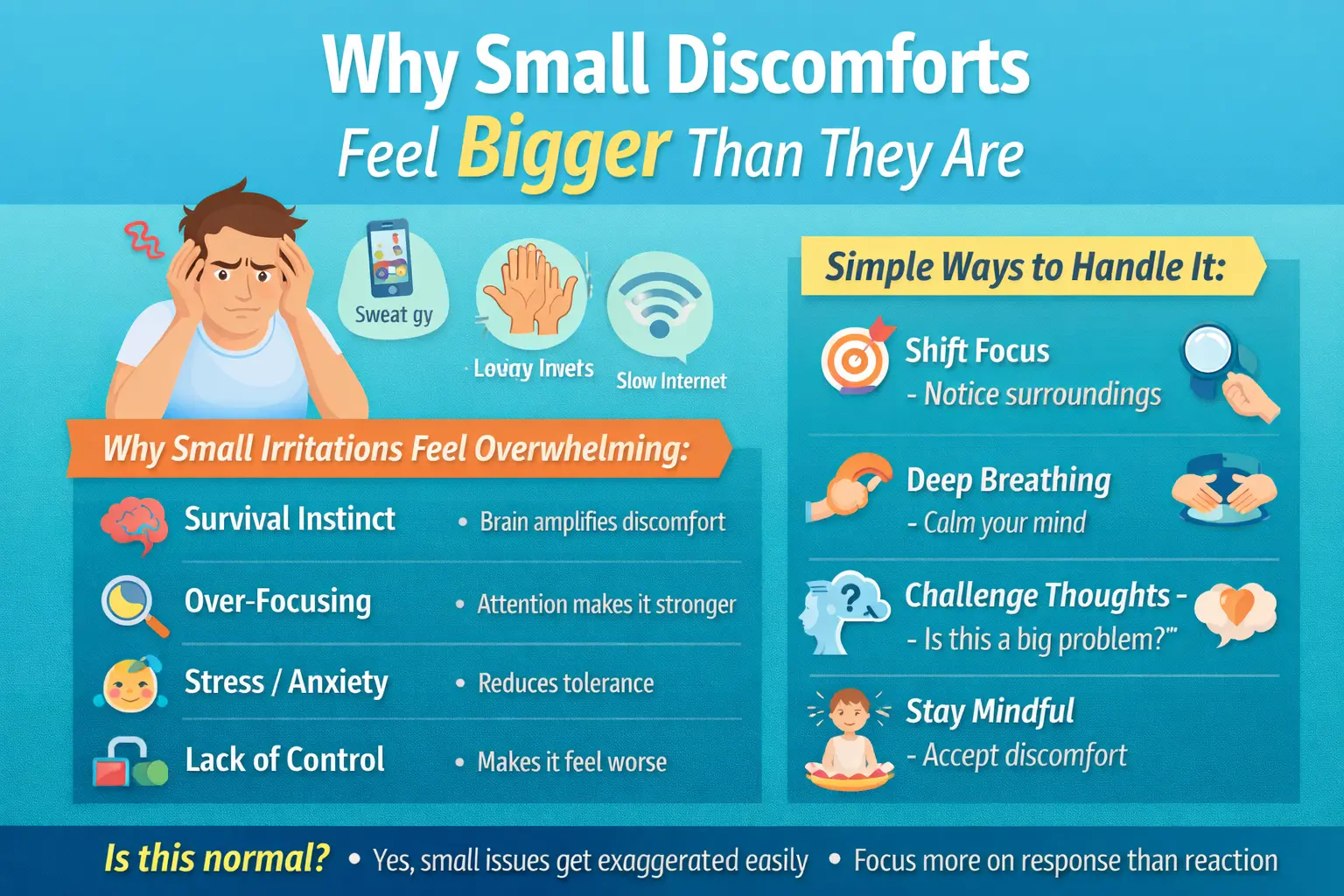
1. Brain’s Survival Mechanism
Your brain is designed to protect you. It constantly scans for threats—even small ones. This process is linked to the Fight-or-Flight Response.
When your brain detects discomfort, it may treat it as a potential threat, triggering a heightened reaction. Even something harmless can feel urgent.
2. Focus Amplifies Feeling
The more you focus on something, the stronger it feels.
For example:
- If you keep thinking about sweaty hands, they feel even wetter
- If you notice a small pain, it starts feeling worse
👉 Attention acts like a magnifying glass for discomfort
3. Lack of Control
When you feel like you can’t control a situation, your brain reacts more strongly.
Examples:
- Sweating in public
- Being stuck in traffic
- Waiting for a response
This lack of control increases stress, making small problems feel bigger.
4. Stress and Anxiety
When you’re already stressed, your tolerance for discomfort becomes very low.
- Small issues feel irritating
- You get overwhelmed quickly
- Your reactions become stronger
👉 Your mind is already “loaded,” so even small triggers feel heavy
5. Negative Thinking Patterns
Your thoughts play a big role. If your mind tends to think negatively, it can exaggerate problems.
Examples:
- “This is so annoying”
- “Why is this happening to me?”
These thoughts increase emotional intensity.
6. Sensory Sensitivity
Some people are naturally more sensitive to physical sensations. They feel things more deeply, which makes small discomforts harder to ignore.
7. Past Experiences
If you’ve had a bad experience related to a situation, your brain remembers it and reacts more strongly the next time.
What Is a Pinguecula and a Pterygium (Surfer’s Eye)?
How This Affects Your Daily Life
When small discomforts feel bigger, it can impact:
- Productivity: You get distracted easily
- Confidence: You feel self-conscious
- Mood: You become irritated or anxious
- Decision-making: You overthink simple things
Over time, this can lead to unnecessary stress and mental fatigue.
How to Stop Overreacting to Small Discomforts
1. Shift Your Focus
Instead of focusing on the discomfort, shift your attention.
- Look around
- Engage in a task
- Talk to someone
👉 What you focus on grows—so change your focus
2. Practice Acceptance
Accept that discomfort is normal.
Instead of thinking:
❌ “This shouldn’t happen”
Think:
✅ “This is normal and temporary”
This reduces resistance and stress.
3. Use Deep Breathing
Slow breathing calms your nervous system.
Try this:
- Inhale for 4 seconds
- Hold for 4 seconds
- Exhale for 6 seconds
This reduces the intensity of your reaction.
4. Challenge Your Thoughts
Ask yourself:
- “Is this really a big problem?”
- “Will this matter in 1 hour?”
Most of the time, the answer is no.
5. Reduce Stress Levels
Lower overall stress to increase tolerance.
- Sleep well
- Exercise regularly
- Take breaks
A calm mind reacts less.
6. Stay Physically Comfortable
Sometimes discomfort is real but manageable.
- Stay hydrated
- Wear comfortable clothes
- Maintain hygiene
Small adjustments can make a big difference.
7. Practice Mindfulness
Mindfulness helps you observe discomfort without reacting.
Instead of fighting the feeling, just notice it:
👉 “My hands are sweaty, and that’s okay”
This reduces its power over you.
When Should You Be Concerned?
If small discomforts:
- Cause constant anxiety
- Affect your daily life
- Lead to panic or avoidance
👉 You may need professional help
Conditions like Generalized Anxiety Disorder can amplify small issues significantly.
Simple Example to Understand
Imagine a small stone in your shoe.
- If you ignore it → you can still walk
- If you focus on it → it feels unbearable
👉 The stone didn’t change—your attention did.
Conclusion
Small discomforts feel bigger than they are because of how your brain processes them. Factors like attention, stress, and lack of control amplify these sensations, making minor issues feel overwhelming.
The key is not to eliminate discomfort but to change how you respond to it. By shifting focus, managing stress, and practicing mindfulness, you can train your mind to stay calm and balanced—even in uncomfortable situations.
Remember, not everything your mind reacts to is actually a problem.
FAQs
1. Why do small problems feel so big sometimes?
Because your brain amplifies discomfort due to stress, focus, and survival instincts.
2. Is it normal to overreact to small discomforts?
Yes, it’s a common human response, especially during stress or anxiety.
3. How can I train my mind to stay calm?
Practice mindfulness, deep breathing, and shift your focus away from discomfort.
4. Can anxiety make small issues feel worse?
Yes, anxiety lowers your tolerance and makes minor discomforts feel intense.
5. Will this problem go away over time?
Yes, with awareness and practice, you can reduce how strongly you react.