Introduction
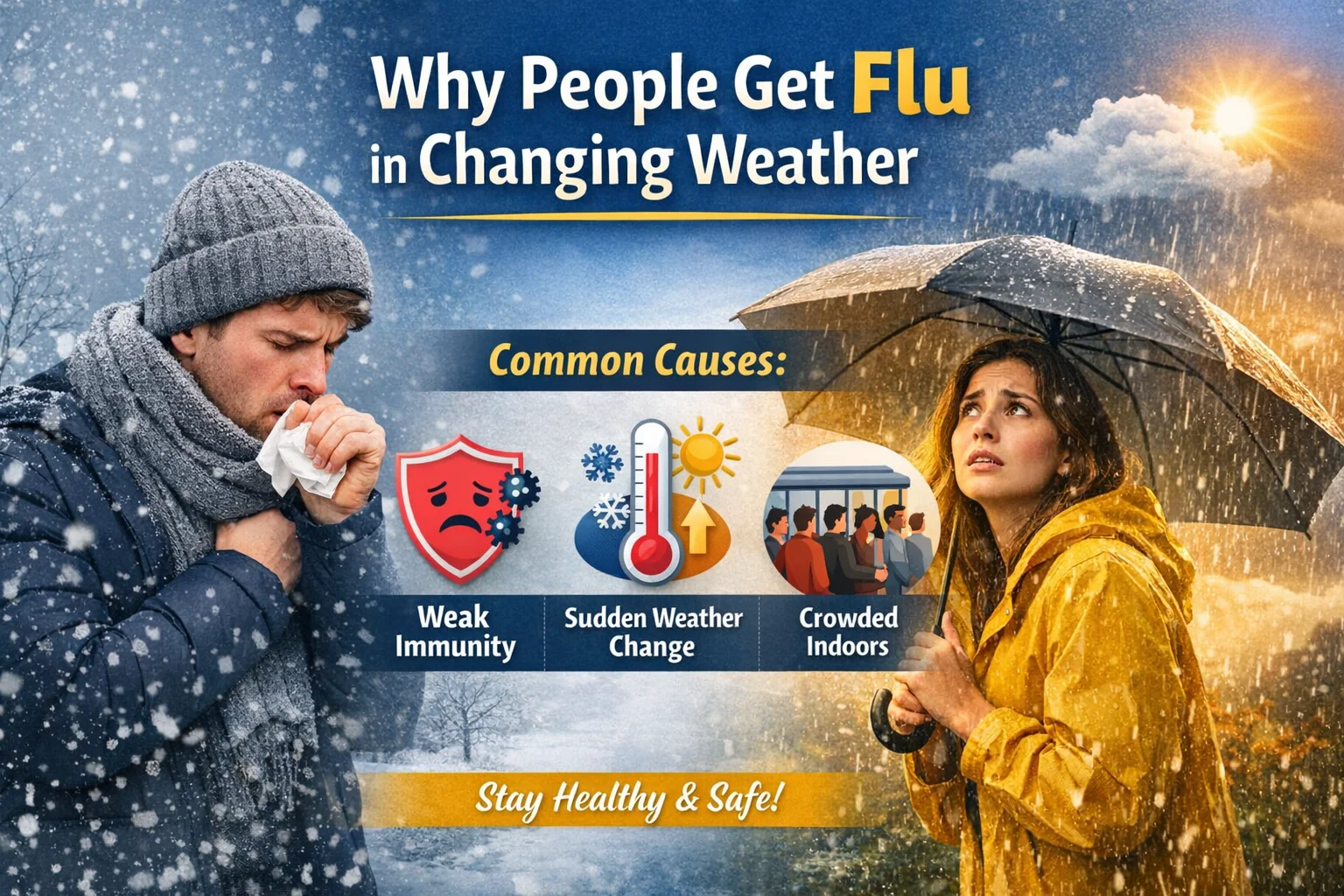
Many people notice that they start getting sick when the weather suddenly changes. Cold, cough, fever, and body pain become very common during seasonal changes. This illness is commonly known as the flu, which is caused by the Influenza virus.
Flu cases usually increase when the weather changes from hot to cold or from dry to rainy. But why does this happen? In this article, we will explain why people get flu in changing weather in simple words and how you can protect yourself.
1. Weak Immune System During Weather Change
One major reason people get flu during changing weather is that the immune system becomes weaker.
When the temperature suddenly changes, the body takes time to adjust. During this adjustment period, the immune system may not work as effectively as usual. This makes it easier for viruses like Influenza to enter the body and cause infection.
People who already have low immunity, such as children and elderly people, are more likely to get sick.
2. Viruses Spread Faster in Cold Weather
Flu viruses survive longer in cold and dry air. This means that when the temperature drops, the virus can stay active for a longer time in the environment.
For example:
- Virus particles can stay in the air
- They can also remain on surfaces like door handles, phones, and tables
When someone touches these surfaces and then touches their face, the virus can easily enter the body.
3. People Spend More Time Indoors
During cold or rainy weather, people usually stay inside their homes, offices, or classrooms.
When many people stay in the same room, the chances of infection increase. If one person has the flu, the virus can spread quickly through coughing, sneezing, or even talking.
This is why flu outbreaks often occur in schools, offices, and public transport during seasonal changes.
4. Dry Air Affects the Nose and Throat
Dry air during winter or seasonal transitions can dry out the nasal passages.
The nose normally produces mucus that helps trap viruses and bacteria before they enter the body. However, when the air becomes dry, this protective layer becomes weaker.
As a result, viruses like Influenza can enter the body more easily and cause infection.
5. Sudden Temperature Changes
Sometimes the temperature changes very quickly during the day.
For example:
- Morning may be cold
- Afternoon may become warm
- Evening may become cold again
These sudden changes make it difficult for the body to maintain a stable temperature, which can stress the immune system and increase the chances of illness.
6. Poor Lifestyle Habits
Lifestyle also plays a big role in how often people get sick.
During changing weather, many people:
- Sleep less
- Eat unhealthy food
- Drink less water
- Spend less time exercising
These habits weaken the immune system and make the body more vulnerable to infections like Influenza.
7. Lack of Sunlight
In colder seasons, people often get less sunlight.
Sunlight helps the body produce Vitamin D, which plays an important role in strengthening the immune system.
Low Vitamin D levels can reduce the body’s ability to fight infections, increasing the risk of flu.
Common Flu Symptoms
Flu symptoms usually appear 1–3 days after infection. Some common symptoms include:
- Fever
- Cold and runny nose
- Sore throat
- Headache
- Body pain
- Fatigue
- Cough
These symptoms usually last 5–7 days, but some people may feel weak for longer.
How to Prevent Flu During Weather Change
The good news is that you can reduce the risk of flu by following some simple habits.
1. Wash Hands Regularly
Wash your hands with soap for at least 20 seconds to remove viruses.
2. Eat Healthy Food
Eat foods rich in vitamins such as:
- Fruits
- Vegetables
- Nuts
- Whole grains
These help strengthen the immune system.
3. Drink Enough Water
Staying hydrated helps the body fight infections.
4. Get Enough Sleep
Sleeping 7–8 hours daily helps the immune system stay strong.
5. Wear Proper Clothing
During seasonal changes, wear clothes that match the weather to protect the body from sudden temperature changes.
Conclusion
People get flu during changing weather mainly because of weaker immunity, faster virus spread, and sudden temperature changes. The Influenza virus becomes more active during colder or dry conditions, which increases infection risk.
However, by maintaining a healthy lifestyle, good hygiene, and proper nutrition, it is possible to reduce the chances of getting sick.
Taking small precautions can help keep you healthy and protect you from seasonal flu.
FAQs
1. Why does flu increase during winter?
Flu increases in winter because viruses survive longer in cold and dry air, making it easier for them to spread.
2. How long does the flu usually last?
Most flu infections last around 5 to 7 days, although weakness may continue for a few more days.
3. Can weather change directly cause flu?
Weather change itself does not cause flu, but it weakens the immune system and allows viruses like Influenza to infect the body more easily.
4. Who is at higher risk of flu?
Children, elderly people, and people with weak immune systems are more likely to get flu during seasonal changes.
5. What is the best way to prevent flu?
The best prevention methods include washing hands, eating healthy food, staying hydrated, and getting enough sleep.