Eye health is very important, but many people ignore small changes in their eyes until they start causing discomfort. Two common eye conditions that people often confuse are Pinguecula and Pterygium. Both conditions affect the white part of the eye and are usually caused by exposure to sunlight, dust, and wind.
These conditions are generally not dangerous, but they can cause irritation and sometimes affect vision if they grow larger. In this article, we will explain what pinguecula and pterygium are, their causes, symptoms, treatment options, and prevention tips in simple and easy-to-understand language.
What Is Pinguecula?
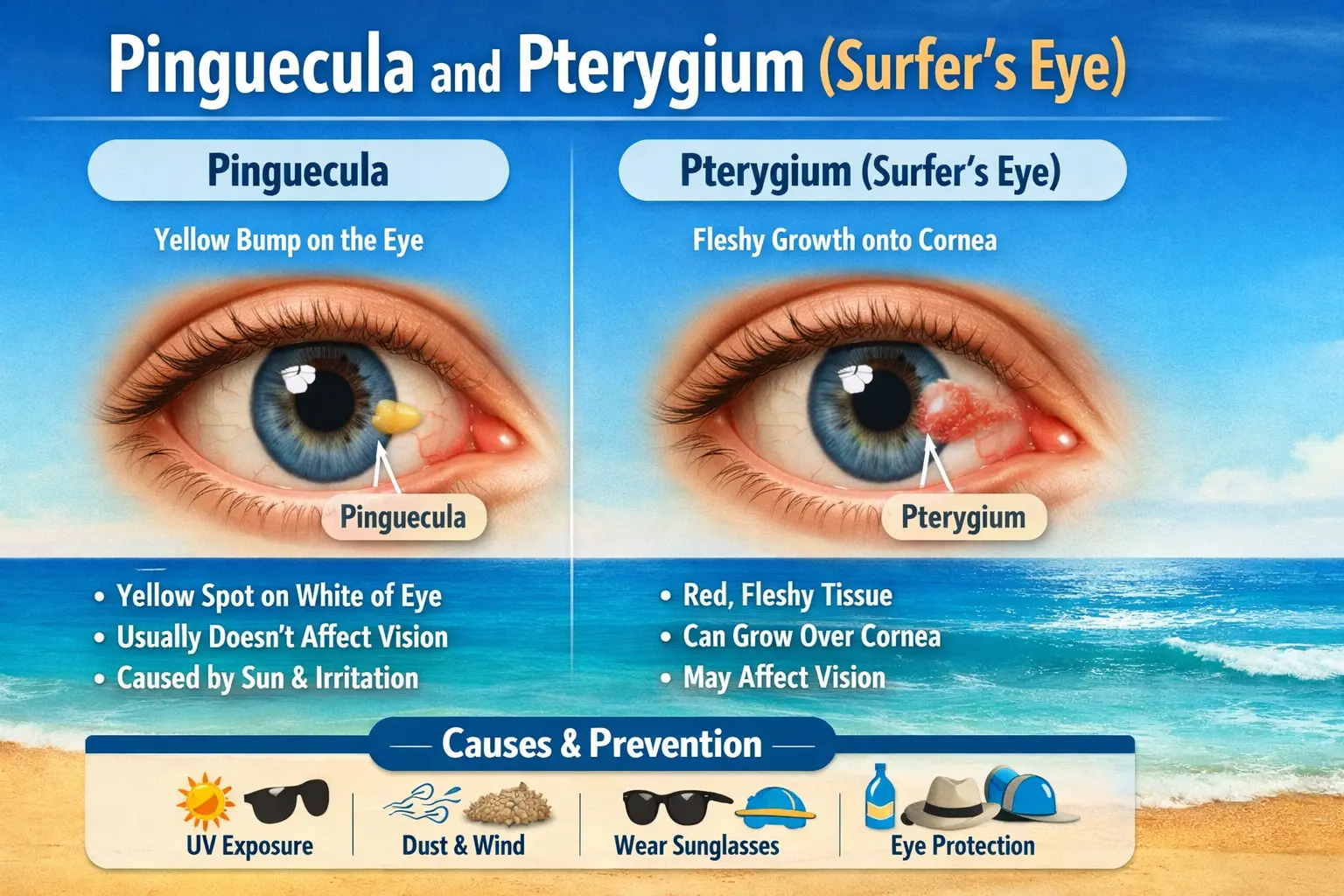
A Pinguecula is a small yellowish bump that forms on the white part of the eye (sclera). It usually appears on the side of the eye closest to the nose.
This bump is made of protein, fat, or calcium deposits that build up over time. Pinguecula does not grow onto the cornea (the clear front part of the eye), which means it usually does not affect vision.
Pinguecula is very common in people who spend a lot of time outdoors.
Common Causes of Pinguecula
Several environmental factors can increase the risk of developing pinguecula:
- Long exposure to sunlight and UV rays
- Dry and dusty environments
- Wind exposure
- Aging
- Spending long hours outdoors without eye protection
People who work outdoors, such as farmers, construction workers, and fishermen, often develop this condition.
Symptoms of Pinguecula
Many people with pinguecula do not notice symptoms at first. However, some common signs include:
- Yellowish bump on the white part of the eye
- Redness in the eye
- Dryness or irritation
- Burning or itching sensation
- Feeling like something is stuck in the eye
In most cases, pinguecula is painless and does not affect eyesight.
What Is Pterygium (Surfer’s Eye)?
A Pterygium, also known as Surfer’s Eye, is a growth of fleshy tissue that starts on the white part of the eye and extends onto the cornea.
Unlike pinguecula, pterygium can grow larger and may eventually affect vision if it covers the cornea.
The condition is called Surfer’s Eye because it is common in people who spend a lot of time in sunny, windy environments, such as surfers, beachgoers, and outdoor workers.
Causes of Pterygium
The main cause of pterygium is long-term exposure to ultraviolet (UV) light. Other factors can also contribute to its development:
- Exposure to sunlight
- Dust and sand
- Wind
- Dry climate
- Lack of protective eyewear
People living in tropical or sunny regions are more likely to develop pterygium.
Symptoms of Pterygium
Early stages of pterygium may not cause noticeable symptoms. However, as it grows, symptoms may include:
- A pink or red fleshy growth on the eye
- Eye redness
- Irritation or burning sensation
- Blurred vision
- Dry eyes
- Feeling of a foreign object in the eye
If the growth spreads onto the cornea, it can block vision or cause astigmatism.
Pinguecula vs Pterygium: Key Differences
Although these conditions look similar, they are different in several ways.
| Feature | Pinguecula | Pterygium |
|---|---|---|
| Appearance | Yellow bump | Pink fleshy growth |
| Location | On white part of eye | Can grow onto cornea |
| Vision impact | Usually no effect | May affect vision |
| Growth | Does not grow much | Can grow larger |
Sometimes a pinguecula can develop into pterygium over time if the eye continues to be exposed to sunlight and irritation.
Risk Factors
Some people have a higher risk of developing these eye conditions.
Common Risk Factors
- Living in sunny or tropical climates
- Working outdoors
- Not wearing sunglasses
- Exposure to dust and wind
- Dry eye condition
- Aging
Men are slightly more likely to develop pterygium than women, mainly because they are more often involved in outdoor work.
Diagnosis
Eye doctors can easily diagnose pinguecula or pterygium during a routine eye examination.
Doctors usually examine the eye using a special microscope called a slit lamp. This allows them to see the eye structures clearly and determine whether the growth is harmless or requires treatment.
Treatment Options
Most cases of pinguecula and pterygium do not require serious treatment unless symptoms become uncomfortable or vision is affected.
1. Artificial Tears
Lubricating eye drops help reduce dryness and irritation.
These drops keep the eye moist and relieve discomfort.
2. Anti-Inflammatory Eye Drops
If the eye becomes red or swollen, doctors may prescribe anti-inflammatory drops to reduce irritation.
3. Steroid Eye Drops
In severe cases, doctors may recommend short-term steroid drops to control inflammation.
These should only be used under medical supervision.
4. Surgery
Surgery may be required if:
- The growth affects vision
- It continues to grow
- It causes severe irritation
- It creates cosmetic concerns
During surgery, the doctor removes the abnormal tissue from the eye surface.
However, pterygium can sometimes grow back even after surgery.
Prevention Tips
The best way to protect your eyes from these conditions is prevention.
Wear Sunglasses
Use sunglasses that block 100% UV rays whenever you go outside.
Use Protective Eyewear
If you work in dusty or windy environments, protective glasses can help prevent irritation.
Use Artificial Tears
Lubricating eye drops can keep your eyes moist and reduce dryness.
Avoid Excessive Sun Exposure
Try to avoid strong sunlight during peak hours.
Wear a Hat or Cap
A wide-brimmed hat can help protect your eyes from direct sunlight.
When to See a Doctor
You should consult an eye doctor if you notice:
- A growing bump on the eye
- Persistent eye redness
- Eye pain
- Blurred vision
- Continuous irritation
Early diagnosis can prevent complications and protect your eyesight.
Conclusion
Both Pinguecula and Pterygium are common eye conditions caused mainly by exposure to sunlight, dust, and dry environments. Pinguecula appears as a yellow bump on the white part of the eye, while pterygium is a fleshy growth that can extend onto the cornea and sometimes affect vision.
Most cases are harmless and can be managed with eye drops and proper eye care. Wearing UV-protective sunglasses, protecting the eyes from dust and wind, and maintaining good eye hygiene can significantly reduce the risk.
If you notice any unusual growth or persistent irritation in your eye, it is always best to consult an eye specialist for proper diagnosis and treatment.
FAQs
1. Is pinguecula dangerous?
No, Pinguecula is usually harmless and rarely affects vision. It mainly causes mild irritation or dryness.
2. Can pinguecula turn into pterygium?
Yes, in some cases a pinguecula can slowly develop into Pterygium if the eye continues to be exposed to UV light and irritation.
3. Does pterygium go away on its own?
No, pterygium usually does not disappear without treatment. However, mild cases can be managed with eye drops.
4. Can pterygium cause blindness?
It is very rare, but if the growth covers the cornea and blocks vision, it can significantly affect eyesight.
5. How can I prevent surfer’s eye?
You can prevent Surfer’s Eye by wearing UV-blocking sunglasses, protecting your eyes from dust and wind, and using lubricating eye drops.