Introduction
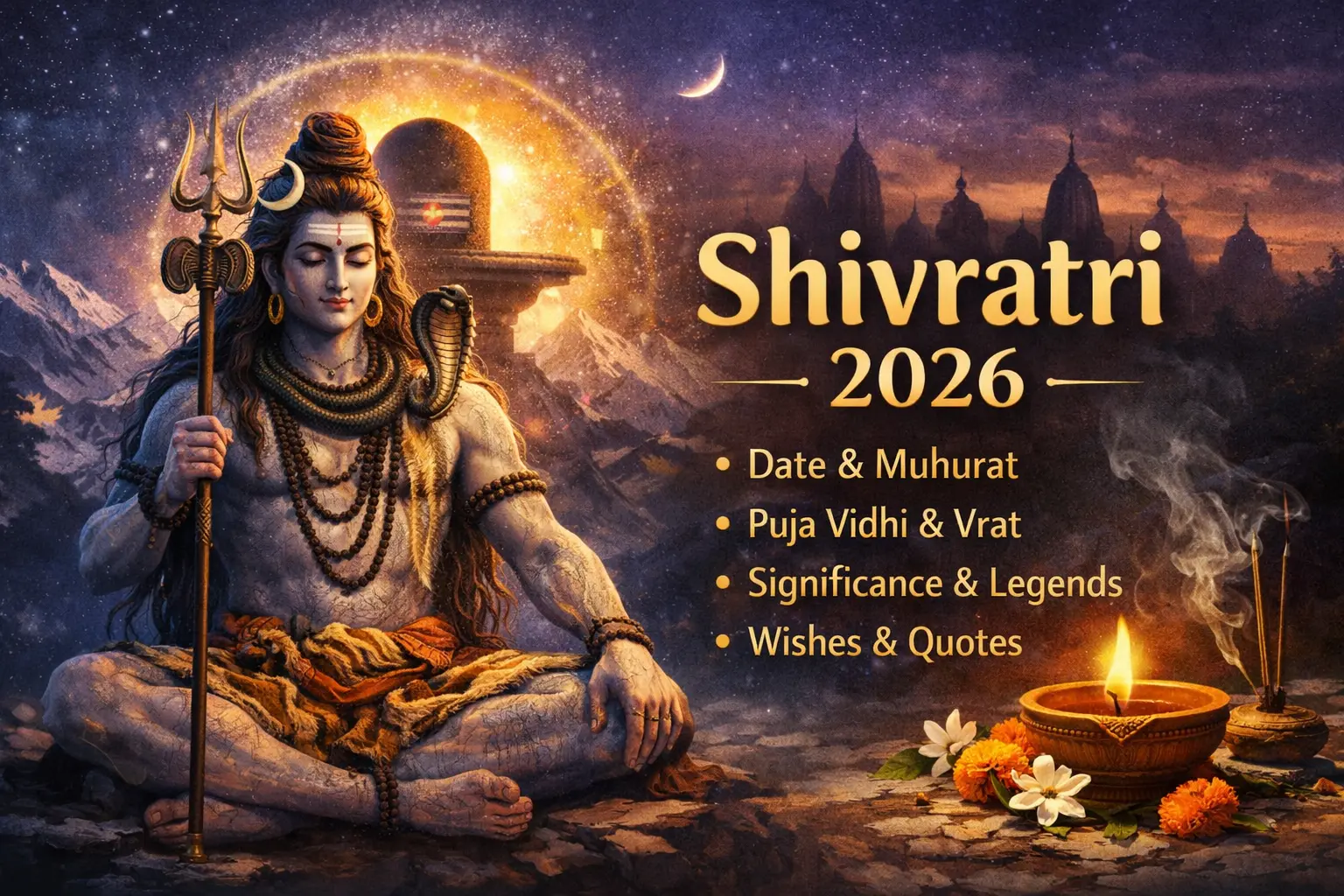
Shivratri — especially Mahashivratri — is among the most significant festivals in the Hindu calendar, dedicated to Lord Shiva. It is a night of fervent devotion, deep spirituality, fasting, and midnight worship (Jagran). In 2026, Shivratri holds even more importance due to rare yogic alignments that are believed to amplify spiritual energy. This article covers Shivratri 2026 date & time, history, Maha Shivratri puja vidhi, fast rules (vrat), significance, wishes & quotes, FAQs, and other essential details that devotees and content creators want to know.
1. What Is Shivratri? (Shivratri Meaning & Importance)
Shivratri literally means “the night of Shiva” — it is the auspicious night dedicated to Lord Shiva, one of the principal deities of Hinduism who represents transformation, meditation, compassion, and destruction of ignorance.
While Shivratri (Shiv Ratri) occurs every month on the 14th night of the dark lunar phase, Mahashivratri refers to the one annual night that is considered extremely powerful and spiritually significant — when Shiva’s energy is believed to be at its peak.
This night symbolizes:
- Union of Shiva and Shakti, the divine masculine and feminine energies
- The cosmic dance (Tandava) of Lord Shiva
- Triumph over ignorance
- Deep spiritual awakening
Devotees traditionally observe fasting, puja, chanting, night vigil, and offering Bilva leaves to Shiva Linga.
2. Shivratri 2026 Date & Tithi (शिवरात्रि 2026 तारीख)
In 2026, Mahashivratri will be observed on:
📅 Sunday, 15 February 2026 — this is the main date devotees fast and perform puja.
🌙 The Chaturdashi Tithi begins on 15 February at around 05:04 PM and ends on 16 February at around 05:34 PM — so the festival is celebrated on 15 February.
🌒 The fast (Vrat) is broken on 16 February 2026 after sunrise and puja completion.
👉 This year the Mahashivratri night also coincides with a rare “Siddhi Yog / Sarvartha Siddhi Yog” — a yogic alignment believed to make worship and meditation especially potent.
3. Shivratri 2026 Muhurat & Puja Time (शिवरात्रि शुभ मुहूर्त)
Timing is especially important for rituals and chanting. Here are the major puja timings for Mahashivratri 2026:
📿 Nishita Kaal (Midnight Puja) — between 12:09 AM and 01:01 AM on 16 Feb (most auspicious).
📿 Four Prahar Puja Time:
- First Prahar: ~6:11 PM – 9:23 PM (15 Feb)
- Second Prahar: ~9:23 PM – 12:36 AM
- Third Prahar: ~12:36 AM – 3:47 AM
- Fourth Prahar: ~3:47 AM – 6:59 AM
These timings are from popular Hindu Panchang calculations and widely accepted in India.
4. Why Is Shivratri Celebrated? (Shivratri Significance)
a) Divine Cosmic Events
Three major legends explain the significance of Mahashivratri:
- Marriage of Lord Shiva and Goddess Parvati: According to mythology, this sacred night marks the divine wedding of Shiva and Parvati, symbolizing harmony between consciousness and energy.
- Shiva’s Cosmic Dance (Tandava): It’s believed that Shiva performed his cosmic dance of creation, preservation, and destruction on this night.
- Manifestation of Shiva Linga (Lingodbhava): Ancient texts say the infinite nature of Shiva appeared as a pillar of fire on this day.
5. How to Celebrate Shivratri (Puja Vidhi & Rituals)
Step-by-Step Mahashivratri Puja Vidhi
Whether you’re observing at home or in the temple, this ritual helps you deepen devotion:
- Cleanse Yourself: Take a bath and wear clean clothes before puja begins.
- Prepare Puja Altar: Place Shivling or Shiva idol.
- Abhishek (Ritual Bath): Offer Ganga jal, milk, curd, honey (Panchamrit) on the Shivling.
- Offer Bilva Leaves: Bilva (Bel) leaves are considered most sacred to Shiva.
- Chant Mantras: Recite “ॐ नमः शिवाय (Om Namah Shivaya)” — one of the most popular Shiva mantras.
- Light Diyas & Incense: Light lamps (diya) and incense sticks for divine ambiance.
- Jagran (Night Vigil): Stay awake through the night chanting and meditating.
6. Shivratri Vrat Rules (Shivratri Fast 2026)
Devotees observe fast (vrat) for purification and spiritual upliftment:
- Some keep Nirjala Vrat (no food or water)
- Others follow Phalahar Vrat (only fruits, milk, etc.)
- Break the fast only after puja and sunrise the next day. (vedantu.com)
Fasting on Shiva Ratri is believed to bring blessings, patience, mental clarity, and removal of sins.
7. Spiritual & Cultural Importance
Shivratri isn’t just a ritual — it represents:
- Consciousness overcoming ignorance
- Self-discipline and inner awakening
- Renewal of devotion and life purpose
- A chance for meditation and deep reflection
Across India, temples like Kashi Vishwanath (Varanasi), Mahakaleshwar (Ujjain), Somnath (Gujarat), and Himalayan shrines like Kedarnath & Amarnath see thousands of devotees for special Mahashivratri ceremonies.
8. Shivratri Wishes & Quotes for Social Sharing
Here are shareable messages and quotes devotees use around Mahashivratri — perfect for greeting cards, posts and reels:
English Wishes
- “Happy Mahashivratri! May Lord Shiva’s blessings guide your path to truth and joy.”
- “On this auspicious night, may the divine grace of Shiva bring peace and prosperity.”
Hindi Wishes
- “महाशिवरात्रि की हार्दिक शुभकामनाएं। भोलेनाथ आपके जीवन में शक्ति और शांति दें।”
- “ॐ नमः शिवाय — शिवजी आपके सभी मनोकामनाएं पूर्ण करें।”
Quotes
- “Mahashivratri is the night of inner awakening and divine union.”
- “On the sacred night of Shiva, let silence deepen your devotion.”
9. Conclusion: Celebrate Shivratri 2026 with Devotion
Mahashivratri 2026 isn’t just another festival — it’s a transformative spiritual journey. Fasting, chanting, night worship and sincere devotion on this night can lead to inner purification, peace, and deeper connection with the divine. Whether you’re seeking spiritual transformation, cultural celebration, or simply want to understand the sacred festival more meaningfully, Mahashivratri 2026 offers a powerful opportunity for every devotee.
FAQs (Frequently Asked Questions)
Q1. When is Shivratri 2026?
A: Mahashivratri 2026 will be observed on 15 February 2026, with fasting and rituals continuing into 16 Feb.
Q2. What is Mahashivratri puja vidhi?
A: Offer Panchamrit, Bilva leaves, chant mantras, perform abhishek and stay awake at night chanting ॐ नमः शिवाय.
Q3. Why do we keep fast on Shivratri?
A: The fast signifies spiritual purification, self-discipline, and devotion to Lord Shiva, believed to remove negativity and bring blessings.
Q4. What is Nishita Kaal?
A: It is the midnight period considered most auspicious for Shiva puja on Mahashivratri, usually around 12:09 AM – 1:01 AM.
Q5. Is Mahashivratri a public holiday?
A: In many Indian states it is a public holiday, but national and bank holidays vary by year and region.