Introduction
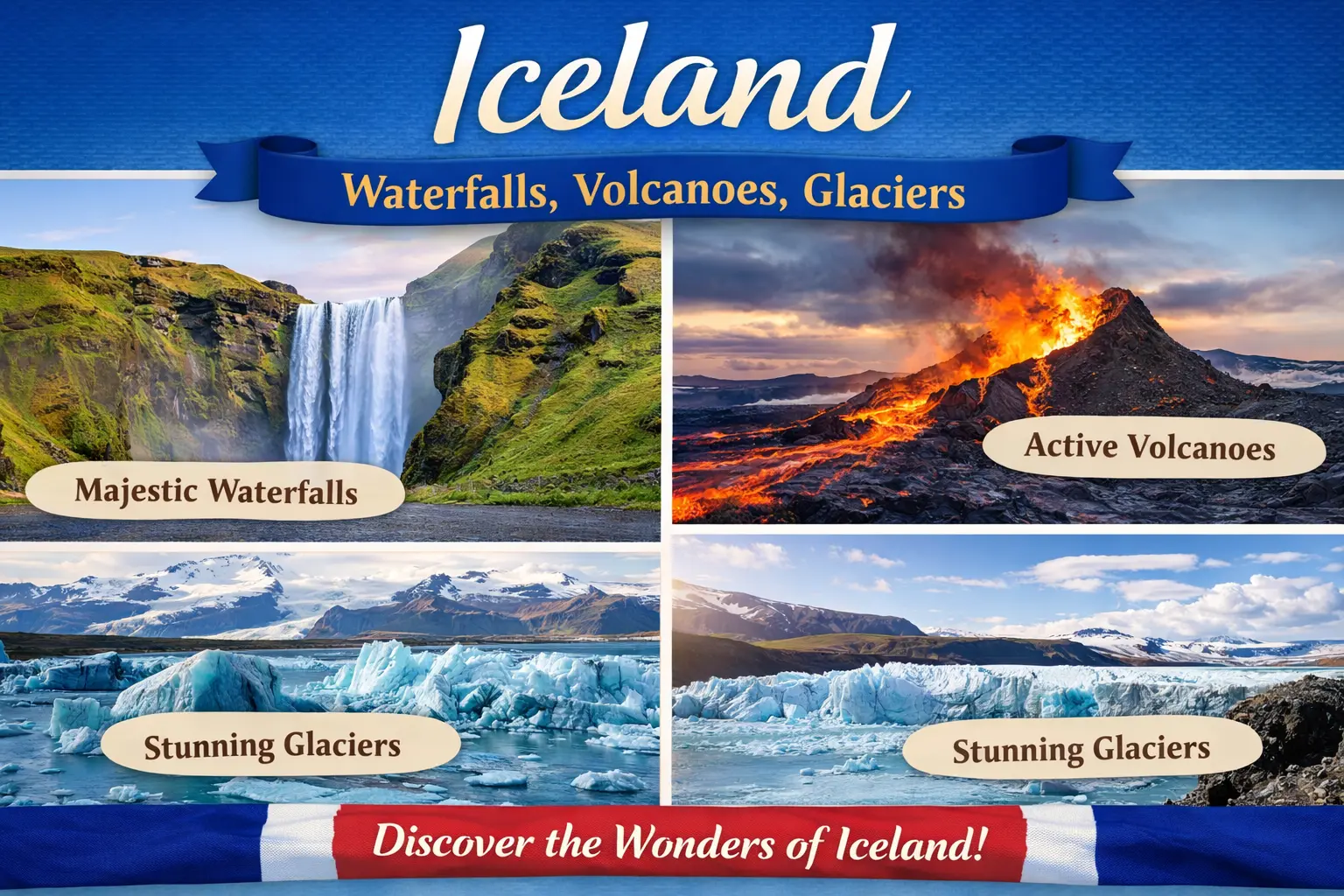
Iceland is a land of natural wonders, where fire and ice meet in breathtaking landscapes. Famous for its waterfalls, volcanoes, glaciers, and geothermal activity, Iceland is a dream destination for travelers who love adventure, nature, and photography. From the powerful waterfalls to smoking volcanoes and massive glaciers, every corner of Iceland tells a story of nature’s power and beauty.
This article will guide you through Iceland’s incredible landscapes, vibrant cities, unique culture, food, and travel tips. Whether you are planning your first trip or returning to explore more, this guide will help you discover the best of Iceland.
Exploring Iceland’s Waterfalls
Waterfalls are one of Iceland’s most famous attractions. With over 10,000 waterfalls scattered across the country, they range from small, hidden cascades to massive, thunderous falls.
Famous Icelandic Waterfalls
Gullfoss – Known as the “Golden Waterfall,” Gullfoss is a two-tiered waterfall on the Hvítá River. Its roaring waters create a mist that often produces beautiful rainbows, making it one of Iceland’s most photographed spots.
Seljalandsfoss – Seljalandsfoss is unique because visitors can walk behind the waterfall. Standing behind a curtain of water with the Icelandic landscape around you is a truly magical experience.
Skógafoss – One of the largest waterfalls in Iceland, Skógafoss is 60 meters high and 25 meters wide. On sunny days, the spray creates vivid rainbows that attract tourists and photographers from around the world.
Hidden Waterfalls and Secret Spots
While popular waterfalls are a must-see, Iceland also has many hidden gems. Places like Gljúfrabúi, Bruarfoss, and Háifoss offer quieter experiences away from the crowds. Trekking to these waterfalls gives visitors a sense of adventure and the feeling of discovering something truly special.
Iceland’s Volcanoes – Land of Fire
Iceland sits on the Mid-Atlantic Ridge, which makes it one of the most volcanically active countries in the world. Volcanoes have shaped Iceland’s landscapes for thousands of years and continue to influence its scenery.
Famous Volcanoes
Eyjafjallajökull – Famous for its 2010 eruption that disrupted air travel across Europe, Eyjafjallajökull is a glacier-covered volcano that combines ice and fire in a dramatic landscape.
Hekla – Known as the “Gateway to Hell” in medieval times, Hekla is one of Iceland’s most active volcanoes. Hiking near Hekla offers a close view of lava fields and volcanic terrain.
Fagradalsfjall – A newer attraction, Fagradalsfjall erupted in 2021, creating flowing lava streams that visitors can safely observe from a distance.
Lava Fields and Geothermal Areas
Iceland’s volcanic activity has created vast lava fields, hot springs, and geysers. Places like Reykjanes Peninsula and Hverir showcase steaming vents, boiling mud pools, and sulfuric landscapes. Exploring these areas gives visitors a glimpse into the raw forces of nature that shaped the island.
Iceland’s Glaciers – Ice Giants
Glaciers cover about 11% of Iceland’s land area. These massive ice sheets, rivers of ice, and glacial lagoons are some of the most stunning features of the country.
Famous Glaciers
Vatnajökull – The largest glacier in Europe, Vatnajökull National Park is home to ice caves, glacier hiking routes, and breathtaking scenery. Tourists can explore ice caves in winter, walk on glaciers with guides, and photograph sparkling blue ice formations.
Sólheimajökull – Sólheimajökull is a popular glacier near the south coast of Iceland. Visitors can hike on the ice and witness crevasses, moulins, and glacier streams up close.
Glacial Lagoons
Jökulsárlón – One of the most famous glacial lagoons, Jökulsárlón is filled with floating icebergs from the nearby Breiðamerkurjökull glacier. Boat tours allow visitors to get close to the icebergs and see seals swimming in the lagoon.
Fjallsárlón – A smaller but equally beautiful glacial lagoon, Fjallsárlón offers a quieter and more peaceful experience for visitors.
Iceland’s Cities and Culture
Though Iceland is mostly known for its natural beauty, its cities are vibrant, modern, and culturally rich.
Reykjavik – The Capital
Reykjavik, the capital of Iceland, is small but lively. The city is known for its colorful houses, modern architecture, cafes, and nightlife. Landmarks like Hallgrímskirkja church and the Harpa Concert Hall showcase Icelandic design and culture. Reykjavik is also a great starting point for tours to nearby natural attractions.
Akureyri – The Northern Gem
Akureyri, often called the “Capital of the North,” is the second-largest city in Iceland. Surrounded by mountains and fjords, it offers cultural experiences, botanical gardens, and winter activities like skiing and northern lights viewing.
Icelandic Culture and Traditions
Iceland has a rich literary, musical, and artistic tradition. The country celebrates its folklore, including stories about elves and trolls, which are still part of the local culture. Music festivals, art galleries, and cultural centers in Reykjavik and other cities showcase Icelandic creativity.
Mauritius – The Jewel of the Indian Ocean
Icelandic Food and Culinary Experiences
Icelandic cuisine is heavily influenced by the island’s geography. Seafood is abundant, and traditional dishes reflect the harsh but beautiful environment.
Traditional Icelandic Dishes
- Lamb – Icelandic lamb is known for its unique flavor due to free-roaming sheep grazing on natural vegetation.
- Seafood – Fresh fish like cod, haddock, and Arctic char are staples. Dishes like plokkfiskur (fish stew) are popular.
- Skyr – A traditional Icelandic dairy product, skyr is similar to yogurt and often eaten with berries or honey.
Modern Icelandic Cuisine
Iceland’s modern restaurants combine traditional ingredients with innovative cooking. Reykjavik is home to fine dining establishments that use local seafood, lamb, and foraged ingredients in creative ways.
Outdoor Activities in Iceland
Iceland is a paradise for adventure seekers. There are countless ways to explore its landscapes.
- Hiking – Trails like Laugavegur and Fimmvörðuháls offer stunning views of mountains, valleys, and volcanoes.
- Glacier Hiking and Ice Climbing – Guided tours on glaciers like Sólheimajökull and Vatnajökull provide safe ways to explore the ice.
- Northern Lights Viewing – Winter months offer opportunities to see the aurora borealis in all its glory.
- Whale Watching – Husavik and Reykjavik are top spots for whale-watching tours.
Travel Tips for Visiting Iceland
- Best Time to Visit – Summer (June to August) offers milder weather and long daylight, while winter (December to February) is perfect for northern lights.
- Transportation – Renting a car is the best way to explore the country. Iceland’s roads are well-maintained, but some highland areas require 4×4 vehicles.
- Safety – Weather can change quickly, so always check forecasts before traveling. Follow local guidance near glaciers, volcanoes, and hot springs.
- Local Customs – Icelanders are friendly and helpful. Respect nature, keep areas clean, and avoid disturbing wildlife.
Conclusion
Iceland is a land like no other, where nature’s raw power and beauty are on full display. From majestic waterfalls to active volcanoes and massive glaciers, every traveler will find something unforgettable. Its small but vibrant cities, unique culture, and delicious food add to the experience.
Whether you are seeking adventure, relaxation, or a mix of both, Iceland offers a once-in-a-lifetime experience. With careful planning and respect for nature, visiting Iceland will leave you with memories that last forever.