Introduction
You switch on your ceiling fan expecting a strong breeze—but after some time, the speed drops on its own. No one touched the regulator, yet the fan slows down.
This is a common issue in many homes, especially in places like India, where fans are used heavily.
The reason behind this isn’t random—it’s linked to electrical components and physics, particularly Electric motor.
In this article, we’ll explain why your ceiling fan speed reduces automatically and how you can fix it easily.
How a Ceiling Fan Works
A ceiling fan runs using an Electric motor.
- Electricity powers the motor
- Motor rotates the blades
- Speed depends on voltage and internal components
If any part doesn’t work properly, speed drops.
Main Reasons Why Fan Speed Reduces
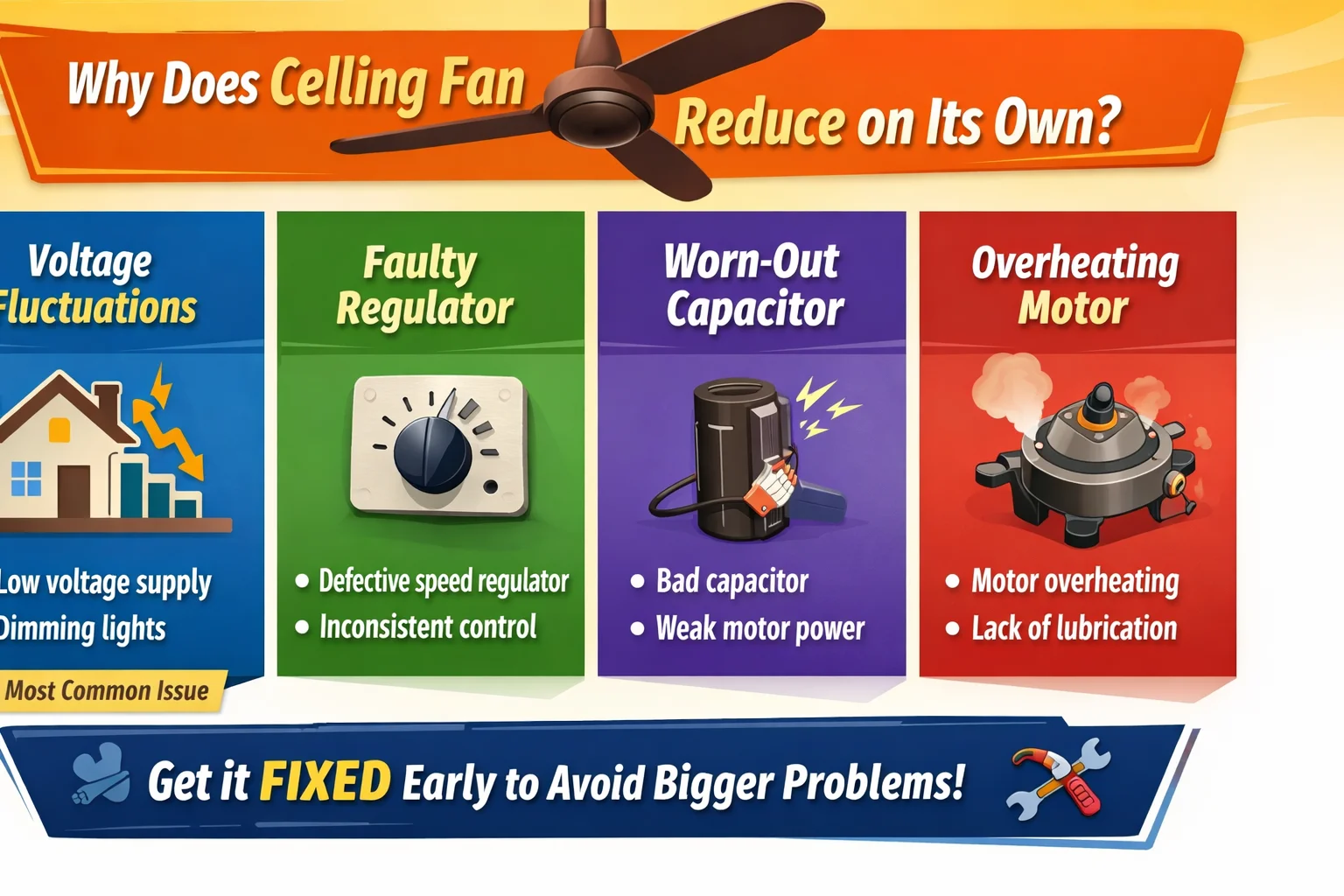
1. Weak or Faulty Capacitor (Most Common Cause)
The capacitor helps start and maintain fan speed.
- Over time, it weakens
- Fan loses power gradually
- Speed reduces even at full regulator
👉 This is the #1 reason in most cases.
2. Voltage Fluctuations
In many areas, power supply is not stable.
- Low voltage = low fan speed
- Speed may change throughout the day
This is common in older electrical systems.
3. Dust Accumulation on Blades
Dust adds extra weight.
- Makes blades heavier
- Reduces rotation speed
- Increases load on motor
4. Worn-Out Motor
Over time:
- Motor efficiency decreases
- Internal parts wear out
- Fan struggles to maintain speed
5. Faulty Fan Regulator
The regulator controls speed.
- Old regulators may malfunction
- Resistance-based regulators waste energy
- Fan may slow down automatically
6. Overheating
If the fan runs continuously:
- Motor heats up
- Efficiency drops
- Speed reduces to prevent damage
7. Poor Wiring or Loose Connections
Loose wires can:
- Reduce power supply
- Cause inconsistent speed
8. Bearing Issues
Bearings help smooth rotation.
- Lack of lubrication
- Wear and tear
This increases friction and slows the fan.
Signs of a Faulty Fan
- Speed drops after some time
- Fan makes noise
- Starts slowly
- Doesn’t reach full speed
Why It Happens More in Indian Homes
- Frequent voltage fluctuations
- Long usage hours (especially summer)
- Dusty environment
- Older electrical systems
How to Fix a Slow Ceiling Fan
1. Replace the Capacitor
- Low cost (₹50–₹150 approx.)
- Quick fix
- Restores speed instantly
2. Clean the Fan Blades
- Remove dust regularly
- Improves airflow and speed
3. Check Voltage Supply
- Use stabilizer if needed
- Avoid running heavy appliances simultaneously
4. Upgrade the Regulator
- Use electronic regulators
- More efficient and stable
5. Lubricate Bearings
- Reduces friction
- Improves rotation
6. Tighten Wiring Connections
- Ensure proper electrical flow
7. Let Fan Cool Down
- Avoid continuous 24/7 usage
8. Replace Old Fan
If the fan is very old:
- Efficiency drops permanently
- New fans consume less power and perform better
Quick Maintenance Routine
Weekly:
- Wipe blades
Monthly:
- Check for noise or vibration
Yearly:
- Inspect capacitor and wiring
Common Mistakes to Avoid
- Ignoring slow speed
- Not cleaning fan
- Using old regulators
- Delaying repairs
FAQs
1. Why does my fan slow down after running for some time?
Due to capacitor weakness or overheating.
2. Can low voltage reduce fan speed?
Yes, voltage directly affects motor performance.
3. How do I know if capacitor is bad?
Fan runs slow even at full speed setting.
4. Is it expensive to fix?
No, most fixes are low-cost.
5. Should I replace or repair my fan?
Repair if minor issue; replace if very old.
6. Does dust affect fan speed?
Yes, it adds weight and reduces efficiency.
Conclusion
A ceiling fan slowing down on its own is usually caused by simple issues like a weak capacitor, dust buildup, or voltage fluctuations. The good news is that most of these problems are easy and affordable to fix.
Regular maintenance and timely repairs can keep your fan running efficiently—especially during hot Indian summers.
What Are the Functions of a Gas Turbine, And How Should it Be Maintained?