In many parts of the world, taking a short nap in the afternoon isn’t seen as laziness—it’s a way of life. Known as a “siesta” in some cultures, this midday break has been practiced for generations. While it may seem unusual in fast-paced modern societies, afternoon naps are deeply rooted in tradition, climate, and human biology.
Let’s explore why some countries embrace afternoon naps and what benefits they offer.
1. Climate and Heat
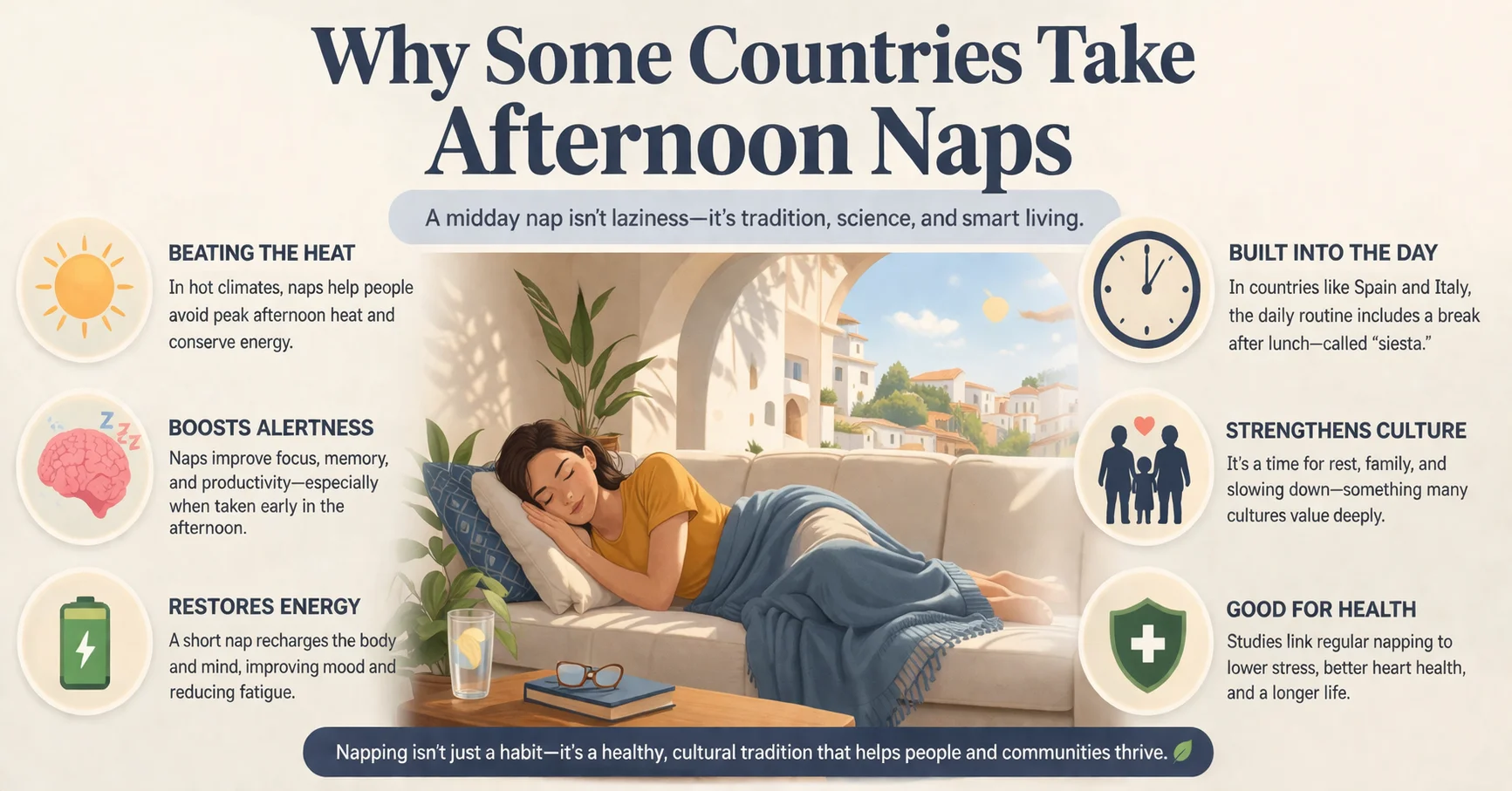
In warmer regions, especially in countries like Spain, Mexico, and Italy, the afternoon heat can be intense.
Working during peak heat hours can be uncomfortable and even unhealthy. Taking a break in the early afternoon allows people to rest and resume work when temperatures are cooler in the evening.
2. Cultural Traditions
Afternoon naps are part of long-standing cultural traditions. In Spain, the concept of a siesta is deeply ingrained in daily life.
Similarly, in Greece and some parts of Latin America, businesses may close for a few hours in the afternoon, allowing people to rest at home.
These traditions have been passed down through generations and remain an important part of daily routines.
3. Biological Need for Rest
The human body naturally experiences a dip in energy levels in the early afternoon, usually between 1 PM and 3 PM. This is part of the body’s internal clock, also known as the circadian rhythm.
Instead of fighting this natural slowdown, some cultures embrace it by allowing time for rest, making people more refreshed and productive afterward.
4. Improved Productivity
Contrary to the belief that naps reduce productivity, short naps can actually improve focus and efficiency.
After a brief rest:
- Energy levels increase
- Concentration improves
- Mood becomes more positive
This is why some modern workplaces are now encouraging short naps during the day.
5. Better Work-Life Balance
In countries where afternoon naps are common, daily schedules are often structured differently. Work may start earlier, pause in the afternoon, and continue later in the evening.
This flexible routine allows people to spend more time with family, rest properly, and maintain a healthier balance between work and personal life.
6. Health Benefits
Short naps, especially those lasting 20–30 minutes, offer several health benefits:
- Reduce stress
- Improve memory
- Boost heart health
- Enhance overall well-being
Regular rest can contribute to both physical and mental health.
7. Rural and Traditional Lifestyles
In agricultural or rural communities, daily routines are often aligned with natural light and weather conditions.
People may wake up early, work during the cooler morning hours, rest in the afternoon, and resume work later. This lifestyle naturally supports the habit of afternoon naps.
8. Changing Modern Trends
While afternoon naps are still common in some countries, urbanization and modern work culture are changing these habits.
In cities, fixed office hours and global business schedules make it harder to maintain traditional siesta routines. However, the idea of “power naps” is gaining popularity worldwide.
9. Psychological Relaxation
Afternoon naps are not just about physical rest—they also provide mental relaxation. Taking a break during the day helps reduce stress and refresh the mind.
This mental reset can improve creativity and decision-making.
10. A Different Approach to Time
Countries that embrace afternoon naps often have a more relaxed approach to time. Life is not always rushed, and there is value placed on rest and well-being.
This mindset contrasts with high-pressure cultures where constant productivity is prioritized over personal comfort.
Why Small Discomforts Feel Bigger Than They Are (And How to Deal With It)
Should Everyone Take Afternoon Naps?
Not necessarily. While naps can be beneficial, they may not suit everyone’s schedule or lifestyle.
If you choose to nap:
- Keep it short (20–30 minutes)
- Avoid late evening naps
- Maintain a consistent sleep routine
This ensures that naps enhance your day without affecting nighttime sleep.
Conclusion
Afternoon naps in certain countries are not just a habit—they are a reflection of culture, climate, and human biology. From escaping the heat to improving productivity and health, the benefits of midday rest are clear.
As modern life becomes increasingly demanding, adopting small practices like short naps could help create a more balanced and healthier lifestyle.
FAQs
1. What is a siesta?
A siesta is a short afternoon nap or rest, commonly practiced in countries like Spain.
2. Are afternoon naps healthy?
Yes, short naps can improve mood, focus, and overall health.
3. Why don’t all countries follow this habit?
Work culture, climate, and lifestyle differences influence whether afternoon naps are practical.
4. How long should an afternoon nap be?
A nap of 20–30 minutes is ideal to avoid feeling groggy.
5. Can naps replace nighttime sleep?
No, naps are a supplement, not a replacement for proper nighttime sleep.