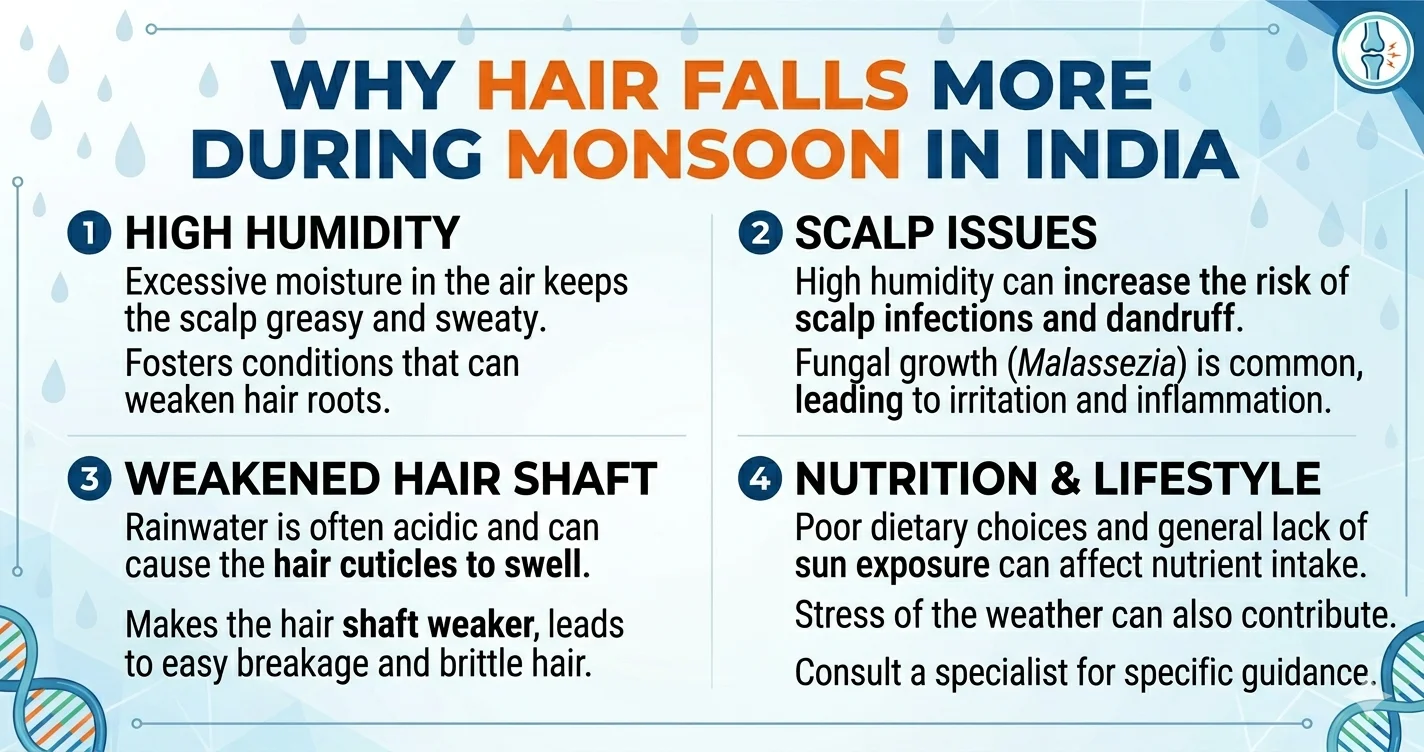
Many people notice increased hair fall during the monsoon season in India. You may see more strands on your comb, pillow, or while washing your hair, which can feel alarming.
But the truth is—monsoon hair fall is common and usually temporary. It happens due to a combination of humidity, scalp conditions, and lifestyle changes during the rainy season.
Let’s understand the real reasons behind it.
1. High Humidity Weakens Hair Roots
During monsoon, humidity levels in the air rise significantly.
What happens:
- Hair absorbs excess moisture
- Strands become weak and frizzy
- Scalp becomes sticky and oily
- Roots lose grip due to imbalance
This makes hair more prone to breakage and fall.
2. Fungal and Bacterial Infections on Scalp
Monsoon creates the perfect environment for microbial growth.
Common issues:
- Dandruff increase
- Itchy scalp
- Seborrheic dermatitis
- Follicle infections
These conditions weaken hair follicles and lead to increased shedding.
3. Scalp Becomes Too Oily or Too Dirty
Rainy weather often disrupts normal hair washing routines.
Effects:
- Excess oil buildup
- Dirt and pollution accumulation
- Blocked hair follicles
A clogged scalp prevents healthy hair growth and increases hair fall.
4. Wet Hair Weakens Hair Strands
Getting caught in rain or tying wet hair can cause damage.
Why it matters:
- Wet hair is more fragile
- Swelling of hair shaft increases breakage
- Rubbing wet hair causes mechanical damage
Even simple combing can lead to more hair loss when hair is wet.
5. Seasonal Shedding Cycle (Natural Hair Fall)
Hair naturally goes through a growth cycle:
- Growth phase (Anagen)
- Rest phase (Telogen)
- Shedding phase
During seasonal changes like monsoon, more hair may enter the shedding phase, leading to noticeable fall.
6. Stress and Lifestyle Changes
Monsoon often brings:
- Less sunlight exposure
- Lower vitamin D levels
- Mood changes
- Irregular routines
These factors indirectly affect hair health and increase fall.
7. Poor Diet During Rainy Season
People often consume more:
- Fried street food
- Low-nutrition snacks
- Less fresh fruits and vegetables
This leads to deficiency in:
- Iron
- Protein
- Vitamins (especially B-complex and D)
Poor nutrition weakens hair roots.
8. Product Buildup and Improper Hair Care
Using too many hair products or not cleansing properly can worsen hair fall.
Common mistakes:
- Not washing scalp regularly
- Using heavy oils during humid weather
- Overusing styling products
This blocks follicles and weakens roots.
How to Reduce Hair Fall During Monsoon
You can control monsoon hair fall with simple habits:
1. Keep Scalp Clean
Wash hair 2–3 times a week with a mild shampoo.
2. Avoid Wet Hair Styling
Never tie or comb hair when it is wet.
3. Use Anti-Dandruff Shampoo (if needed)
Helps control fungal growth.
4. Eat Nutrient-Rich Foods
Include:
- Leafy greens
- Eggs
- Nuts
- Fruits
- Protein-rich foods
5. Avoid Excess Oil Application
Keep scalp light and breathable.
6. Dry Hair Properly
Always dry hair gently before going out or sleeping.
When Hair Fall Is a Concern
You should consult a doctor if:
- Hair fall is excessive for more than 2 months
- Bald patches appear
- Severe itching or infection occurs
- Sudden thinning happens
This may indicate underlying issues like hormonal imbalance or severe scalp infection.
Final Thoughts
Hair fall during monsoon in India is usually caused by a mix of humidity, scalp infections, lifestyle changes, and seasonal shedding. While it may look alarming, it is often temporary and manageable.
With proper care, nutrition, and hygiene, you can significantly reduce hair fall and maintain healthy hair even during the rainy season.
FAQs
1. Is hair fall normal during monsoon?
Yes, mild to moderate hair fall is common due to humidity and scalp conditions.
2. How much hair fall is normal per day?
Around 50–100 strands per day is considered normal.
3. Does rainwater cause hair fall?
Rainwater itself is not the main cause, but pollution mixed in rainwater can damage hair.
4. Can monsoon hair fall be stopped completely?
It cannot be stopped entirely, but it can be controlled with proper care.
5. Which oil is best during monsoon?
Light oils like coconut or almond oil are better, but should not be overused.
Excessive Sweaty Hands and Feet in Summer: Causes, Treatment & Easy Solutions