When you’re involved in a car accident, your primary focus should be on recovery. However, if you plan to file an injury claim, your medical records become one of the most critical pieces of evidence. They play a key role in determining the outcome of your claim, including the amount of compensation you may receive.
In this article, we’ll explain how medical records affect a car accident injury claim and why maintaining accurate documentation is essential.
What Are Medical Records in Injury Claims?
Medical records are official documents that detail your diagnosis, treatment, and recovery after an accident. These records typically include:
- Doctor’s notes
- Hospital reports
- Diagnostic test results (X-rays, MRIs)
- Prescriptions
- Treatment plans
- Billing statements
They provide a complete picture of your injuries and the care you received.
Why Medical Records Are Crucial
1. Prove the Existence of Injuries
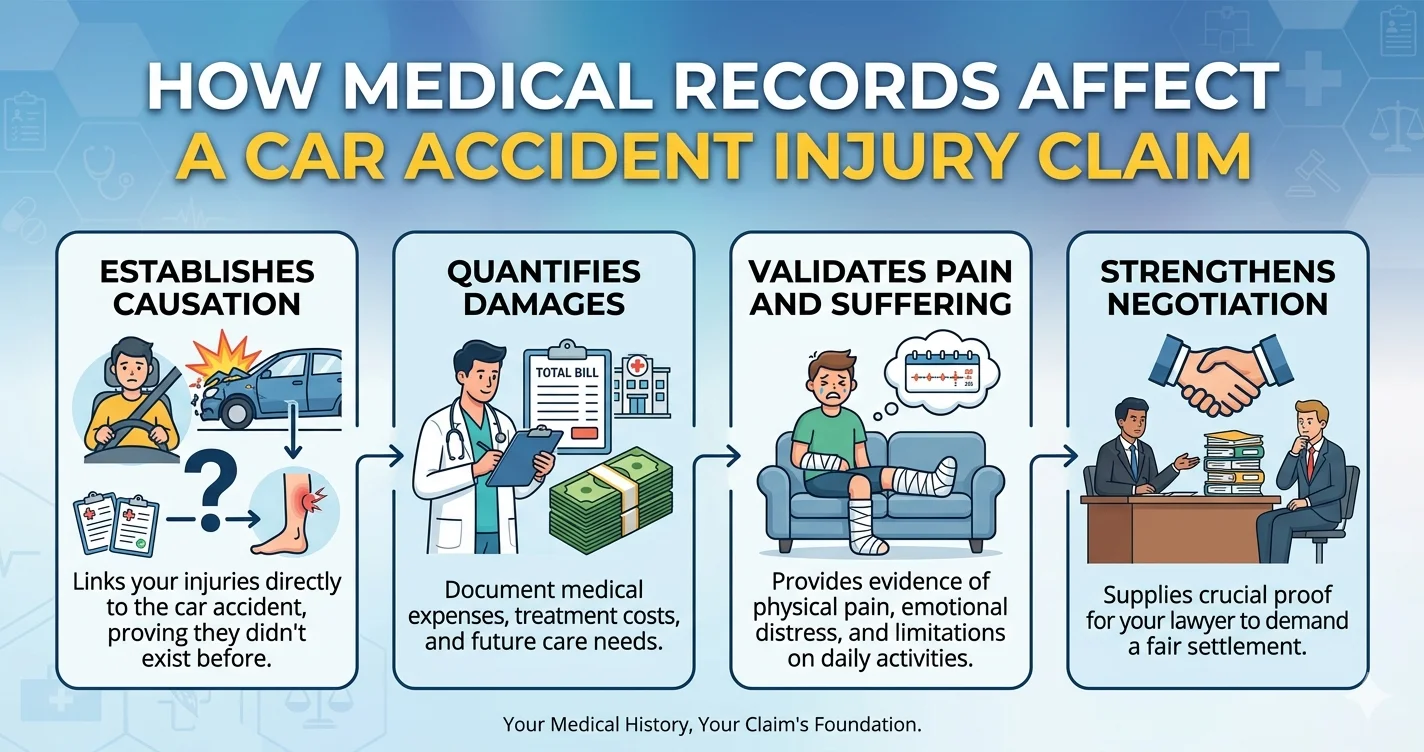
Insurance companies require proof that you were actually injured in the accident. Medical records serve as concrete evidence that your injuries are real and documented by professionals.
2. Establish a Link Between Accident and Injury
To receive compensation, you must show that your injuries were caused by the accident—not a pre-existing condition. Medical records help establish this connection clearly.
3. Determine Compensation Amount
The severity of your injuries, duration of treatment, and medical expenses all influence your claim value. These details are directly reflected in your medical records.
4. Support Pain and Suffering Claims
Notes from doctors about your pain levels, mobility issues, or emotional distress can strengthen your claim for non-economic damages.
5. Prevent Insurance Disputes
Incomplete or inconsistent medical records can lead to claim denial or reduced compensation. Proper documentation helps avoid disputes with insurers.
How Medical Records Influence Your Claim Outcome
Accurate Documentation Strengthens Your Case
Detailed and consistent records make your claim more credible and easier to validate.
Gaps in Treatment Can Harm Your Claim
If you delay treatment or skip follow-ups, insurance companies may argue that your injuries are not serious.
Pre-Existing Conditions Can Complicate Claims
If you had prior health issues, insurers might claim your injuries were not caused by the accident. Clear medical records can help differentiate between old and new injuries.
Timely Medical Attention Matters
Seeking immediate treatment after an accident strengthens the connection between the accident and your injuries.
Important Medical Records to Maintain
To support your claim effectively, keep copies of:
- Emergency room reports
- Doctor consultation records
- Diagnostic test results
- Physiotherapy or rehabilitation records
- Medication prescriptions
- Medical bills and receipts
Organizing these documents can significantly improve your chances of a successful claim.
Tips to Strengthen Your Injury Claim
Seek Immediate Medical Help
Even if injuries seem minor, get checked by a medical professional as soon as possible.
Follow Your Treatment Plan
Adhering to your doctor’s advice shows that you are serious about recovery.
Be Honest and Consistent
Always provide accurate information to healthcare providers and insurers.
Keep a Personal Injury Journal
Document your pain levels, daily challenges, and recovery progress to support your claim.
Consult a Legal Expert
An experienced personal injury lawyer can help interpret medical records and present them effectively.
Common Mistakes to Avoid
- Delaying medical treatment
- Not keeping copies of records
- Ignoring doctor’s advice
- Providing incomplete information
- Posting contradictory information on social media
These mistakes can weaken your claim and reduce your compensation.
Conclusion
Medical records are the backbone of any car accident injury claim. They provide essential proof of your injuries, establish a connection to the accident, and help determine fair compensation.
By maintaining accurate, consistent, and timely medical documentation, you significantly improve your chances of a successful claim. Always prioritize your health while ensuring your records are properly managed.
FAQs
1. Can I file a claim without medical records?
It’s very difficult. Medical records are essential proof of injury and are required by insurers.
2. How soon should I seek medical attention after an accident?
Immediately or within 24 hours to strengthen your claim.
3. What if I had a pre-existing condition?
You can still file a claim, but medical records must clearly show how the accident worsened your condition.
4. Can insurance companies access my medical records?
Yes, but usually with your consent. They review them to verify your claim.
5. How long should I keep my medical records?
Keep them at least until your claim is fully settled—and ideally longer for future reference.