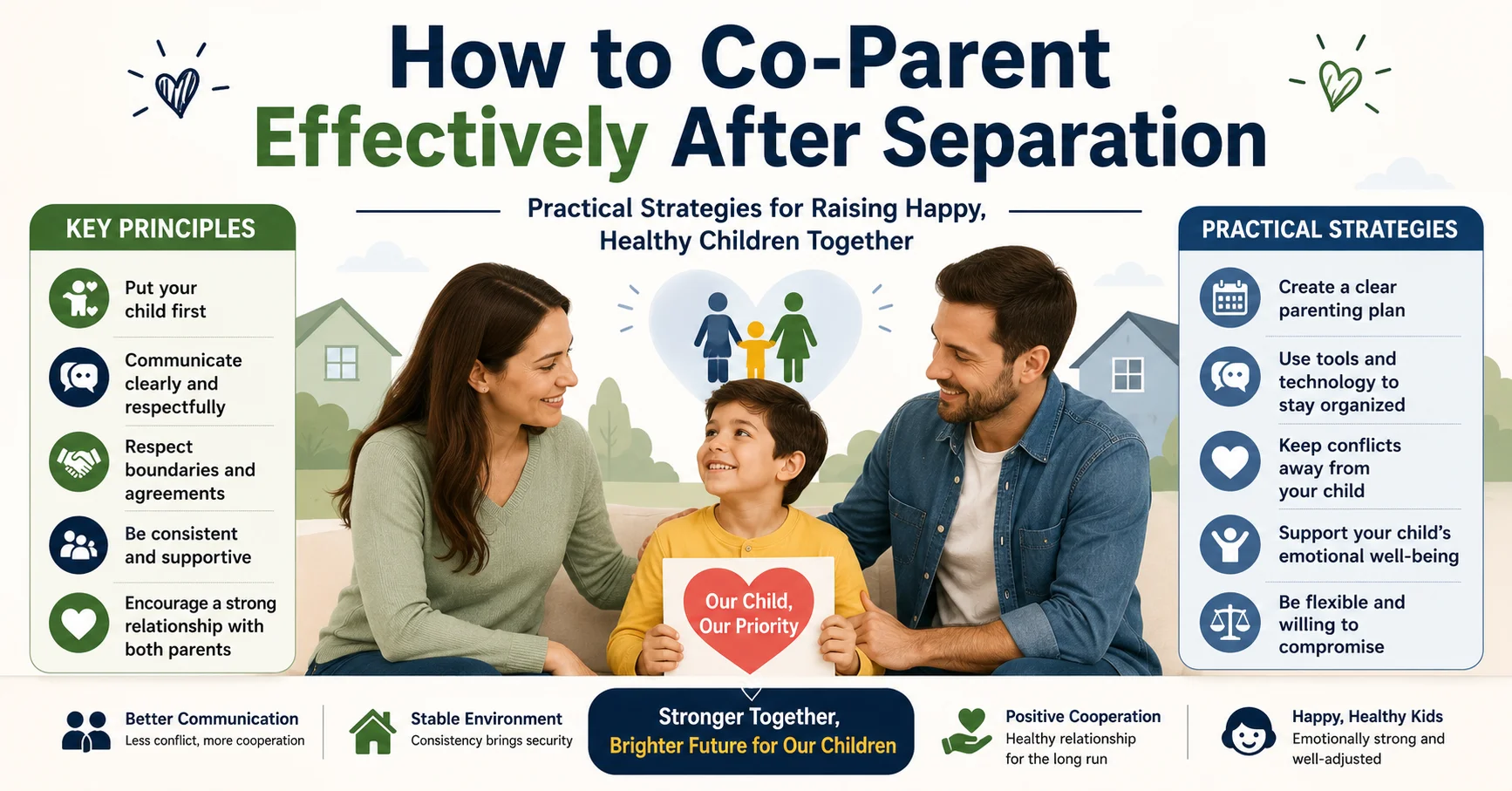
Separation or divorce can be one of the most challenging experiences for a family. While the relationship between partners may change, the responsibility of raising children remains. Effective co-parenting helps children adjust to the new family dynamic while maintaining strong relationships with both parents.
Research consistently shows that children thrive when parents work together respectfully after separation. Although co-parenting can be difficult, especially in the early stages, developing a cooperative parenting relationship can significantly benefit your child’s emotional, social, and psychological well-being.
In this guide, we’ll explore what co-parenting means, common challenges, and practical strategies to make co-parenting successful after separation.
What Is Co-Parenting?
Co-parenting is a parenting arrangement where separated, divorced, or unmarried parents work together to raise their children.
Effective co-parenting involves:
- Shared responsibility for child-rearing
- Consistent communication
- Mutual respect
- Joint decision-making when appropriate
- Prioritizing the child’s needs over personal conflicts
The primary goal is to provide stability, love, and support for the child despite changes in the family structure.
Why Effective Co-Parenting Matters
Children are highly sensitive to conflict between parents.
Healthy co-parenting can help children:
- Feel secure and loved
- Adjust better to separation
- Reduce stress and anxiety
- Improve academic performance
- Build healthy relationships in the future
- Develop emotional resilience
When parents cooperate, children are less likely to feel caught in the middle of adult disagreements.
Common Challenges in Co-Parenting
Before discussing solutions, it’s important to recognize common obstacles.
Emotional Tension
Separation often involves strong emotions such as:
- Anger
- Hurt
- Disappointment
- Resentment
These feelings can make communication difficult.
Different Parenting Styles
Parents may disagree about:
- Discipline
- Education
- Bedtimes
- Screen time
- Social activities
Differences in parenting approaches can create conflict if not managed properly.
Communication Breakdowns
Miscommunication can lead to misunderstandings regarding:
- Schedules
- School events
- Medical appointments
- Financial responsibilities
New Relationships
Introducing new partners may create additional emotional challenges for parents and children.
Principles of Successful Co-Parenting
1. Put Your Child First
The most important rule of co-parenting is prioritizing your child’s needs above personal disagreements.
Ask yourself:
“Is this decision best for my child?”
Instead of:
“How does this affect my relationship with my ex?”
Focusing on the child’s well-being helps parents make healthier decisions.
2. Separate Parenting From Personal Issues
Your former partner may no longer be your spouse or romantic partner, but they remain your child’s parent.
Try to:
- Focus conversations on parenting matters
- Avoid revisiting past relationship conflicts
- Keep discussions solution-oriented
This approach reduces unnecessary tension.
3. Maintain Consistent Communication
Good communication is the foundation of effective co-parenting.
Discuss:
- School activities
- Health concerns
- Behavioral issues
- Schedule changes
- Major decisions
Regular communication helps prevent misunderstandings and keeps both parents informed.
4. Be Respectful
Respect doesn’t require friendship.
It simply means:
- Speaking politely
- Avoiding insults
- Listening carefully
- Treating each other professionally
Think of co-parenting as a business partnership focused on raising your child.
Practical Strategies for Effective Co-Parenting
Create a Parenting Plan
A parenting plan provides structure and clarity.
Include details such as:
- Custody schedules
- Holidays
- School vacations
- Transportation arrangements
- Medical decisions
- Emergency contacts
Having expectations documented reduces confusion and conflict.
Establish Consistent Rules
Children benefit from consistency.
While households don’t need identical rules, parents should align on major expectations regarding:
- Education
- Safety
- Respectful behavior
- Health routines
Consistency helps children feel secure.
Use Technology to Stay Organized
Many co-parents use apps and shared calendars to manage responsibilities.
These tools can help coordinate:
- Appointments
- School events
- Visitation schedules
- Expenses
Written communication can also reduce misunderstandings.
Keep Children Out of Adult Conflicts
One of the most harmful mistakes parents make is involving children in disputes.
Avoid:
- Asking children to relay messages
- Speaking negatively about the other parent
- Sharing legal or financial disputes
- Using children as messengers
Children should never feel responsible for managing adult relationships.
Encourage a Positive Relationship With Both Parents
Children benefit from healthy relationships with both parents whenever possible.
Support your child’s connection by:
- Encouraging communication
- Respecting visitation schedules
- Speaking positively about the other parent
- Celebrating important milestones together when appropriate
Your child should never feel guilty for loving both parents.
How to Handle Disagreements
Disagreements are normal.
The key is resolving them constructively.
Focus on Solutions
Instead of assigning blame, ask:
- What outcome benefits the child?
- What compromise is possible?
- How can we move forward?
Solution-focused discussions are more productive.
Pick Your Battles
Not every disagreement requires a major confrontation.
Ask yourself:
“Will this matter in six months?”
If not, flexibility may be the better option.
Stay Calm During Discussions
If emotions become overwhelming:
- Take a break
- Pause the conversation
- Return later when both parties are calm
Reacting emotionally often escalates conflict.
Consider Mediation
If recurring disagreements occur, a family mediator can help parents reach agreements in a neutral environment.
Mediation often reduces stress and improves communication.
Supporting Your Child Emotionally
Separation affects children differently depending on age, personality, and circumstances.
Listen to Their Feelings
Children may experience:
- Sadness
- Anger
- Confusion
- Anxiety
Allow them to express emotions without judgment.
Reassure Them Regularly
Children often worry that separation is their fault.
Remind them:
- They are loved by both parents
- The separation is not their responsibility
- Both parents will continue caring for them
Consistent reassurance provides emotional security.
Maintain Routines
Predictable routines help children feel stable.
Try to maintain consistency with:
- School schedules
- Bedtimes
- Activities
- Family traditions
Stability can reduce stress during transitions.
Co-Parenting With Different Parenting Styles
No two parents parent exactly alike.
Differences are normal.
Focus on agreement in critical areas such as:
- Safety
- Education
- Healthcare
- Core values
Accept that some differences between households may exist.
Children can adapt to different environments when expectations remain reasonable.
What to Avoid in Co-Parenting
Criticizing the Other Parent
Negative comments can damage a child’s emotional well-being.
Children often identify with both parents and may feel personally hurt by criticism.
Competing for Your Child’s Affection
Avoid trying to become the “favorite” parent through gifts, lenient rules, or manipulation.
Healthy parenting prioritizes long-term well-being over short-term approval.
Using Children as Messengers
Communicate directly with the other parent whenever possible.
This reduces stress on children and minimizes misunderstandings.
Ignoring Agreements
Consistency builds trust.
Follow agreed schedules and commitments whenever possible.
Benefits of Successful Co-Parenting
When parents work together effectively, children often experience:
- Greater emotional security
- Better mental health
- Stronger academic performance
- Healthier relationships
- Reduced anxiety and stress
Parents may also benefit from:
- Less conflict
- Better communication
- Reduced parenting stress
- More predictable routines
Final Thoughts
Co-parenting after separation isn’t always easy, but it is one of the most important investments parents can make in their child’s future. While personal differences may remain, successful co-parenting focuses on creating a stable, loving, and supportive environment where children can thrive.
By prioritizing your child’s needs, maintaining respectful communication, and working together as parenting partners, you can help your child navigate separation with confidence and resilience.
Remember, effective co-parenting isn’t about being perfect—it’s about consistently making decisions that support your child’s well-being.
Frequently Asked Questions (FAQs)
What is the most important rule of co-parenting?
The most important rule is to prioritize the child’s needs above personal conflicts with the other parent.
How can co-parents improve communication?
Use respectful language, stay focused on parenting issues, utilize shared calendars or apps, and communicate consistently.
Should children be involved in co-parenting disagreements?
No. Children should never be placed in the middle of adult conflicts or used as messengers.
What if co-parents have different parenting styles?
Focus on consistency in major areas such as safety, education, and health while accepting reasonable differences between households.
How does effective co-parenting benefit children?
It promotes emotional stability, reduces stress, improves mental health, and helps children maintain healthy relationships with both parents.
When should co-parents seek professional help?
If communication breaks down repeatedly or conflicts remain unresolved, family counseling or mediation may be beneficial.