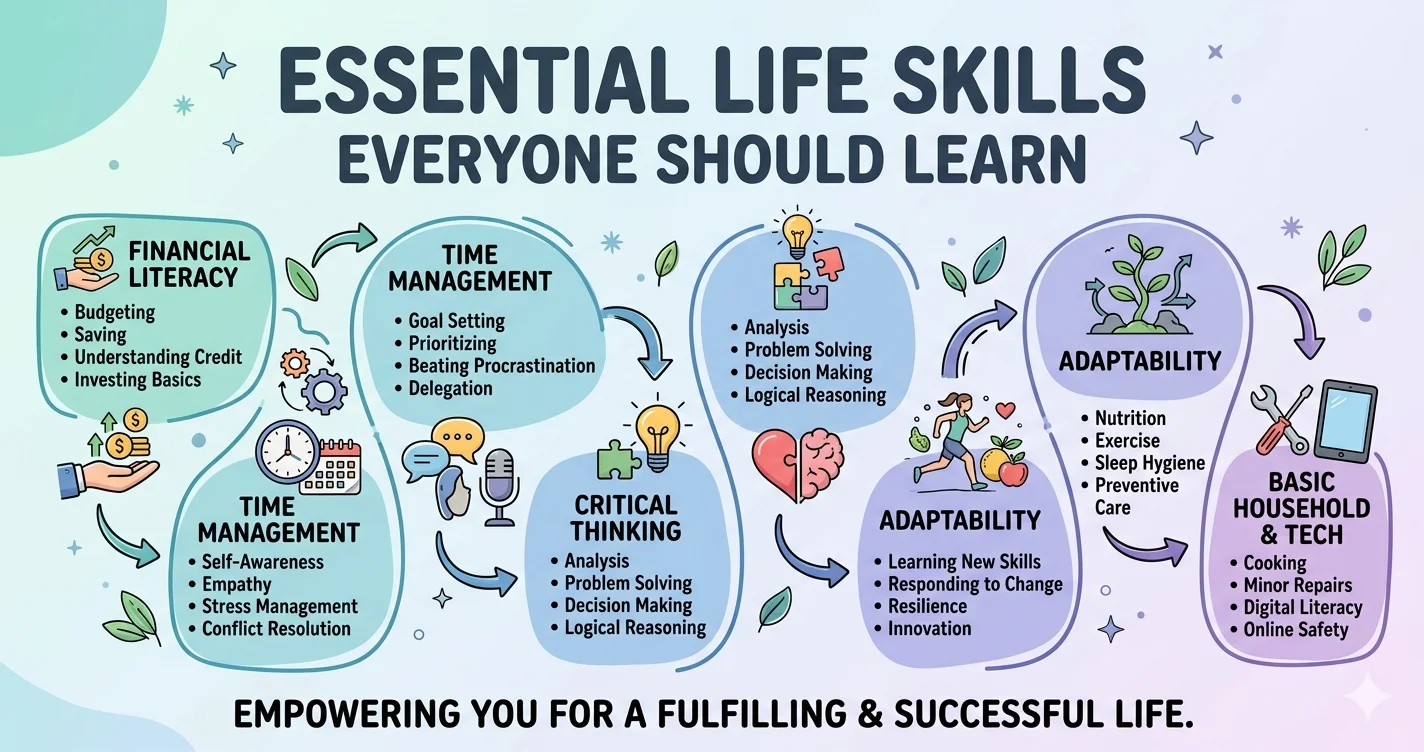
Life is full of challenges, opportunities, and unexpected situations. While formal education teaches academic subjects, many of the skills needed for everyday success are often learned outside the classroom. These are known as life skills—practical abilities that help individuals navigate personal, social, and professional situations effectively.
Developing essential life skills can improve confidence, increase independence, and make daily life easier. Whether you’re a student, young professional, or someone looking to improve yourself, mastering these skills can have a lasting impact on your quality of life.
In this article, we’ll explore the most important life skills everyone should learn and why they matter.
What Are Life Skills?
Life skills are abilities that enable people to handle the demands and challenges of everyday life. They include practical, emotional, social, and cognitive skills that help individuals make informed decisions, build relationships, manage responsibilities, and achieve personal goals.
Unlike technical skills, life skills are valuable in almost every situation and remain relevant throughout life.
1. Effective Communication Skills
Communication is one of the most important life skills anyone can develop. Whether you’re talking to family, friends, colleagues, or customers, the ability to express yourself clearly can significantly improve relationships and outcomes.
Why It Matters
- Prevents misunderstandings
- Builds stronger relationships
- Improves teamwork
- Enhances career opportunities
How to Improve Communication
- Listen actively when others speak
- Maintain eye contact
- Ask thoughtful questions
- Practice speaking clearly and confidently
- Learn to communicate respectfully during disagreements
Strong communication skills help people connect, collaborate, and resolve conflicts effectively.
2. Financial Literacy
Money management is a critical life skill that affects nearly every aspect of life. Understanding how to earn, save, budget, and invest money can lead to greater financial security and reduced stress.
Key Financial Skills
- Creating a budget
- Tracking expenses
- Building an emergency fund
- Understanding credit and debt
- Learning basic investing concepts
Benefits of Financial Literacy
- Better financial decisions
- Reduced debt
- Improved savings habits
- Long-term financial stability
Financial literacy empowers individuals to take control of their financial future.
3. Time Management
Time is one of the few resources that cannot be replaced. Learning how to manage time effectively allows people to accomplish more while reducing stress and burnout.
Time Management Tips
- Prioritize important tasks
- Use calendars and planners
- Break large projects into smaller steps
- Avoid procrastination
- Set realistic deadlines
People who manage their time well often experience greater productivity and work-life balance.
4. Problem-Solving Skills
Life constantly presents challenges. Problem-solving skills help individuals evaluate situations, identify solutions, and make informed decisions.
Steps to Effective Problem Solving
- Identify the problem
- Gather information
- Consider possible solutions
- Evaluate outcomes
- Take action
- Review the results
Problem-solving encourages critical thinking and adaptability, both of which are valuable in today’s fast-changing world.
5. Emotional Intelligence
Emotional intelligence refers to the ability to recognize, understand, and manage emotions—both your own and those of others.
Components of Emotional Intelligence
- Self-awareness
- Self-regulation
- Empathy
- Social skills
- Motivation
Why Emotional Intelligence Matters
People with strong emotional intelligence often have healthier relationships, better leadership abilities, and improved mental well-being.
Developing emotional intelligence can help individuals respond thoughtfully rather than react impulsively.
6. Decision-Making Skills
Every day, people make decisions that affect their lives. Good decision-making skills help individuals choose options that align with their goals and values.
Tips for Better Decision Making
- Gather relevant information
- Consider potential consequences
- Weigh pros and cons
- Avoid emotional decisions when possible
- Learn from past experiences
Strong decision-making skills contribute to personal growth and long-term success.
7. Adaptability and Flexibility
Change is inevitable. The ability to adapt to new situations, technologies, and circumstances is increasingly important in modern life.
Benefits of Adaptability
- Increased resilience
- Better stress management
- Greater career opportunities
- Improved problem-solving abilities
Adaptable individuals are often better equipped to handle uncertainty and unexpected challenges.
8. Critical Thinking
Critical thinking involves analyzing information objectively and making reasoned judgments.
Why Critical Thinking Is Important
In an age of information overload, critical thinking helps people:
- Evaluate information accurately
- Avoid misinformation
- Make informed decisions
- Solve complex problems
Ways to Improve Critical Thinking
- Ask questions
- Examine evidence
- Consider multiple perspectives
- Challenge assumptions
Critical thinking is valuable in education, work, and everyday life.
9. Stress Management
Stress is a normal part of life, but unmanaged stress can negatively impact physical and mental health.
Effective Stress Management Techniques
- Regular exercise
- Meditation and mindfulness
- Deep breathing exercises
- Adequate sleep
- Healthy nutrition
Learning how to manage stress helps individuals maintain balance and perform at their best.
10. Relationship Building
Humans are social beings, and healthy relationships contribute significantly to happiness and well-being.
Essential Relationship Skills
- Respect
- Trust
- Communication
- Empathy
- Conflict resolution
Strong relationships provide emotional support and create a sense of belonging.
11. Self-Discipline
Self-discipline is the ability to stay focused on goals despite distractions or challenges.
Why Self-Discipline Matters
- Increases productivity
- Builds consistency
- Supports goal achievement
- Encourages healthy habits
How to Build Self-Discipline
- Set clear goals
- Create routines
- Limit distractions
- Practice delayed gratification
Self-discipline is often the foundation for long-term success.
12. Basic Digital Literacy
Technology has become a central part of everyday life. Digital literacy involves understanding how to use technology effectively and safely.
Important Digital Skills
- Internet research
- Email communication
- Online safety
- Data privacy awareness
- Basic software proficiency
Digital literacy is increasingly important for education, employment, and communication.
13. Conflict Resolution
Disagreements are a natural part of life. Learning how to resolve conflicts constructively can strengthen relationships and improve communication.
Conflict Resolution Strategies
- Stay calm
- Listen actively
- Focus on the issue, not the person
- Seek common ground
- Work toward mutually beneficial solutions
Strong conflict-resolution skills help create healthier personal and professional environments.
14. Goal Setting
Setting goals provides direction and motivation.
Characteristics of Effective Goals
- Specific
- Measurable
- Achievable
- Relevant
- Time-bound
Breaking larger goals into smaller milestones can make them easier to achieve and maintain motivation.
15. Basic Health and Wellness Knowledge
Understanding how to care for your physical and mental health is a vital life skill.
Key Areas of Wellness
- Nutrition
- Exercise
- Sleep
- Mental health
- Preventive healthcare
Healthy habits contribute to higher energy levels, better productivity, and improved quality of life.
Related: Why Do We Feel Lost in Our 20s? (Complete Guide for Clarity & Direction)
How to Start Developing Life Skills
Learning life skills doesn’t happen overnight. It requires practice, patience, and continuous improvement.
Practical Ways to Build Life Skills
- Read books and articles
- Take online courses
- Seek mentorship
- Practice self-reflection
- Learn from mistakes
- Set personal development goals
The more you practice these skills, the more naturally they become part of your daily life.
The Long-Term Benefits of Life Skills
Mastering essential life skills offers numerous advantages:
- Greater confidence
- Improved relationships
- Better financial stability
- Increased career success
- Enhanced mental well-being
- Stronger resilience during challenges
These skills not only help people navigate everyday situations but also prepare them for future opportunities and responsibilities.
Conclusion
Essential life skills are the building blocks of a successful and fulfilling life. While academic knowledge and technical expertise are important, practical abilities such as communication, financial literacy, emotional intelligence, time management, and problem-solving often have a greater impact on long-term happiness and success.
The good news is that life skills can be learned and improved at any age. By investing time in personal development and practicing these essential abilities regularly, individuals can become more confident, independent, and capable of handling life’s challenges.
No matter where you are in your journey, developing life skills is one of the best investments you can make in yourself.
FAQs
What are the most important life skills to learn?
Some of the most important life skills include communication, financial literacy, time management, emotional intelligence, problem-solving, and decision-making.
Why are life skills important?
Life skills help individuals manage daily responsibilities, build relationships, make informed decisions, and achieve personal and professional goals.
Can life skills be learned at any age?
Yes. Life skills can be developed and improved throughout life with practice, education, and real-world experience.
How can I improve my life skills?
You can improve life skills through reading, online courses, mentorship, self-reflection, and consistent practice in everyday situations.
Which life skill has the biggest impact on success?
While all life skills are valuable, communication, emotional intelligence, financial literacy, and self-discipline often have the greatest influence on long-term success.