Knee pain is no longer just an issue for older adults. In India, many teenagers and young adults are now experiencing knee pain earlier than expected.
If you feel pain while walking, climbing stairs, sitting for long hours, or exercising, it may be linked to your lifestyle and physical habits—not just aging.
Let’s understand the real reasons behind knee pain at a young age in India and how to prevent it.
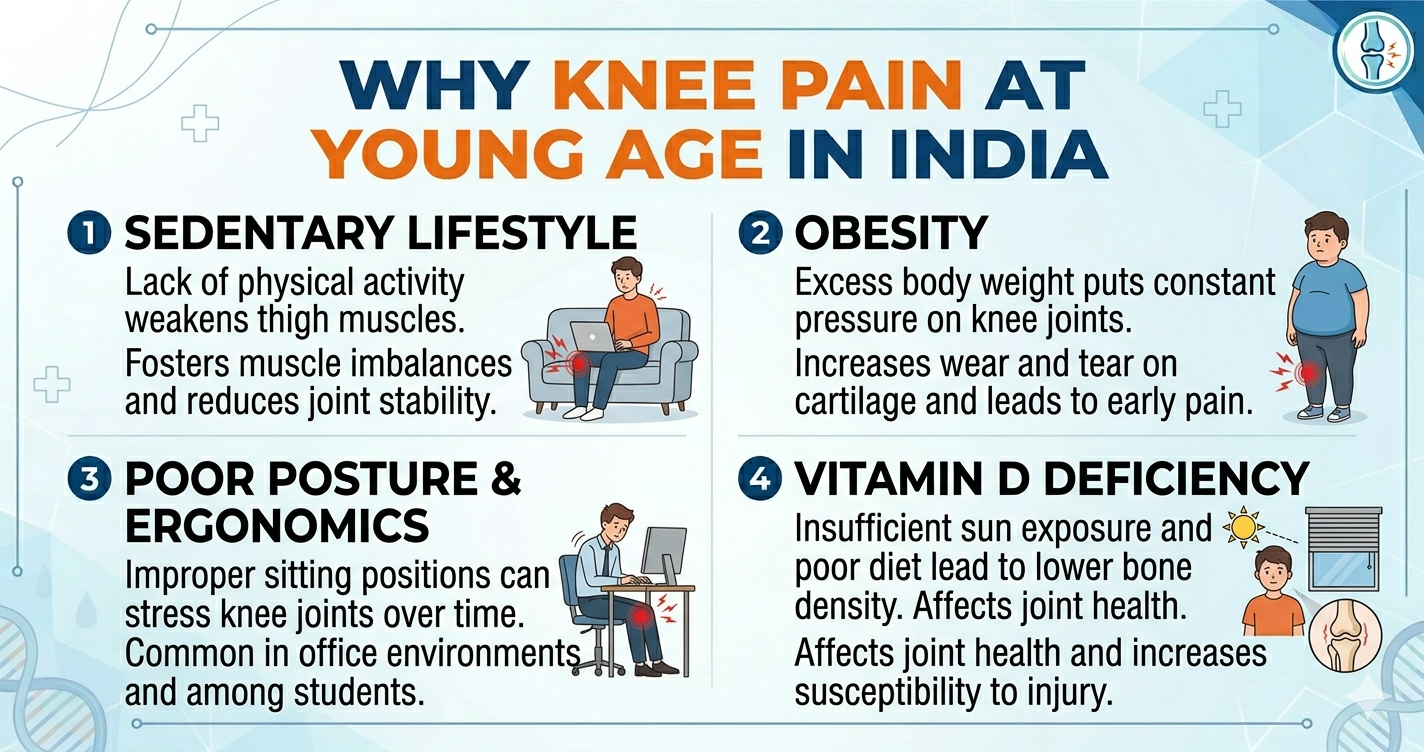
1. Long Sitting Hours (Sedentary Lifestyle)
One of the biggest reasons is sitting for long hours in school, college, or office work.
What happens:
- Weak thigh and leg muscles
- Reduced blood circulation
- Stiff joints
- Extra pressure on knees when standing
Your knees depend on muscle support—when muscles weaken, knees take extra load.
2. Lack of Physical Activity
Many young people do not engage in regular exercise or sports.
Effects:
- Weak ligaments
- Poor joint flexibility
- Reduced bone strength
- Higher risk of injury
Without movement, joints become stiff and painful over time.
3. Being Overweight or Sudden Weight Gain
Extra body weight puts direct pressure on knee joints.
Impact:
- Every 1 kg extra weight increases knee load significantly
- Cartilage wears faster
- Pain while walking or climbing stairs
Even moderate weight gain can stress knees in young individuals.
4. Poor Diet and Nutritional Deficiency
Diet plays a major role in bone and joint health.
Common deficiencies in India:
- Vitamin D
- Calcium
- Protein
- Magnesium
Effects:
- Weak bones
- Poor cartilage repair
- Increased joint pain
Low sunlight exposure also worsens vitamin D deficiency.
5. Wrong Posture (Very Common Today)
Poor posture while sitting, standing, or using phones affects lower body alignment.
Examples:
- Sitting cross-legged for long hours
- Slouching on chairs
- Incorrect squat posture
- Leaning forward while using mobile
This leads to uneven pressure on knees.
6. Excess Pressure from Physical Activity
While lack of exercise is bad, overdoing exercise incorrectly is also harmful.
Common causes:
- Running on hard surfaces
- Incorrect gym techniques
- Sudden intense workouts
- Jumping without warm-up
This can strain knee ligaments and cartilage.
7. Vitamin D Deficiency (Very Common in India)
Many young people in India are deficient in vitamin D due to:
- Indoor lifestyle
- Less sunlight exposure
- Poor diet
Result:
- Weak bones
- Joint pain
- Muscle weakness
This is one of the hidden causes of early knee pain.
8. Weak Thigh Muscles (Quadriceps)
Strong thigh muscles support the knee joint. If these muscles are weak:
- Knees take extra stress
- Pain increases during movement
- Risk of injury rises
This is common in people who don’t exercise legs regularly.
9. Early Joint Wear and Tear
Cartilage in the knee acts as a cushion. Poor lifestyle habits can cause early wear:
- Frequent stair climbing without strength
- Sitting on the floor repeatedly
- Lack of stretching or recovery
This leads to early discomfort even at a young age.
10. Injuries That Were Ignored
Small injuries from sports or accidents often go untreated.
Examples:
- Ligament strain
- Minor sprains
- Meniscus irritation
If ignored, they can lead to chronic knee pain later.
How to Prevent Knee Pain at a Young Age
Simple lifestyle changes can protect your knees:
1. Stay Active
Walk daily and do light exercises.
2. Strengthen Leg Muscles
Include squats (correct form), lunges, and cycling.
3. Maintain Healthy Weight
Reduce excess pressure on knees.
4. Improve Diet
Eat:
- Calcium-rich foods
- Protein
- Vitamin D (sunlight exposure)
5. Fix Posture
Avoid long sitting without breaks.
6. Stretch Regularly
Helps maintain flexibility and reduce stiffness.
When to See a Doctor
Consult a doctor if:
- Pain lasts more than 2–3 weeks
- Swelling or redness appears
- Knee feels unstable
- Pain increases while resting
Early diagnosis prevents long-term damage.
Final Thoughts
Knee pain at a young age in India is mainly caused by modern lifestyle habits, poor posture, lack of exercise, and nutritional deficiencies.
The good news is that most cases are preventable and reversible with simple changes in daily routine.
Your knees are built to last a lifetime—but they need movement, strength, and care to stay healthy.
FAQs
1. Is knee pain normal at age 20–30?
No, it is not normal, but it is becoming common due to lifestyle factors.
2. Can sitting too much cause knee pain?
Yes, prolonged sitting weakens muscles and increases stiffness.
3. Does vitamin D deficiency cause knee pain?
Yes, it weakens bones and can lead to joint discomfort.
4. Can exercise reduce knee pain?
Yes, proper strengthening and stretching exercises help a lot.
5. When should I worry about knee pain?
If pain persists, worsens, or affects daily movement, consult a doctor.