Do you often feel tired even after sleeping? Or struggle with low motivation throughout the day without any clear reason?
The truth is, your energy levels are deeply influenced by your daily lifestyle habits. Many people don’t realize that small, repeated behaviors slowly drain their physical and mental energy.
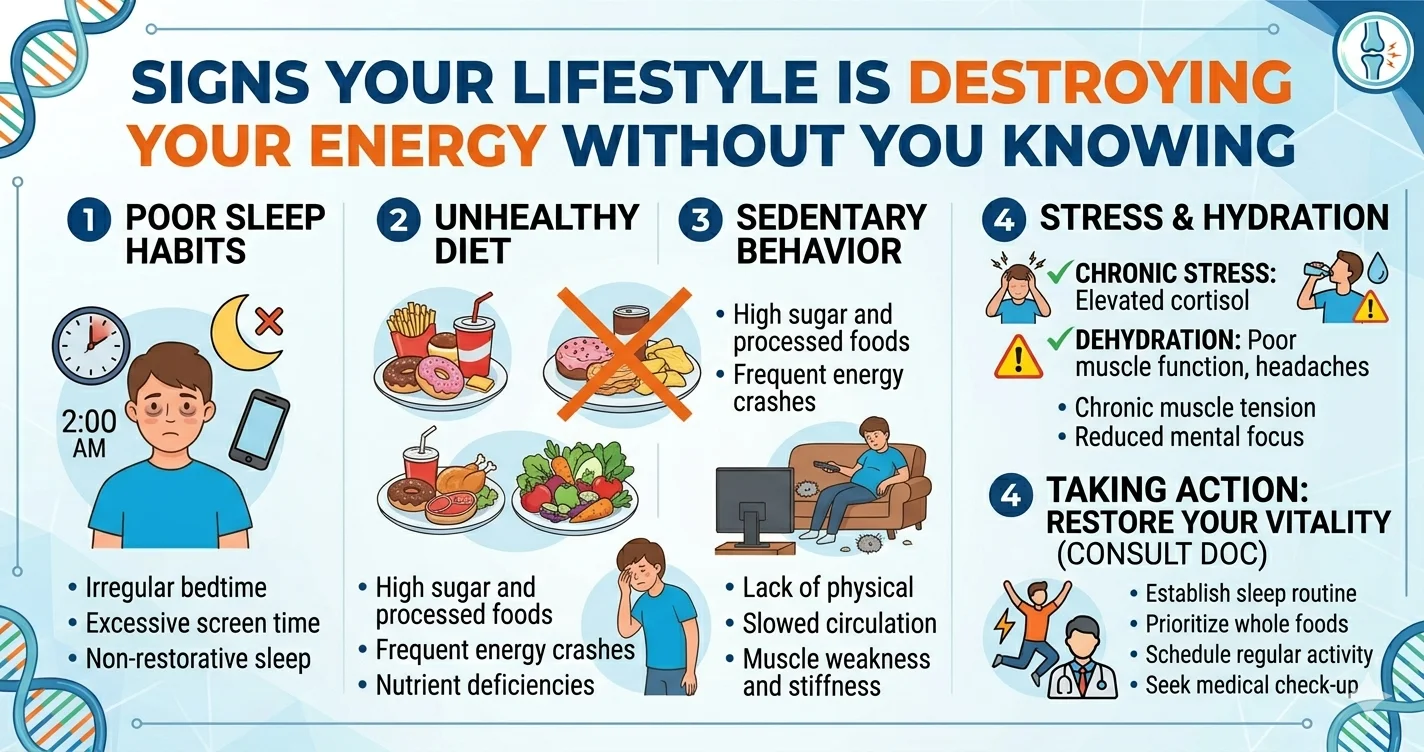
Here are the hidden signs your lifestyle may be destroying your energy without you noticing—and what they actually mean.
1. You Wake Up Tired Even After Sleeping
If you sleep for 7–9 hours but still feel exhausted, your body may not be getting quality sleep.
Possible reasons:
- Irregular sleep schedule
- Excess screen time before bed
- Poor sleep posture
- Stress or overthinking
Your body is resting, but your brain is not fully recovering.
2. You Feel Drained After Using Your Phone
Scrolling social media or watching videos for long periods can quietly drain mental energy.
Why it happens:
- Constant dopamine stimulation
- Information overload
- Comparison stress
- Lack of real rest for the brain
This creates mental fatigue without physical activity.
3. Sitting Too Long Makes You Feel Lazy, Not Rested
Long sitting hours (especially without breaks) slow down blood circulation and reduce energy flow.
Effects:
- Stiff muscles
- Lower oxygen circulation
- Reduced alertness
- Brain fog
Even though you’re “not doing anything,” your body becomes tired.
4. You Feel Low Energy After Eating Certain Foods
Food directly impacts your energy levels.
Energy-draining foods:
- Heavy fried food
- Excess sugar
- Processed snacks
- Sugary drinks
These cause energy spikes followed by crashes, leaving you more tired than before.
5. You Feel Mentally Exhausted Doing Small Tasks
If simple tasks feel overwhelming, it may indicate mental overload.
Common causes:
- Too many unfinished tasks
- Constant notifications
- Lack of breaks
- Decision fatigue
Your brain uses more energy than you realize.
6. You Stay Up Late but Feel Guilty the Next Day
Irregular sleep patterns disrupt your body’s internal clock (circadian rhythm).
Result:
- Low morning energy
- Reduced focus
- Mood swings
- Afternoon crashes
Even one hour of lost sleep can affect your next day’s performance.
7. You Feel “Busy” But Not Productive
Being busy doesn’t always mean being productive.
Signs:
- Constant multitasking
- Switching between tasks too often
- No clear priorities
This creates energy leakage, where effort increases but results don’t.
8. You Overthink Everything
Overthinking is one of the biggest hidden energy drainers.
What it does:
- Keeps the brain in stress mode
- Reduces mental clarity
- Causes emotional fatigue
- Interrupts sleep quality
Your mind never gets a break.
9. You Avoid Physical Movement
A sedentary lifestyle reduces natural energy production in the body.
Effects of low movement:
- Weak muscles
- Poor circulation
- Low oxygen supply
- Sluggish feeling
Ironically, the less you move, the more tired you feel.
10. You Rely on Caffeine to “Start” Your Day
If you need coffee or tea just to function, your baseline energy may be too low.
Why this happens:
- Poor sleep quality
- Nutrient imbalance
- Stress accumulation
- Lack of hydration
Caffeine masks fatigue—it doesn’t fix it.
How to Restore Your Energy Naturally
Small changes can dramatically improve your energy levels:
1. Fix Sleep Routine
Go to bed and wake up at consistent times.
2. Take Movement Breaks
Walk or stretch every 45–60 minutes.
3. Reduce Screen Overload
Limit social media breaks and take digital detox hours.
4. Eat Clean, Simple Meals
Focus on whole foods, fruits, vegetables, and protein.
5. Practice Mental Breaks
Even 5–10 minutes of silence or deep breathing helps reset the brain.
Final Thoughts
Low energy is not always caused by health issues—it is often the result of daily lifestyle habits you don’t notice.
Your energy is like a battery: if you keep draining it without recharging properly, burnout becomes inevitable.
The good news?
Once you identify these hidden patterns, you can slowly rebuild your energy and feel more focused, active, and alive again.
FAQs
1. Why do I feel tired all the time even after sleeping?
Poor sleep quality, stress, or irregular routine can reduce real rest even if sleep duration is enough.
2. Can phone usage reduce energy?
Yes, excessive screen time causes mental fatigue and dopamine overload.
3. What is the fastest way to increase energy naturally?
Hydration, short walks, proper sleep, and reducing sugar intake help quickly.
4. Is low energy always a medical problem?
No, most cases are due to lifestyle habits rather than medical conditions.
5. How long does it take to restore energy levels?
With consistent changes, noticeable improvement can happen in 1–2 weeks.
Also Read: Excessive Sweaty Hands and Feet in Summer: Causes, Treatment & Easy Solutions