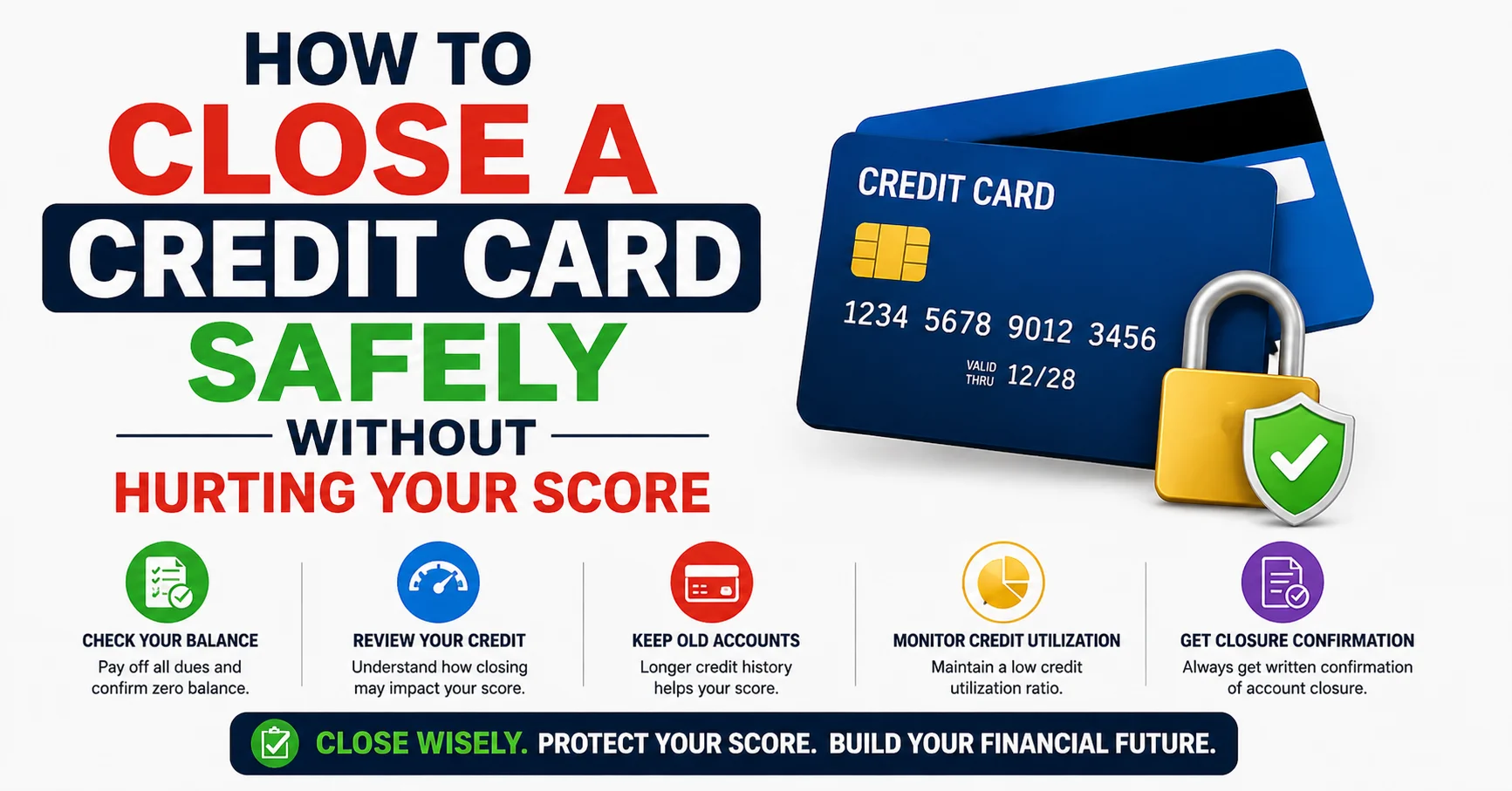
Closing a credit card might seem simple, but doing it the wrong way can negatively impact your credit score. Whether you’re trying to reduce debt, avoid annual fees, or simplify your finances, it’s important to close your card strategically.
In this guide, we’ll walk you through how to safely close a credit card without hurting your credit score—and what to consider before taking that step.
Why Closing a Credit Card Can Affect Your Score
Before closing a card, it’s important to understand how credit scores work. Your credit score depends on several factors, including:
- Credit utilization ratio
- Length of credit history
- Credit mix
- Payment history
Closing a credit card can impact two major areas:
1. Credit Utilization Ratio
This is the percentage of your total credit limit that you’re using. Closing a card reduces your available credit, which can increase your utilization ratio—even if your spending stays the same.
2. Length of Credit History
Older accounts help boost your credit score. If you close one of your oldest cards, it may shorten your credit history and affect your score.
When Should You Close a Credit Card?
Closing a credit card makes sense in certain situations:
- High annual fees with no benefits
- You struggle with overspending
- You have too many unused cards
- Poor customer service or unfavorable terms
However, if the card has no annual fee and a long history, keeping it open may be better for your credit score.
Also Read; How Different Countries Define Happiness?
Step-by-Step Guide to Close a Credit Card Safely
1. Pay Off the Entire Balance
Before closing your card, make sure the balance is zero. Even small pending amounts can lead to interest charges and complications.
2. Redeem Rewards Points
Use or transfer any reward points, cashback, or benefits before closing the account. Once closed, these are usually lost.
3. Check for Pending Transactions
Ensure there are no pending payments, subscriptions, or auto-debits linked to the card.
4. Call Customer Care or Submit Closure Request
Contact your bank’s customer support or use net banking to request card closure. Always ask for written confirmation.
5. Request a No-Dues Certificate
This is important proof that you have cleared all outstanding dues and closed the account properly.
6. Monitor Your Credit Report
After closing the card, check your credit report to ensure the account is marked as “closed” and not “settled.”
Smart Tips to Protect Your Credit Score
Keep Your Oldest Card Open
If possible, avoid closing your oldest credit card. It helps maintain a long credit history.
Maintain Low Credit Utilization
Try to keep your credit usage below 30% of your total limit to maintain a healthy score.
Close Cards Gradually
Avoid closing multiple cards at once, as it can significantly impact your credit profile.
Consider Downgrading Instead
Instead of closing, ask your bank to downgrade your card to a no-fee version.
Common Mistakes to Avoid
- Closing a card with an outstanding balance
- Ignoring reward points before closure
- Not checking credit report after closure
- Closing multiple cards together
- Closing your oldest or only credit card
Alternatives to Closing a Credit Card
If you’re unsure about closing your card, consider these options:
- Reduce your credit limit
- Stop using the card but keep it active
- Convert to a lifetime free card
- Use it occasionally to keep it active
These alternatives help maintain your credit profile while minimizing risks.
Conclusion
Closing a credit card is a financial decision that should be taken carefully. While it may help you manage expenses or avoid fees, it can also impact your credit score if not done properly.
By following the right steps—like clearing dues, monitoring your credit report, and understanding the impact—you can safely close your credit card without hurting your financial health.
Always think long-term and make decisions that support your overall credit profile and financial goals.
Related: Guide to Investing in Index Funds for Beginners in India
FAQs
1. Will closing a credit card hurt my credit score?
It can, especially if it increases your credit utilization or reduces your credit history.
2. Is it better to close unused credit cards?
Not always. If they have no annual fee, keeping them open may benefit your credit score.
3. How long does it take to update the credit report after closure?
It usually takes 30–45 days for the update to reflect in your credit report.
4. What is the difference between “closed” and “settled”?
“Closed” means you paid all dues, while “settled” means partial payment—this can harm your credit score.
5. Can I reopen a closed credit card?
In most cases, no. You may need to apply for a new card instead.