Introduction
You clean your mirror, it shines perfectly—and then after a few hours or days, it starts looking dull, hazy, or blurry again. It feels like the cleaning didn’t even last.
This is a common problem in many households, especially in humid environments. The reason behind this is not just dirt—it involves moisture, residue buildup, and a process called Condensation.
In this article, we’ll break down why mirrors get blurry so quickly and how you can prevent it effectively.
What Does “Blurry Mirror” Actually Mean?
A blurry mirror doesn’t always mean it’s dirty. It can be:
- Foggy or hazy
- Streaky after cleaning
- Dull instead of reflective
- Covered with a thin invisible film
These effects are usually caused by a combination of environmental and cleaning factors.
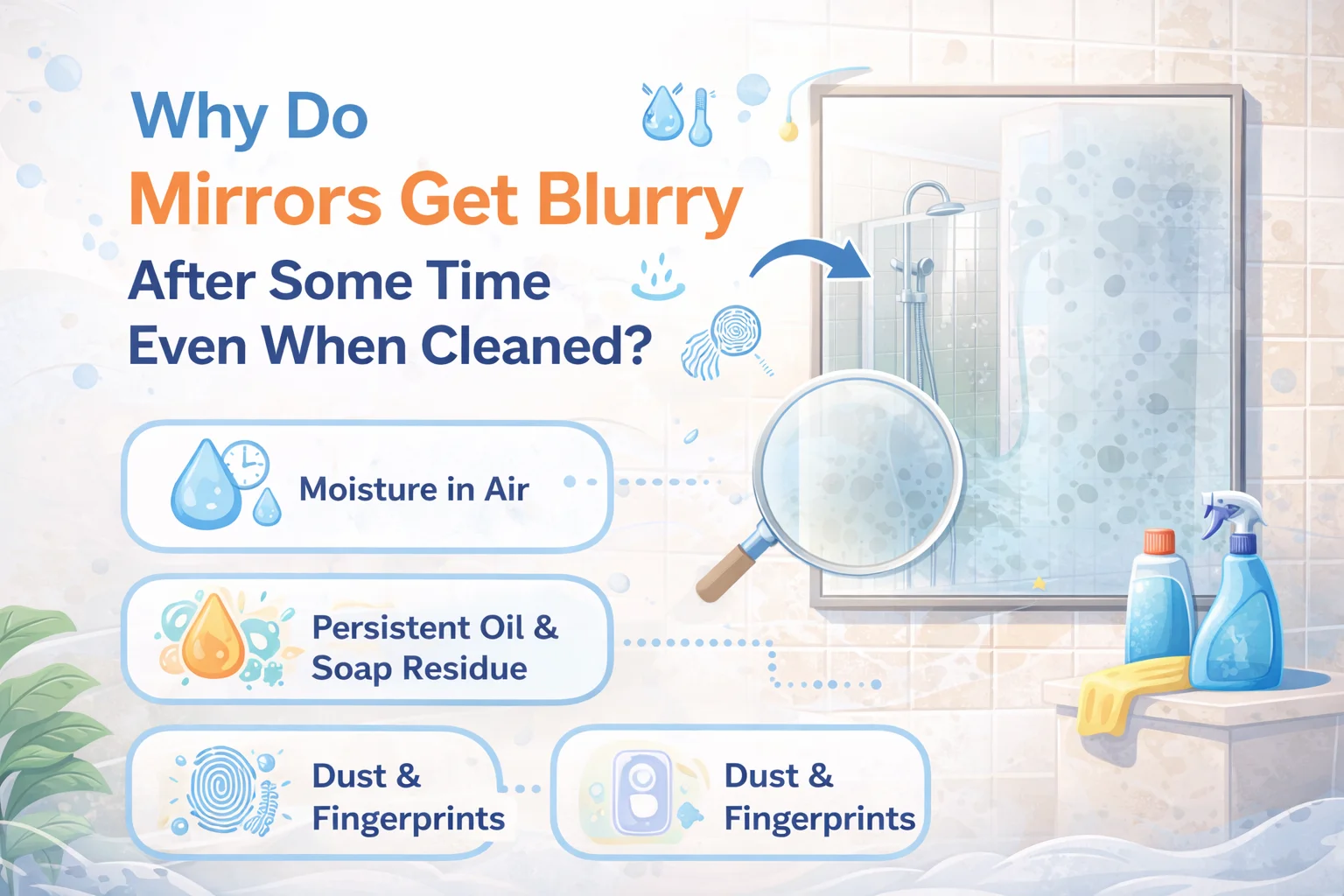
Main Reasons Mirrors Get Blurry Quickly
1. Moisture and Humidity
The most common cause is humidity—especially in bathrooms.
When warm air hits a cool mirror, Condensation occurs:
- Water vapor turns into tiny droplets
- These droplets scatter light
- The mirror appears foggy or blurry
This happens frequently after showers.
2. Soap and Shampoo Residue
In bathrooms, tiny particles from:
- Soap
- Shampoo
- Face wash
settle on the mirror surface.
Over time, they form a thin film that:
- Reduces clarity
- Makes the mirror look dull
- Causes streaks even after cleaning
3. Hard Water Stains
If you clean mirrors with tap water, minerals like calcium and magnesium can leave marks.
This is related to Hard water.
- Leaves white spots or haze
- Builds up over time
- Difficult to remove with normal wiping
4. Incorrect Cleaning Methods
Sometimes the problem isn’t the mirror—it’s how you clean it.
Common mistakes:
- Using too much cleaner
- Not drying properly
- Using dirty cloths
- Cleaning in circular motions that leave streaks
These create residue instead of removing it.
5. Dust and Airborne Particles
Even after cleaning, dust settles quickly.
- Air carries tiny particles
- They stick to the mirror surface
- Form a thin layer that reduces shine
This is linked to Airborne particles.
6. Oil and Fingerprints
Natural oils from your hands or face:
- Stick easily to glass surfaces
- Attract more dust
- Create smudges that look like blur
7. Aging or Damaged Mirror Coating
Mirrors have a reflective coating at the back.
Over time:
- Moisture can damage it
- Edges may turn black
- Reflection becomes dull
This is not fixable by cleaning.
8. Cleaning Product Residue
Some glass cleaners leave behind:
- Chemical films
- Sticky layers
- Streak marks
Instead of clarity, they create a hazy look.
Also Read: Why Do We Get Negative Vibes from Some People?
Why This Happens More in Indian Homes
In India, mirrors get blurry faster due to:
- High humidity in many regions
- Hard water supply
- Dust and pollution
- Frequent temperature changes
This combination accelerates buildup on mirror surfaces.
The Science Behind Mirror Fogging
When warm, moist air meets a cooler mirror surface:
- Air cools down
- Water vapor condenses
- Tiny droplets form
These droplets scatter light, reducing reflection clarity.
This is why mirrors fog up instantly after a hot shower.
How to Keep Mirrors Clear for Longer
1. Use the Right Cleaning Solution
- Mix vinegar + water
- Removes residue and mineral deposits
2. Use Microfiber Cloth
- Leaves no lint
- Prevents streaks
3. Wipe in One Direction
- Avoid circular motion
- Reduces streak formation
4. Keep Bathroom Ventilated
- Use exhaust fan
- Open windows after shower
5. Apply Anti-Fog Solution
- Available in market
- Prevents condensation
6. Avoid Using Hard Water
- Use filtered or distilled water for cleaning
7. Clean Regularly (Not Just When Dirty)
- Prevents buildup
- Easier to maintain clarity
8. Use Shaving Foam Trick
A popular hack:
- Apply a thin layer
- Wipe it off
Creates a temporary anti-fog coating.
Common Mistakes to Avoid
- Using newspaper (can leave ink marks)
- Overusing cleaning spray
- Ignoring edges of mirror
- Cleaning in humid conditions
Quick Daily Routine
- Wipe mirror lightly after use
- Keep area dry
- Avoid touching mirror unnecessarily
When Should You Replace a Mirror?
You may need a new mirror if:
- Black spots appear
- Reflection is permanently dull
- Coating is damaged
Cleaning won’t fix these issues.
FAQs
1. Why does my mirror look blurry even after cleaning?
Because of residue buildup, moisture, or improper cleaning methods.
2. How do I stop my mirror from fogging?
Improve ventilation or use anti-fog solutions.
3. Can vinegar clean mirrors effectively?
Yes, it removes residue and hard water stains.
4. Why do streaks appear after cleaning?
Due to excess cleaner or improper wiping technique.
5. Is blurry mirror a sign of damage?
Not always—only if the coating is affected.
6. How often should I clean mirrors?
At least 2–3 times a week for best results.
Conclusion
Mirrors become blurry not because they are dirty—but because of moisture, residue, dust, and environmental factors constantly affecting their surface.
Understanding the real causes helps you clean smarter, not harder. With proper techniques and regular maintenance, you can keep your mirrors crystal clear for much longer—even in challenging conditions.